
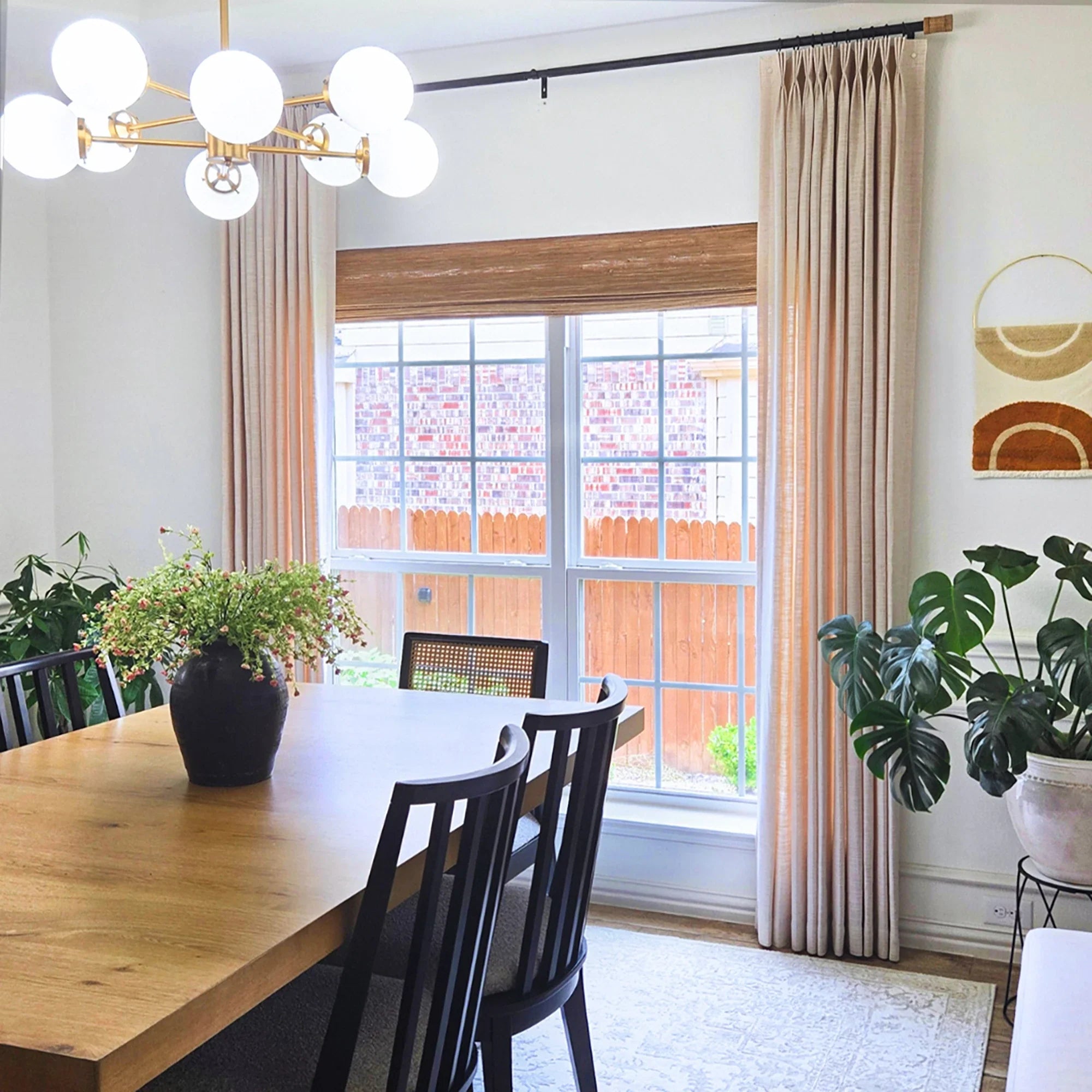
7 Expert Tips for Picking Summer Curtains That Beat the Heat

Want your home to stay cool and look nice this summer? Begin by picking the best summer curtains. The fabric, color, and size you pick matter a lot. For example, medium-colored draperies with white-plastic backing can lower heat by 33%.
Curtain Material |
Heat Gain Reduction |
|---|---|
Medium-colored draperies with white-plastic backing |
33% |
Light fabrics and light colors bounce sunlight away. This helps you cut down heat by almost 28%. When you choose summer curtains, you control comfort and style. Try these smart ideas for your summer look, and enjoy a cooler home.
Key Takeaways
Pick light and airy fabrics like cotton, linen, or sheer curtains. These help your home stay cool and let air move through. - Choose curtains with light colors. They bounce sunlight away and keep rooms cooler in summer. - Put sheer curtains with thicker or thermal curtains. This blocks more heat and helps save energy. - Measure your windows with care. Use curtains that cover the whole window to stop sunlight from getting in. - Try smart tools like motorized blinds or thermostats. These can move curtains for you and help lower cooling bills.
Summer Curtains: Best Fabrics
Cotton and Linen
When you want your home to feel cool and comfortable, cotton and linen curtains are a smart choice. You get a fresh, light and airy look that fits right in with summer. Linen curtains stand out because they block the sun well and let air move through the room. Their hollow fibers and special weave help wick away moisture, so your space stays dry even on humid days. Linen also lasts a long time—sometimes up to 30 years—because its fibers are much stronger than cotton. You can count on linen to handle lots of sunlight without wearing out.
Cotton curtains bring a soft touch and let in more natural light. They make your room feel light and airy, perfect for a relaxed summer vibe. Cotton is easy to wash and care for, though it may not last as long as linen. If you want a quick, breezy update, cotton works well.
Property |
Linen |
Cotton |
|---|---|---|
Breathability |
Highly breathable, great airflow, moisture-wicking |
Breathable, but less moisture-wicking |
Durability |
Very durable, lasts up to 30 years |
Less durable, lasts up to 5 years |
Tip: Choose linen for rooms that get a lot of sun and need extra cooling. Pick cotton if you want easy-care, light curtains for a softer look.
Sheer and Lightweight Options
Sheer curtains are a summer favorite. You can use sheer curtains alone or layer them with other curtains for more style and function. These curtains let sunlight filter in, but they still give you privacy. Sheer curtains are perfect for making your space feel open and bright. They are light and airy, so you get good airflow and less heat buildup.
You might see sheer curtains made from polyester, cotton blends, or even special fabrics with UV-blocking features. These materials help reflect sunlight and keep your room cooler. Some sheer curtains have dense weaves or coatings that boost their heat resistance. You can also find sheer curtains that are easy to clean and shape, which makes them practical for busy homes.
Sheer curtains work well in living rooms, bedrooms, or any spot where you want soft light.
Try layering sheer curtains with heavier curtains if you want to block out more heat during the hottest part of the day.
Sheer curtains give you a stylish, breezy look and help you beat the summer heat.
How to Choose the Right Curtains for Summer
Breathability and Airflow
When you think about how to choose the right curtains for summer, start with breathability. You want your space to feel fresh, not stuffy. Curtains that let air move through the room help you stay cool all season. Fabrics with high air permeability, like those with a basic sateen weave, allow more airflow. For example, a basic sateen weave can reach up to 935 mm/sec in air permeability, which means it lets a lot of air pass through. This keeps your home light and airy, even on hot days.
Fabric Weave Type |
Air Permeability (mm/sec) |
Notes |
|---|---|---|
Basic Sateen |
935 |
Highest airflow, great for summer |
Quarter Turn |
763 |
Good airflow, still very breathable |
Superimposed |
~600 |
Moderate airflow |
Reversing Method |
394 |
Lower airflow, less cooling |
You can also look for curtains with good moisture management. These fabrics absorb and dry moisture quickly, so your room feels dry and comfortable. This is important during the season when humidity rises. Sheer curtains and light fabric curtains are top picks because they boost airflow and help keep the heat out.
Tip: Hang your curtains so they do not block vents or windows. This lets air move freely and keeps your room cooler.
Avoiding Heavy or Dark Materials
Heavy or dark curtains might look nice in winter, but they trap heat during the summer season. Thick fabrics stop air from moving and make your room feel warmer. Dark colors soak up sunlight, which can raise the temperature inside. If you want to keep your home cool, skip velvet, brocade, or any curtain that feels heavy to the touch.
Choose lighter shades and fabrics instead. Sheer curtains in white or pastel colors reflect sunlight and help your room stay bright. Light fabric curtains are easy to move and wash, making them perfect for the season. When you pick summer curtains, always think about how the material and color will affect airflow and temperature. This way, you enjoy a cool, comfortable home all season long.
Summer Heat Control: Color Choices

Light and Reflective Shades
When you want to keep the heat out, light-colored curtains are your best friend. These shades bounce sunlight away from your windows and help your rooms stay cool. You might notice that white, cream, or pastel curtains make your space feel brighter and more open. They do more than look good—they work hard to block heat and protect your furniture from fading.
Light-colored curtains reflect sunlight and UV rays, which helps lower the temperature inside.
Curtains with a light side facing the window boost heat-blocking power.
Thermal curtains with insulating layers can keep your home comfortable by blocking solar heat in summer.
If you want the best curtain colors for summer heat control, stick with lighter shades. You can even find curtains with special reflective coatings or linings for extra protection. These options help you create a cooler, airier home.
Window Film Type |
Heat Rejection (%) |
Glare Reduction (%) |
UV Blocking (%) |
Light Transmission (%) |
|---|---|---|---|---|
One-way mirror film (RN07) |
Up to 82% |
93% |
>99% |
N/A |
Silver reflective R20 |
>80% |
>80% |
N/A |
20% |
Silver reflective R35 |
N/A |
69% |
N/A |
35% |
Silver reflective R50 |
N/A |
46% |
N/A |
50% |
Dual-reflective DR15 |
Highest heat rejection among dual-reflective |
N/A |
>99% |
15% |
Dual-reflective DRN25 |
Moderate heat rejection |
N/A |
>99% |
25% |
Dual-reflective DRN35 |
Lowest heat rejection among dual-reflective |
N/A |
>99% |
35% |
Exterior window films (RHE series) |
Impressive heat rejection |
N/A |
99% |
Varies (20, 35, 50) |
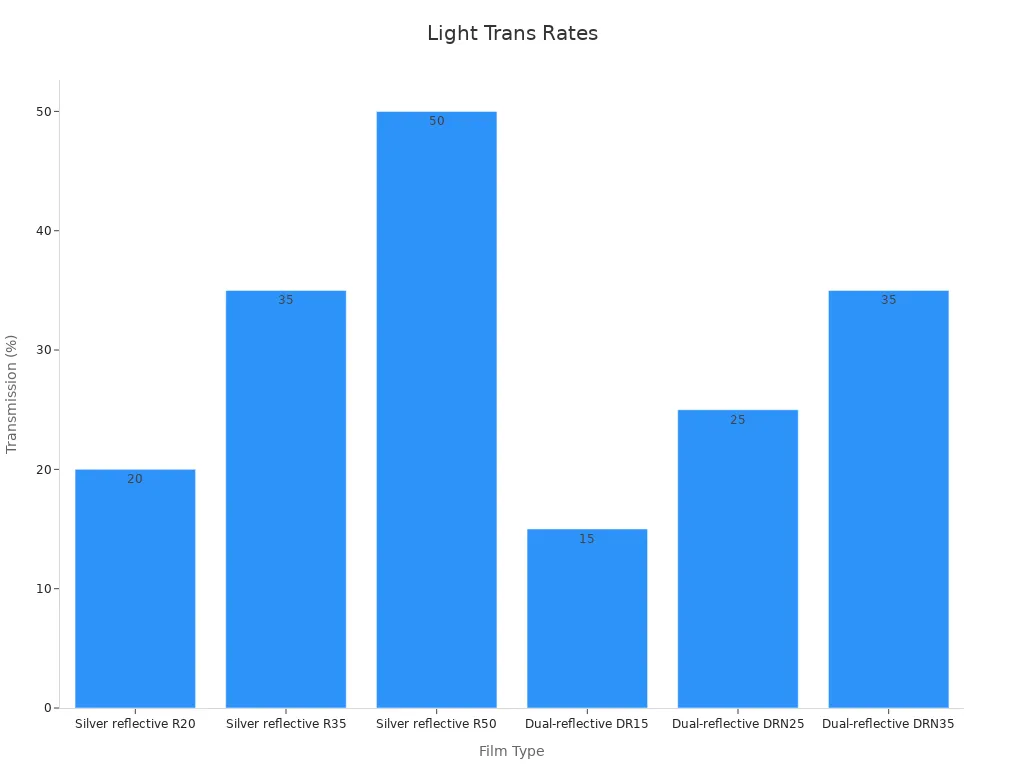
You can see from the table and chart that reflective surfaces, like those on some window films, block a lot of heat and UV rays. Light-colored curtains work in a similar way, making them a smart choice for summer heat control.
When to Use Darker Tones
You might wonder if you should ever choose curtain colors that are darker in summer. While light-colored curtains are best for cooling, darker tones can work in some rooms. If you have a space with a rustic or formal style, dark woven wood blinds or earth-tone drapes can add warmth and texture. These colors help balance rooms with lots of wood or heavy features. Darker curtains can also make bedrooms feel cozy without making the space too hot, as long as you use them with lighter layers or sheers.
If you want to choose curtain colors that match your style, think about the mood you want. Darker tones may not block as much heat, but they can give your room a rich, inviting look. Just remember to use them where you need more privacy or want to control light, not where you want to keep the heat out.
Recommended Summer Curtain Options
Thermal-Backed Curtains
Thermal curtains are great for keeping your house cool. They have special linings that block heat and sunlight. This makes your rooms feel nice, even on hot days. The best thermal curtains use thick fabrics or a blackout thermal lining. This extra layer stops heat from coming in. It also helps your air conditioning work less.
Many people like thermal curtains because they block noise and give privacy. Some good choices are the Nicetown Triple-Weave Thermal Curtain and the Best Home Fashion Wide Basic Thermal Blackout Curtain. These curtains use triple-weave polyester and special linings. They can block up to 99% of light and UV rays. You can see how they compare in the table below:
Product Name |
Key Features & Materials |
Light Blocking & Thermal Performance |
Pros |
Cons |
|---|---|---|---|---|
Nicetown Triple-Weave Thermal Curtain |
Polyester blend with black yarn layer between microfiber layers |
Blocks approx. 75-80% light, reduces heat and noise |
Many sizes, good noise reduction, machine washable |
Colors may fade in direct sunlight |
Best Home Fashion Wide Basic Thermal Blackout Curtain |
Triple-weave polyester with black yarn layer |
Blocks up to 99% light, 100% UV rays |
Excellent insulation, multiple colors, machine washable |
Fabric creases hard to remove, back same color |
Tip: Always read the care instructions. Some thermal curtains need spot cleaning or dry cleaning. This keeps their lining in good shape.
Studies show thermal curtains can lower indoor temperatures and save energy. You get better results if you pick good materials and keep them clean.
Layering Sheers and Heavier Curtains
Layering curtains is a smart way to stay cool in summer. Start with a sheer curtain close to the window. Sheer panels let in soft light but block some heat. When the sun is strong, pull heavier curtains over the sheers for more protection.
This double layer makes an air pocket between the two curtains. The pocket acts like insulation. It keeps heat out in summer and warmth in during winter. The U.S. Department of Energy says layering window treatments can cut heat loss by up to 25%. You might even save 15–20% on cooling bills!
Sheer curtains work well during the day. Heavier drapes or blackout panels give privacy and block light at night. For the best results, use sun-blocking fabric for the outer layer. Use a blackout thermal lining for bedrooms. This combo gives comfort, style, and energy savings all year.
Note: Layered curtains also help reduce glare. They protect your furniture from fading.
If you want summer curtain options that really work, try layering sheers with thermal curtains. You get light when you want it and cool comfort when you need it.
Fit and Coverage Tips
Measuring for Full Coverage
Getting the right fit for your curtains makes a big difference in keeping your home cool. Start by measuring the width of your window from edge to edge. Add extra inches on each side—usually 6 to 20 inches—so your curtains cover the whole area and block out more heat. For example, if your window is 59 inches wide, and you add 10 inches on each side, your curtain rod should be 79 inches long. This extra coverage helps stop sunlight from sneaking in around the edges.
Here’s a simple way to measure for full coverage:
Measure your window width, including the frame.
Add 6–20 inches to each side for the rod or track.
Calculate the total rod length: window width plus both side extensions.
Decide how many panels you need. For small windows, two panels work well. For larger windows, you might need three or four panels.
Measure the length from the top of the rod or track to the floor. Add an extra inch for a neat look.
Tip: Curtains with sealed edges create a tight air layer, which can reduce heat transfer by about 19%. Make sure your curtains fit snugly against the wall for the best results.
Achieving Proper Fullness
Fullness means your curtains are wide enough to look rich and block heat. You want your curtains to be 1.5 to 2 times the width of your window for standard coverage. For extra fullness, especially with sheer curtains, go up to 2.5 times the width. This extra fabric helps trap air and keeps your room cooler.
Hang your curtains close to the ceiling and let them fall all the way to the floor. This covers more space and creates an insulating pocket of air.
Use rods that extend past the window frame. This lets the curtains wrap around the sides and seal in cool air.
Try magnetic or Velcro strips along the edges to keep curtains tight against the wall. This simple trick can stop drafts and boost your comfort.
If you layer curtains, add extra panels to make sure every inch is covered. The right fullness not only looks great but also helps your curtains work harder to beat the summer heat.
Room-Specific Curtain Advice
High Sun Exposure Rooms
Does your room get lots of sunlight? You need curtains that help keep it cool. Insulated or thermal curtains work best for these rooms. They block sunlight and reflect heat away. This helps lower the temperature inside. Your air conditioner will not have to work as hard. Some new curtains can connect to smart home systems. You can move them with your phone.
Here is a table that shows how window treatments work in sunny rooms:
Curtain Type |
Room Context |
Performance in High Sun Exposure and Privacy Needs |
Pros |
Cons |
|---|---|---|---|---|
Curtains |
Sunrooms, Large Windows |
Translucent fabrics spread sunlight, not much insulation |
Soft light, open feel |
Not much insulation, less light control |
Plantation Shutters |
Sunrooms |
Good privacy, strong light control |
Strong, easy to clean |
Expensive, blocks outside view |
Cellular Shades |
Sunrooms |
Best for insulation and temperature control |
Saves energy, custom choices |
Can trap dust, does not like humidity |
Solar Shades |
Sunrooms |
UV protection, keeps view |
Blocks UV, keeps outdoor view |
Less privacy if very open |
Roller Shades |
Sunrooms |
Opaque for privacy, UV resistant |
Many colors, blocks UV |
No view when closed |
If you want your sunroom bright but cool, try layering sheer curtains with thermal panels. This lets in soft light but blocks heat. Faux wood blinds are good for big windows. They do not bend from the sun.
Tip: Pick light-colored or shiny curtains for sunny windows. They bounce sunlight away and help your room stay cool.
Privacy and Light Control
Each room needs its own level of privacy and light. You may want lots of sun in the living room. But you want darkness in your bedroom. The right curtain style helps you get what you need.
Living rooms do well with light or see-through curtains. These let in sunlight but still give privacy.
Bedrooms need thick, dark curtains like blackout panels. These block light and keep your room private.
Kitchens and bathrooms use curtains or blinds that resist water. These stand up to steam and splashes and cover your window.
Study rooms can use thick curtains to stop glare and cut noise.
Curtain materials like fabric, bamboo, or Venetian blinds give different privacy and light control.
Blackout, thermal, and UV-blocking features protect your furniture and keep rooms cool.
You can mix curtain types for each window in your house. Think about what you need most—privacy, light, or both. Then pick the best window treatments for each space.
Combining Curtains with Other Solutions
Blinds and Shades
You can make your curtains work better by adding blinds or shades. This helps you control sunlight and heat more easily. Close the blinds when it is hottest outside. This stops a lot of heat before it gets to your curtains. Cellular shades are good because their air pockets trap heat. This keeps your room cooler. Reflective blinds bounce sunlight away from your windows. This means your air conditioner does not have to work as hard.
Here’s a simple chart that shows how these options help:
Complementary Solution |
Energy-Saving Benefit |
Supporting Data / Case Study Example |
|---|---|---|
Blinds |
Adjustable control of sunlight and heat |
Can reduce cooling needs by up to 45% by blocking heat gain during summer |
Cellular Shades |
Insulation via air pockets |
Reduce heat loss by up to 30%, maintaining consistent indoor temperatures |
Low-E Window Films |
Reflect solar heat and UV rays |
Reflect up to 70% of solar heat, reducing cooling load without sacrificing natural light |
Thermal or Blackout Curtains |
Additional insulation layer |
Reduce heat loss by 25%, block sunlight during hot months, lowering room temperature and cooling costs |
Reflective Blinds/Shades |
Block solar heat gain |
Can cut solar heat gain by up to 45%, easing air conditioner workload |
Programmable Thermostats |
Automated temperature regulation |
When paired with smart window coverings, reduce HVAC energy use by closing blinds/shades during peak heat hours |
Automated Window Treatments |
Dynamic adjustment based on environment |
Motorized blinds and curtains adjust in real-time to block heat or trap warmth, optimizing HVAC efficiency |
You can see from the chart below that using these together saves a lot of energy:
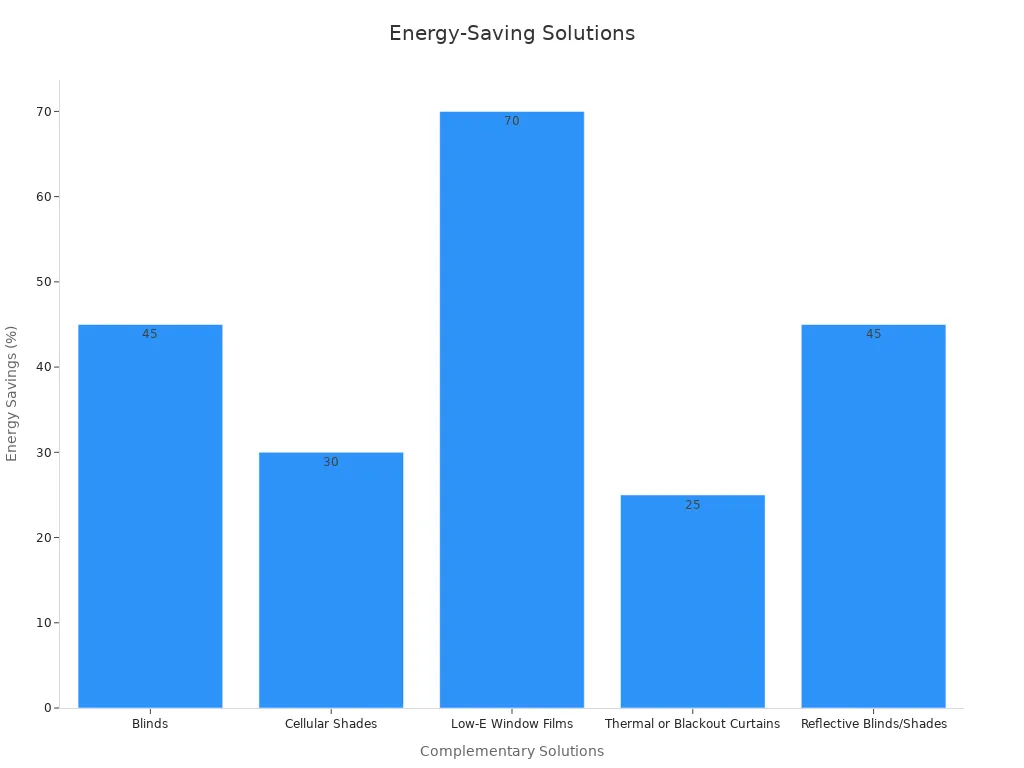
Experts say blinds with shiny coatings can reflect up to 95% of the sun’s energy. If you put blinds or shades close to the glass, you make a tight space that keeps your house cooler. The Department of Energy says the right window coverings can cut heat gain by up to 77%. That means your home feels cooler and your bills go down.
Smart Accessories
Smart accessories help your summer window coverings work even better. You can use smart thermostats, motorized blinds, or automatic curtain tracks. These let you control your window coverings with your phone or set them to move by themselves. For example, you can set your blinds to close when it is hot and open when it cools off.
Smart HVAC systems use sensors to check temperature, humidity, and if someone is in the room.
Machine learning lets these systems learn what you like, so your home always feels comfortable.
IoT lets your devices talk to each other for easy automation.
Real-time data helps you save energy and lower your bills.
Smart home technology is growing quickly. The smart HVAC control market was $9.67 billion in 2022 and could reach $17.89 billion by 2028. When you use smart accessories with your window coverings, your home stays cool, uses less energy, and feels great all summer.
You now have seven expert tips to help you pick summer curtains that keep your home cool and stylish. Choose the right fabric, color, and fit for each room this season. Try layering for extra comfort. Studies show that early changes, like using curtains before the hottest part of the season, make a big difference. Your actions matter more than the building itself. Start updating your windows now, and enjoy a cooler, more comfortable season at home.
FAQ
What fabric works best for summer curtains?
You want light, breathable fabrics like cotton, linen, or sheers. These let air move through your room and help keep things cool. Heavy fabrics trap heat, so skip those for summer.
How do I keep my room cool with curtains?
Pick light colors and close your curtains during the hottest part of the day. Layer sheers with thermal curtains for extra protection. Make sure your curtains cover the whole window for the best results.
Can I use blackout curtains in summer?
Yes! Blackout curtains block sunlight and heat. They work great in bedrooms or rooms with lots of sun. Just choose lighter colors if you want a cooler look.
Do smart curtains really help save energy?
Smart curtains can help you save energy. You can set them to close when the sun is strong and open when it cools down. This keeps your home comfortable and lowers your cooling bills.
Light Curtains or Dark Curtains for Small Spaces
The Ultimate Guide to Choosing Summer Curtains for a Cool & Stylish Home
Related Posts

Beyond the Fabric: The Ultimate Guide to Curtain Care, Health, and Style

The Sleep Sanctuary Guide: Why Custom Blackout Curtains Are the Best Investment for Your Health (and Style)

High Impact: The Ultimate Guide to 2 Story Curtains for Your Home

The "Old Money" Aesthetic: How to Master Timeless Luxury with Velvet Curtains

The Ultimate Guide to High Ceiling Curtains: Elevate Your Tall Windows with Drama and Style

High Ceiling Curtains: 7 Design Secrets to Transform Your Tall Windows

High Ceiling Curtains: How to Choose, Style, and Elevate Tall Spaces (2025 Guide)


