

















High Ceiling Curtains: How to Choose, Style, and Elevate Tall Spaces (2026 Guide)

High ceilings are a dream — they make a home feel grand, airy, and luxurious. But when it comes to decorating them, especially choosing high ceiling curtains, many homeowners feel overwhelmed. Extra-tall windows require more strategic styling, different materials, and thoughtful installation techniques to make the room feel balanced and inviting.
This comprehensive guide walks you through everything you need to know about curtains for high ceilings — from measurements to design styles, fabric suggestions to mounting height — so your tall space becomes a breathtaking focal point.
If your space needs curtains longer than standard 96" or 108" panels, consider Freshine’s custom extra long drapes and curtains for high ceilings. They are made for tall windows, two-story living rooms, and large glass walls where standard curtain lengths often fall short.
What Are High Ceiling Curtains?
High ceiling curtains are extra-long window treatments designed for rooms with ceilings ranging from 10 to 20+ feet. They are typically:
-
Longer in length (120–160+ inches)
-
Heavier or more structured for visual impact
-
Installed higher than standard curtains to emphasize vertical height
-
Tailored to large-scale architecture
In interior design, curtains not only soften tall walls but also influence how spacious, cozy, or elegant the room feels.
Why High Ceiling Curtains Matter
High ceilings provide incredible design potential — and curtains are one of the most powerful tools to shape that look.
According to environmental psychology studies, vertical elements influence spatial perception, making ceilings appear even taller and creating a sense of visual harmony.
High ceiling curtains help to:
-
Balance the room’s proportions
-
Reduce echo common in tall rooms
-
Add warmth and softness
-
Frame large windows beautifully
-
Improve natural light control
When done right, they transform a tall space from cavernous to cozy-luxurious.
⭐️ How to Choose Curtains for High Ceilings
Below are the essential design principles for selecting the perfect high-ceiling curtains.
1. Measure the Full Height (and Do It Twice)
For a professional look, accurate measurement is non-negotiable.
Standard curtain lengths for tall ceilings
| Ceiling Height | Recommended Curtain Length |
|---|---|
| 8–10 ft | 96–118 in (96" standard for 8 ft; 116–118" for a clean float at 10 ft) |
| 10–12 ft | 120–132 in |
| 12–15 ft | 144–160 in |
| 15–20 ft | Custom lengths required |
Recommended Freshine options for high ceilings:
- For soft light filtering and a relaxed linen look, choose Amara’s extra long linen drapes for high ceilings. They work well in airy living rooms, two-story spaces, and large windows.
- For a broader selection of styles, shop Freshine’s custom extra long drapes for high ceilings and tall windows.
- For bedrooms or media rooms, choose extra long blackout drapes for tall windows.
- For a softer layered look, choose extra long sheer curtains for high ceilings.
Pro Tip:
Always aim for curtains that kiss the floor, float about ½ inch above it, or pool lightly by 1–2 inches for elegance. If you hang with rings or clips, subtract 1–1.5 inches for their drop; if you’re planning a puddle, add 2–4 inches.
For the full step-by-step process (width, fullness, and stack-back math included), follow our floor to ceiling curtains measuring guide.
2. Mount the Curtain Rod Close to the Ceiling
One of the biggest mistakes homeowners make is hanging the rod too low.
For high ceilings:
-
Mount rods 4–6 inches below the crown molding
-
If there’s no molding, mount as close to the ceiling as possible
-
Choose a rod at least 1.25–1.5" in diameter — finished floor-to-ceiling panels can weigh 20–50 lbs
-
Add a support bracket every 30–36 inches of span to prevent bowing
This visually extends the height and creates a dramatic, luxurious look.
3. Choose Heavier Fabrics for Visual Balance
Tall walls need fabric with weight, texture, and presence.
Best fabric options:
-
Linen blend — elegant, breezy, upscale
-
Velvet — rich, dramatic, excellent for acoustics
-
Twill or canvas — structured and modern
-
Sheer layered with blackout lining — softens the space
Very lightweight curtains alone often look “lost” in tall rooms unless layered.
4. Go Wider Than the Window
To maintain proportion, make sure the curtain panels are extra wide.
Use the 2×–2.5× fullness rule:
Curtains should total twice to two-and-a-half times the width of the window.
This prevents the fabric from looking thin or underwhelming.
5. Use Double or Triple Curtain Rods (Highly Recommended)
Layering adds depth — especially important in tall spaces.
Ideal layering combinations:
-
Sheer + Linen
-
Sheer + Velvet
-
Blackout liner + Decorative panel
Layers soften the acoustics and introduce texture without overwhelming the room.
6. Pick the Right Heading Style
On long drops, the header does more work than you’d think:
-
Pinch pleat — the designer standard; structured folds that hold their shape over a long drop.
-
Ripple fold on a track — the modern architect’s choice; glides effortlessly on ceiling tracks and pairs perfectly with motorization.
-
Grommet — fine for standard heights, but designers usually avoid it above ~10 ft: the look reads casual and the rings can rattle on tall, heavy panels.
🎨 Design Styles for High Ceiling Curtains
1. Modern Minimalist
-
Floor-to-ceiling sheer white curtains
-
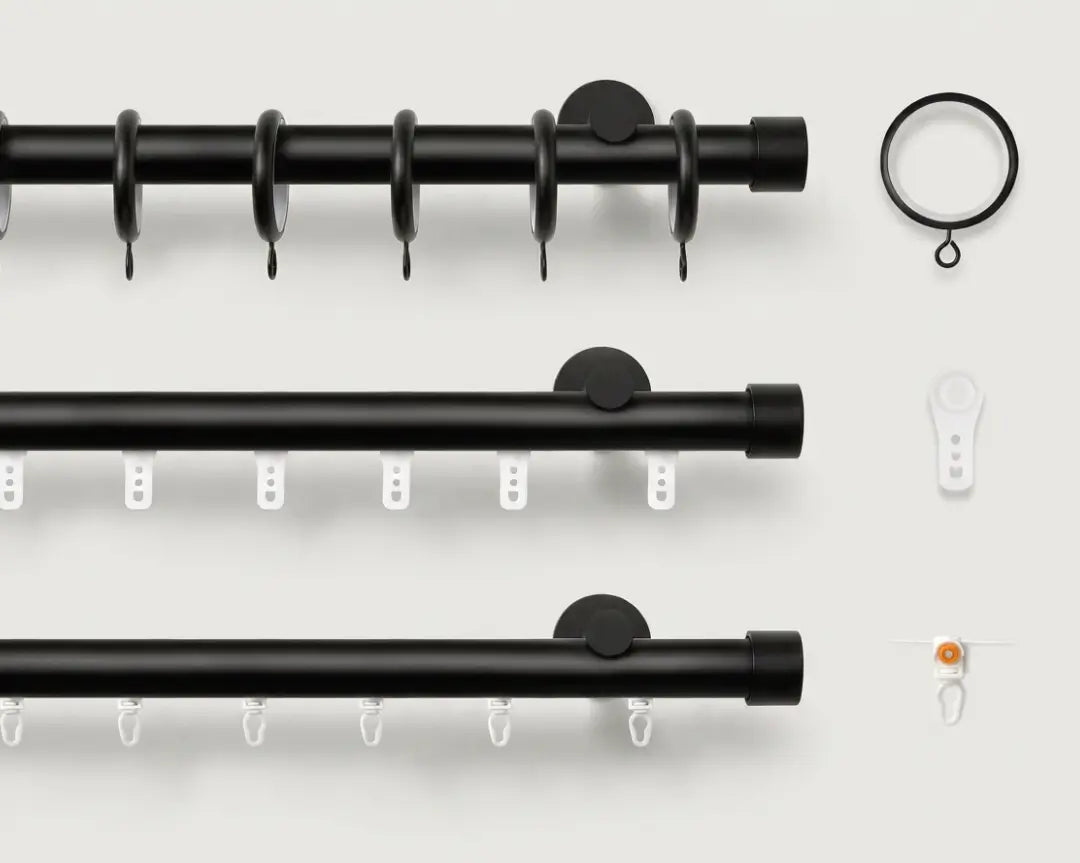
Slim black or brass curtain rod
-
Works beautifully with 12–20 ft ceilings
Creates a clean, airy vertical effect.
2. Classic Elegance
-
Heavy velvet or lined drapery
-
Deep jewel tones or warm neutrals
-
Decorative finials and thick rods
Perfect for formal living rooms or traditional homes.
3. Coastal or Relaxed Farmhouse
-
Textured linen curtains
-
Soft neutrals (beige, oatmeal, driftwood gray)
-
Natural wooden rods or matte metal
Adds warmth and an approachable charm.
4. Industrial Loft Style
-
Extra-long sheer panels
-
Steel or matte black rods
-
Layered textures for softness against concrete or brick walls
Complements tall loft windows beautifully.
🛠️ Installation Tips for a Perfect Look
✔ Use ceiling-mounted tracks for ultra-tall spaces
This creates a seamless, hotel-like luxury effect.
✔ Consider motorized curtain systems
Especially for windows over 12–15 feet high — see our guide to motorized curtains for two-story windows.
✔ Avoid busy patterns
In very tall rooms, simple textures and solid colors look more cohesive.
✔ Always steam or press curtains after installation
Extra-long curtains wrinkle easily, and crisp lines matter.
🏠 High Ceiling Curtain Ideas for Every Room
Living Room
-
Use layered sheers to soften large window walls
-
Add warm neutrals to make tall ceilings feel cozy
Dressing a double-height great room? Here’s our complete guide to 2-story curtains.
Bedroom
-
Blackout fabric is essential
-
Hang curtains beyond the window width for better sleep quality
Dining Room
-
Choose elegant linens or velvets
-
Add dramatic pooling for luxury
Entryway or Foyer
-
Go with statement-height curtains
-
Keep colors neutral to maintain brightness
Common Questions About High Ceiling Curtains
Do high ceilings always need long curtains?
Not always — but floor-to-ceiling curtains look the most balanced and luxurious.
Should I use blinds or curtains?
You can use both. Blinds offer control, while curtains add softness and style.
Are motorized curtains worth it?
Yes, especially for ceilings above 14 feet.
What color works best?
Neutrals, soft earth tones, and warm whites help harmonize tall vertical spaces.
Are extra long drapes good for high ceilings?
Yes. Extra long drapes are one of the best options for high ceilings because they create a continuous vertical line from near the ceiling to the floor. This makes tall rooms feel more balanced and intentional.
What length curtains do I need for high ceilings?
For 10–12 ft ceilings, many rooms need 120"–132" curtains. For 12–15 ft ceilings, 144"–160" is often more appropriate. For 15–20 ft ceilings, custom extra long curtains are usually required. For 10 ft ceilings specifically, 116–118 inches gives a clean float; choose 120 inches if you want the fabric to kiss or gently puddle.
Where can I buy extra long curtains for high ceilings?
Freshine offers custom extra long curtains and drapes for high ceilings, tall windows, two-story living rooms, and large windows in linen, sheer, blackout, velvet, and light-filtering styles.
How do I clean curtains that are 12+ feet high?
Vacuum monthly with an extension wand and brush attachment, and steam in place to release creases. Lined or interlined panels are best taken down once a year for professional cleaning — a motorized track makes lowering and rehanging far easier.
Can I use tension rods for high ceilings?
No — tension rods aren’t rated for the weight or span of extra-long drapery. Use wall-mounted rods with support brackets every 30–36 inches, or a ceiling-mounted track.
🌟 Final Thoughts
High ceiling curtains are more than window coverings — they’re architectural elements that shape the mood, balance the proportions, and elevate the luxury of your home. With the right measurements, fabrics, and installation choices, your tall space can feel warm, elegant, and beautifully intentional.
If you’re redesigning a living room, bedroom, or grand entryway, the right high-ceiling curtains will transform your entire atmosphere.