















100% Blackout Linen Curtains: Ultimate Guide for Extra‑Wide Bedrooms
100% Blackout Linen Curtains: Ultimate Guide for Extra‑Wide Bedrooms
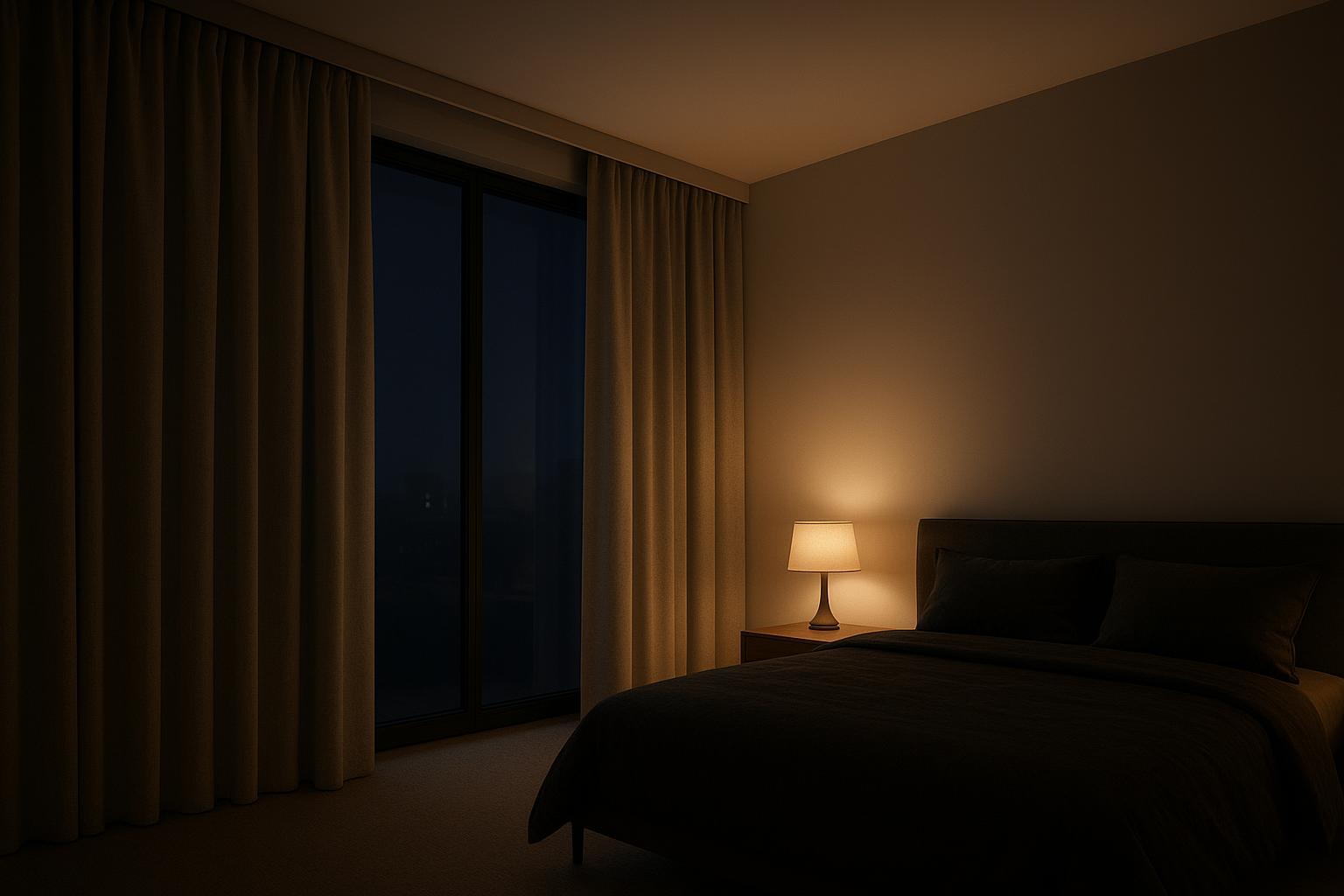
When you’re staring down the glow of streetlights and neighbor windows, a bedroom that’s truly dark can feel out of reach—especially if you have an extra‑wide span of glass. The goal of this guide is simple: show you how to achieve total darkness, meaningful thermal comfort, and reliable privacy with 100% blackout linen curtains on extra‑wide windows, without giving up the natural look and hand of linen. Here’s the deal: “true blackout” in a real room isn’t just about fabric claims. It’s a system—fabric + lining + fullness + overlap + returns + top/bottom sealing + hardware—that together drives ambient light at the bed toward the 1–3 lux range.
Why Total Darkness Matters for Sleep
Research in recent years consistently shows that nighttime light disrupts cardiometabolic rest and circadian signals. In a randomized lab study (2022), sleeping one night with moderate ambient light around 100 lux increased heart rate, shifted sympathovagal balance, and raised next‑morning insulin resistance compared to dim light conditions. The authors concluded that dark sleep environments better preserve overnight recovery; practically, aim for ≤1–3 lux at the mattress head. See the evidence in Mason et al., 2022, reported in the Proceedings of the National Academy of Sciences, summarized in the university press narrative and primary article: Light exposure during sleep impairs cardiometabolic function (PNAS, 2022).
Large cohort analyses reinforce the picture. In a 2024 prospective study of more than 88,000 adults, the pattern of brighter nights and darker days predicted higher all‑cause and cardiometabolic mortality risk—another signal that minimizing nighttime light exposure is wise for long‑term health. See Brighter nights and darker days predict higher mortality risk (PNAS, 2024). For practical bedroom guidance, reputable sleep resources emphasize blackout strategies to limit light pollution; the Sleep Foundation’s overview of light and sleep lays out accessible steps.
Bottom line: especially in urban settings with streetlights and close neighbor sightlines, drive ambient bedroom light down to the low single‑digit lux range. You’ll do that by sealing edges, centering overlap, and managing the top and bottom gaps—paired to blackout liners behind linen fabric.
How 100% Blackout Linen Curtains Work (and Why Linen)
Linen has a distinctive, natural texture and drape that many homeowners love in bedrooms. On its own, most linen weaves transmit some light. That’s fine for daytime diffusion—but at night you need a blackout system behind the linen face. Two architectures work well:
A sewn‑in 100% blackout lining oriented toward the glass behind the linen face fabric. Good for a minimal, single‑layer look.
A multi‑layer stack: linen face + separate blackout liner (and optionally a daytime sheer). Flexible for different daylight/privacy scenarios.
The fabric choice sets the aesthetic; the lining and system design deliver darkness. To make 100% blackout linen curtains perform on extra‑wide spans, you must specify fullness, center overlap, side returns, and top/bottom seals. We’ll cover those parameters next.
System Architectures That Deliver True Blackout for Extra‑Wide Windows
Extra‑wide windows—think 10–20 feet or a wall‑of‑glass—create challenges: long spans, heavier panels, and more opportunities for light leaks. Effective blackout systems focus on:
Full coverage width and stack‑back. Extend the rod or track beyond the glass 6–12 inches per side so the panels can clear the opening when you want daylight. At night, you’ll have fabric beyond the jambs to block edge glow.
Center overlap. On tracks, use master carriers to create a 4–8 inch overlap where panels meet. That closes the center seam—often the biggest leak on wide windows.
Side returns. Either wraparound rods or track returns of 3–6 inches pull fabric back toward the wall, sealing the vertical edges.
Top seal. A ceiling‑mounted track with a fascia/cornice or recessed mount blocks upward spill at the header.
Bottom seal. Floor‑length hems with minimal float (about ½–1 inch) and weights reduce under‑curtain glow. Sill‑length installs benefit from sill seals.
Single‑panel sewn blackout is clean and efficient. Layered systems add flexibility for daytime use and can improve thermal feel by adding micro‑air gaps. If your room must be extremely dark (e.g., a light‑sensitive sleeper), consider side U‑channels or magnetic strips adapted from shade systems to pull the fabric to the frame at night.
Measurement & Spec Workbook for Extra‑Wide Spans
Measuring extra‑wide spans is mechanical, not mysterious. Record widths and heights at three points (left/center/right) and use the largest values. Then calculate finished specs with the following workbook.
Fullness: For ripplefold/wave systems, select around 180–300% fullness; 200% is a practical starting point. For pinch‑pleat headers, 150–250% depending on pleat depth and fabric hand.
Stack‑back: Plan extensions of 6–12 inches beyond each jamb. In very wide setups, allocate about 15–20% of window width per side so panels can stack off glass when open.
Center overlap: 4–8 inches using master carriers (tracks) or panel overlap (rods).
Side returns: 3–6 inches of return to the wall via wraparound rods or track returns.
Top seal: Ceiling mount the track; add fascia/cornice or recess the track 4–12 inches above the frame.
Bottom seal: Hem float of ½–1 inch with weights.
Below is a compact worksheet table you can fill using your measurements.
Parameter |
Typical Range |
Your Value |
|---|---|---|
Glass width |
Measure at three points; use the largest |
|
Track length (glass + extensions) |
+12–24 in (6–12 in per side) |
|
Fullness (fabric vs. track) |
180–300% (ripplefold); 150–250% (pleat) |
|
Center overlap |
4–8 in |
|
Side returns to wall |
3–6 in |
|
Mount height above frame |
4–12 in |
|
Hem float (floor installs) |
½–1 in |
If you prefer step‑by‑step visuals and definitions, the Curtain Guide page explains headers, fullness, and hardware options in plain language.
Hardware Playbook for Wide, Heavy Curtains
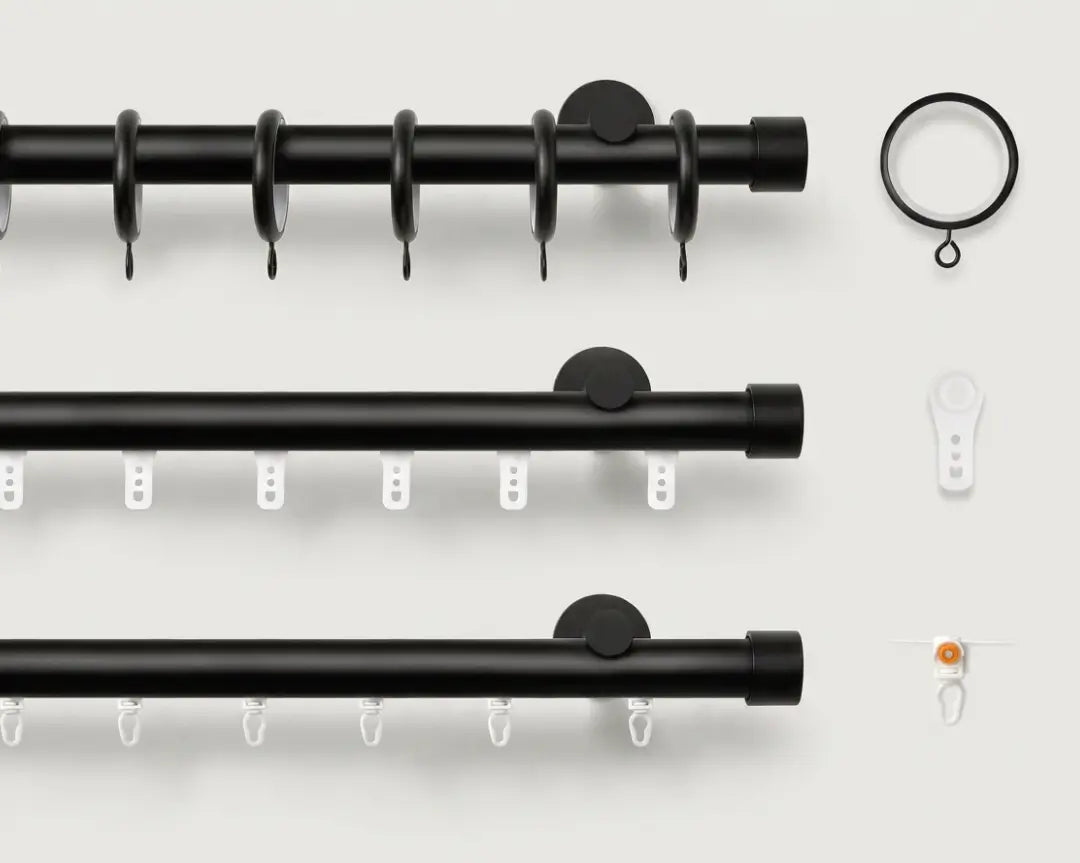
Wide spans need predictable tracking and controlled overlap. In residential/contract installations, aluminum glider tracks and engineered rods are common. For hand‑drawn systems, many installers rely on proven glider tracks; Forest’s KS manual track is widely specified for medium‑weight drapes and can be bent or run straight across long spans. See the Forest KS data sheet (technical overview). Design systems in the DS/DS‑XL family support wave/ripple headers with accessory carriers; review the DS series brochure if you favor that aesthetic.
If you need motorization (convenience, child safety, or very heavy panels), Somfy’s Glydea line provides published load capacities in architectural references. Typical single tracks manage roughly 35–60 kg across about 30–36 feet; tandem setups can carry up to ~120 kg across long spans. Always confirm your exact model’s load chart. See Somfy’s curtain databook (2023) and Somfy’s Architectural Resources Binder (2025).
Header choice matters for blackout consistency. Pinch‑pleat and ripplefold/wave headers produce predictable stacking and allow master carriers for center overlap. Grommets can work, but only with wraparound rods that include sufficient returns; otherwise you’ll fight edge leaks.
Finally, plan bracket spacing and substrate anchors with care. On wide, heavy systems, ceiling mounts spread loads evenly and allow clean fascias that seal top glow. If you wall‑mount, choose deep projection brackets to support returns.
Liner Technologies Compared
A linen face fabric paired to a blackout liner is the heart of 100% blackout linen curtains. Three common liner technologies appear in residential drapery:
Triple‑weave blackout (often polyester core). Frequently rated near‑total light blocking under lab conditions; durable hand and fewer pinholes. Performance in a room depends on sealing the system.
Foam‑backed blackout liners. High light blocking with a cushioned feel and modest thermal effect via micro‑air gaps. Handle with care to avoid heat damage.
Coated blackout liners (acrylic/PVC). Strong blocking when coatings are intact; can stiffen over time. Often dry‑clean only.
If indoor air quality matters, look for OEKO‑TEX® Standard 100 certified fabrics and liners. For a practical overview of blackout materials by use case, see Freshine’s neutral comparison of fabric types in Best Fabric for Blackout Curtains.
Installation Techniques to Block Light Leaks
Sealing matters as much as fabric choice. Focus on these techniques:
Wraparound hardware and returns. Use rods that return to the wall or tracks with end caps and returns. Aim for 3–6 inches so the fabric curves back and blocks edge glow.
Top fascia or cornice. A simple fascia over a ceiling‑mounted track hides the header gap and prevents upward spill.
Magnetic or Velcro edge strips. Adapt magnetic tape or hook‑and‑loop strips to draw fabric to the frame. This is effective for extreme blackout needs.
Weighted hems and minimal float. Add chain or bar weights; keep hem float to ½–1 inch on floor‑length installations.
Manufacturer accessory catalogs (e.g., Forest and Somfy) support these methods with returns, end stops, and carrier options. For hardware selection basics, see Freshine’s curtain hardware guide.
Performance Validation: Lux and Thermal Checks You Can Do
A simple validation routine proves your setup achieves near‑zero light:
Daylight close test. In daytime, close the curtains fully. Stand at the bed and let your eyes adapt for 30–60 seconds. Look for glow at edges, center, top, and bottom.
Flashlight edge test. At night, have a helper shine a small flashlight along the edges while you stand at the bed. Any visible beam or glow marks a gap to remediate with more overlap or returns.
Lux measurement. Use a basic lux meter app or device at the pillow level. Aim for ≤1–3 lux. If readings are higher, add side channels or extend returns.
Thermal feel is also noticeable: lined curtains reduce radiant chill near glass and improve comfort. For urban readers seeking more context on light pollution and blackout strategies, this Freshine deep dive—Escape the urban glow: blackout curtains for apartments—shows practical patterns.
Case Studies: Three Extra‑Wide Bedroom Configurations
Urban high‑rise bedroom (12‑foot window). The homeowner battled sodium streetlight glow. Solution: ceiling‑mounted glider track extended 10 inches beyond each jamb; ripplefold at 200% fullness; linen face with sewn‑in blackout liner; master carriers set to 6‑inch center overlap; 4‑inch side returns with magnetic tape discretely mounted to the frame. Result: lux at pillow down to 2–3; silhouette privacy ensured.
Wall‑of‑glass master suite (18‑foot span). A contemporary space with minimal trim. Solution: recessed ceiling track with fascia; two panels meeting at center, 8‑inch master overlap; pinch‑pleat header at ~180% fullness due to heavy linen hand; weighted hem with ½‑inch float; side U‑channels installed for nighttime only. Result: measurable darkness (1–2 lux); warmer near‑window feel during winter evenings.
Rental conversion (10‑foot window, limited drilling). Solution: wraparound rod with deep projection brackets anchored in existing studs; grommet header but returned to wall with 5‑inch returns; foam‑backed blackout liner behind linen; adhesive sill seal at bottom edge. Result: low‑cost retrofit, substantial reduction in glow; privacy improved without major modifications.
Alternatives and Tradeoffs
Blackout roller shades with side channels are excellent for edge sealing and pair well with a curtain for aesthetics. Cellular shades (blackout) improve thermal comfort; add side channels for true blackout. Dual‑layer systems—daytime sheer and nighttime blackout curtain—balance light and privacy. For minimal setups (e.g., temporary housing), sleep masks are a personal workaround, though they don’t address room privacy.
Care, Safety, and Longevity
Linen care depends on the fabric and liner pairing: many blackout liners are dry‑clean only, while some triple‑weaves and foam‑backed options allow gentle machine care. Avoid high heat on foam‑backed liners. If you’re outfitting commercial or public spaces, consult flame propagation standards; NFPA 701 is commonly referenced for textiles and films, though it’s typically not mandated in one‑ and two‑family dwellings.
For window coverings with cords (more relevant to shades), the safest route is cordless. The Consumer Product Safety Commission’s guidance and enforcement continue to highlight hazards from operating cords; learn more at the CPSC Go Cordless hub.
Next Steps & Neutral Freshine Example
Disclosure: Freshine Curtains is our product. To configure a clean, evidence‑aligned setup for an extra‑wide bedroom, a practical path is a linen face fabric with a sewn‑in blackout liner on a ceiling‑mounted glider track, ripplefold at ~200% fullness, master carriers set for a 6‑inch center overlap, and wraparound returns of 4–6 inches. For materials browsing, start with Freshine’s Linen Curtains collection and the Blackout Curtains collection; if you need a refresher on measurement terminology while you plan, check the Curtain Guide page. When your installation is complete, run the daylight close test and a quick lux check at the pillow—if you’re above 3 lux, extend returns or add a magnetic edge strip.
If you prefer a multi‑step overview from fabric selection through installation, see the process essentials in Step‑by‑Step Design: Custom Curtains, Fabric to Installation.
Frequently Asked Questions
What’s the difference between “blackout” and “room darkening”? Blackout aims for near‑zero light transmission; room darkening reduces light but won’t seal edges or achieve very low lux. For definitions and practical selection, see Freshine’s overview: Blackout vs. room darkening vs. sheer.
Will ripplefold or pinch‑pleat perform better for blackout? Both can achieve strong results if you specify adequate fullness, master carriers for overlap, and returns. Ripplefold is sleek and consistent; pinch‑pleat can control heavy linen beautifully.
Do I need side channels? Not always. If you live under bright streetlights or have severe light sensitivity, they help ensure edge sealing. Many bedrooms reach ≤3 lux without channels by using returns, overlap, and a top fascia.