














The Finishing Touch: Your Ultimate Guide to Choosing Curtain Hardware

You’ve done it. After careful consideration, you’ve selected the perfect curtains. The color is just right, the fabric feels luxurious, and you can already envision how they’ll transform your space. But before you can declare the project complete, there’s one final, crucial step: choosing the hardware.
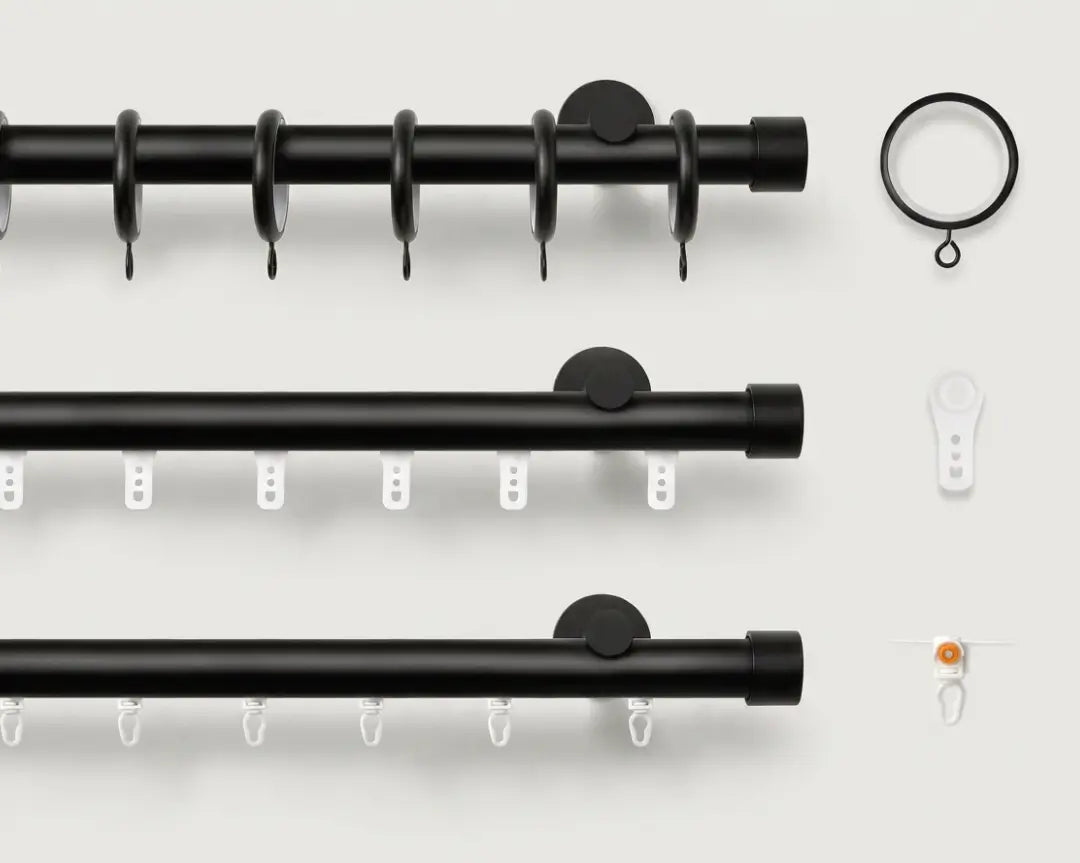
This is the part of the process many people rush, grabbing the first rod they see. But that’s like buying a masterpiece painting and putting it in a cheap, flimsy frame. Curtain hardware—the rods, finials, rings, and brackets—is not just a functional necessity; it’s a critical design element that provides the structure and style to properly showcase your new curtains.
The right hardware ensures your curtains hang beautifully, operate smoothly, and complement your decor. The wrong hardware can lead to sagging rods, snagged fabric, and a look that feels unfinished.
At Freshinelife.com, we believe every detail matters. This guide will demystify the world of curtain hardware, giving you the confidence to select every component for a sturdy, stylish, and flawlessly professional installation.
Part 1: The Foundation - Choosing the Right Curtain Rod
The curtain rod is the backbone of your window treatment. Its primary job is to support the weight of your curtains without bowing or bending.
A. Strength and Scale: Diameter Matters
The diameter of the rod is your first consideration. It’s not just about looks; it’s about strength.
-
Standard Diameters (1" to 1 1/8"): This is the most common size and is perfect for standard curtains, including most light-filtering, sheer, and unlined cotton or linen panels.
-
Thicker Diameters (1 1/4" and up): If you've chosen heavy, luxurious drapes like our lined blackout curtains or plush velvet drapes, you need a thicker, more substantial rod. A wider diameter prevents sagging over long spans and provides the appropriate visual weight for heavy fabrics.
B. Functionality: Single, Double, and Specialty Rods
-
Single Rod: The standard choice for hanging a single pair of curtain panels.
-
Double Rod: The professional's secret weapon for layering. This setup features two rods on a single bracket, allowing you to hang a layer of sheer curtains on the back rod for daytime privacy and a layer of opaque drapes on the front rod for nighttime.
-
Wraparound (or Return) Rod: This rod curves at the ends to mount directly to the wall. It’s the ultimate choice for blackout curtains, as it allows the panel to wrap around the side of the window, blocking nearly all side light for a true room-darkening effect.
-
Tension Rod: A damage-free solution perfect for renters or delicate walls. It uses a spring mechanism to hold itself in place inside the window frame. Best for very lightweight curtains in smaller windows.
Part 2: The Style Statement - Finding Your Perfect Finials
Finials are the decorative end caps of your curtain rod. They are the primary style statement of your hardware and your chance to inject personality. The key is to match the finial's design to your room's overall aesthetic.
-
For Modern & Minimalist Spaces: Look for clean, simple shapes like a small ball, a flat end cap, or a sleek cylinder. Finishes like matte black, brushed nickel, or silver work perfectly.
-
For Farmhouse & Rustic Decor: Choose simple, understated finials in natural materials like distressed wood or in hardy finishes like oil-rubbed bronze or matte black.
-
For Traditional & Glamorous Rooms: This is where you can be more ornate. Crystal balls, carved wooden acorns, or decorative fleur-de-lis shapes in finishes like antique brass, polished nickel, or gold will complement a classic, luxurious style.
Part 3: The Connection - Headers, Rings, and Rings
How your curtain attaches to the rod affects both its look and its function. The "header" is the top part of the curtain panel.
-
Rod Pocket: The curtain has a sewn channel that the rod slides through. Pro: A classic, gathered look. Con: Can be difficult to slide open and closed.
-
Grommet Top: Metal rings are embedded in the fabric. Pro: Creates deep, modern-looking folds and glides effortlessly along the rod.
-
Back Tab: Loops on the back of the panel create a clean, "floating" look with soft pleats.
-
Pinch Pleat: A traditional, tailored header that creates formal, structured folds. This style requires curtain rings with clips or small pins to attach to the rod.
A Note on Rings: For any header style besides grommet, adding clip-on curtain rings will dramatically improve how smoothly your curtains open and close.
Part 4: The Unsung Heroes - Brackets & Accessories
These small pieces play a huge role in the success of your installation.
-
Brackets: These are the hardware pieces that attach the rod to the wall. You must use enough of them to prevent sagging. The rule of thumb is one bracket on each end and at least one center support bracket for any rod over 60 inches long. For very wide windows, you may need two or more center supports.
-
Tie-Backs and Holdbacks: These are used to hold the curtain panels open. A tie-back is typically made of fabric or rope, while a holdback is a decorative metal or wood hook mounted to the wall. They are a functional way to let in light and can add another layer of decorative elegance.
Final Step: Choosing Your Finish
When selecting a finish (e.g., brass, black, nickel, bronze), look at the other hardware in your room. Matching your curtain rod to your light fixtures, cabinet pulls, or door knobs is a surefire way to create a cohesive, professionally designed look.
Hardware Isn't an Afterthought
Your curtains deserve a supporting cast that is just as beautiful and hardworking as they are. By choosing your hardware with the same care and intention as your fabrics, you ensure a finished look that is polished, professional, and built to last.
Ready to complete your vision? Explore our comprehensive collection of high-quality curtain rods and accessories at Freshinelife.com.
Frequently Asked Questions (FAQ)
Topic-Related Questions
1. How far should a curtain rod extend past the window frame?
For a look that maximizes light and makes your window appear larger, the rod should extend 3 to 10 inches beyond the frame on each side. The wider you go, the more space you'll have to stack the curtains completely off the glass when they're open.
2. How many brackets do I need for my curtain rod?
Every rod needs at least two brackets, one at each end. For any rod spanning more than 60 inches, you absolutely need at least one center support bracket to prevent sagging. For very long spans (over 120 inches), two or more evenly spaced center brackets are recommended.
3. What is a "return" on a curtain rod?
The "return" is the distance from the front of the rod to the wall. On a standard rod, this is determined by the bracket. On a wraparound rod, the return is the curved part at the end that allows the curtain to wrap back and touch the wall, which is excellent for blocking light.
4. Can I mix and match hardware finishes in one room?
Yes, but do it with intention. A popular design strategy is to stick to two, or at most three, metal finishes in a room. For example, if you have chrome faucets, using matte black for your curtain rods and cabinet pulls can create a beautiful, modern contrast.
5. Are tension rods strong enough?
Tension rods are great for damage-free hanging but are only designed for lightweight curtains in small windows (like a bathroom or small bedroom). They are not strong enough to support heavy drapes or to span a large window, as they will sag or fall.
Brand-Related Questions
6. Do you have bamboo shades?
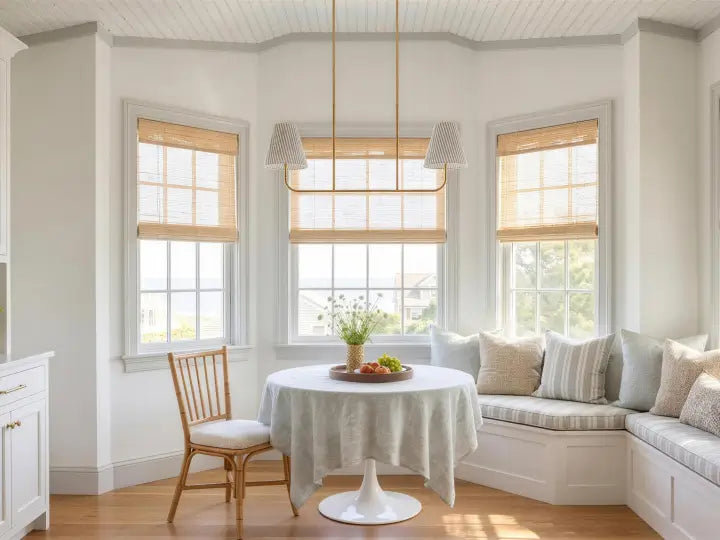
A: Yes, we do. Our collection includes beautiful woven bamboo shades, also known as woven wood shades. They are a fantastic way to bring a natural, organic texture into your home, perfect for creating a relaxed, coastal, or bohemian atmosphere.
7. What kind of wood are your wood blinds made of?
A: Our premium wood blinds are crafted from 100% North American Basswood. We chose Basswood specifically for its superior quality; it's a lightweight yet strong hardwood that resists warping and has a beautiful, fine grain that takes stains and paints evenly, ensuring a rich and consistent finish.
8. Do you offer free fabric samples?
A: Absolutely. We know how important it is to see colors and feel textures in your own home's lighting. At Freshinelife.com, you can order free fabric swatches from our curtain, shade, and blind collections to help you make your decision with complete confidence.
9. What are fabric swatches?
A: Fabric swatches are small, physical samples of the materials used for our products. Ordering swatches allows you to see the true color, texture, and weight of the fabric before you buy. You can compare them to your wall colors, furniture, and flooring to ensure a perfect match.
10. What materials are your curtains made of?
A: We pride ourselves on offering a wide range of high-quality materials to suit any style and need. Our primary collections at Freshinelife.com feature curtains made from beautiful, natural Linen; rich and insulating Velvet; soft and durable Cotton; as well as specially engineered, multi-layered fabrics for our Thermal and Blackout collections. We also carry a variety of lightweight sheers and practical, easy-care polyester blends.