




















Curtains for Home Theaters & Media Rooms: The Complete, Practical Guide (2025)

If you’re building or upgrading a home theater or media room, speakers, screens, and seating get most of the attention. But one of the most powerful, cost-effective changes you can make is also one of the simplest: the right curtains. They control light, improve acoustics, add thermal performance, enhance privacy, and complete the look. Done right, curtains transform a room from “good enough” into truly immersive.
This guide explains exactly what to choose, how to measure, how curtains interact with acoustics and light, safety considerations, installation tips, and the best options to consider.
Why Curtains Matter in a Media Room
When you sit down to watch a movie, small things matter: stray glare off the screen, ambient noise from outside, or echoes from hard surfaces can ruin immersion. Curtains help in four major ways:
-
Light control and contrast — Blackout curtains reduce daylight and stray reflections so your projector or TV contrast remains deep.
-
Acoustic absorption — Heavy fabrics and layered curtains absorb mid-to-high frequency reflections, improving clarity and reducing flutter echoes (study).
-
Thermal comfort & energy — Lining and tight installation help keep a room at the right temperature so HVAC doesn’t fight the heat from gear (U.S. Department of Energy).
-
Safety & finish — Properly chosen, fire-rated fabrics and secure hardware keep high-traffic media rooms safe and polished (NFPA 701 standard).
Acoustic Basics — What Curtains Actually Change
Sound in a room reflects off hard surfaces. Curtains change two key acoustic parameters:
-
Absorption: Heavy curtains absorb mid and high frequencies, reducing reflections that cause “boxy” or “echoey” sound.
-
Blocking (transmission loss): Curtains add mass and layering which helps reduce some incoming noise (street or neighbor sounds), though they cannot replace structural soundproofing.
Design principle: Use curtains to treat reflections and to tight-seal windows. For bass control you’ll still need acoustic panels and bass traps; curtains help clarity and midrange intelligibility (Acoustics.org).
Curtain Types That Work Best in Home Theaters
1. Blackout / Lined Blackout Drapes
Essential for any room with windows. They dramatically reduce light and improve contrast for projectors and HDR displays.
Check out Freshinlife’s blackout collection for high-density options.
2. Heavy Velvet or Dense Woven Panels
Velvet and dense heavy weaves are excellent at absorbing mid-high frequencies and look luxurious.
Try Freshinlife’s Lyra velvet blackout drapes for rich theater aesthetics.
3. Multi-layer Acoustic Curtains
Curtains with acoustic liners or mass-loaded vinyl (MLV) inside provide both absorption and some noise blocking.
Learn more about sound-absorbing curtains.
4. Double-layer Systems (Sheer + Heavy)
Use a sheer layer for daytime privacy and a heavy blackout layer for viewing. The double-rod approach allows flexibility without sacrificing performance.
Light Control: Blackout Level, Seams, and Stack-back
For a true theater experience, light control is not just “how dark” — it’s also about how uniform and reflection-free the window area is.
-
Blackout rating: Look for full blackout lining or multi-layer constructions.
-
Overlap and hemming: Wide overlap beyond the frame (at least 6–12" each side) prevents side-glare.
-
Stack-back: Choose a rod system that allows curtains to stack outside the viewing area.
You can find blackout curtains with thermal lining here.
Safety: Flame Retardancy & Building Codes
Home theaters often use thick upholstery and textiles; flame-retardant fabrics and compliance matter.
-
Drapery textiles used in commercial theaters are subject to NFPA 701 testing.
-
Many residential installations also benefit from fire-retardant fabrics, especially in rooms with heavy electrical gear.
Ask Freshinlife about fire-retardant certifications if you’re planning a high-use media room.
Hardware & Mounting — Do This Right
Good fabric needs good hardware. Poor rods and brackets lead to sag, noise, and fabric misbehavior.
-
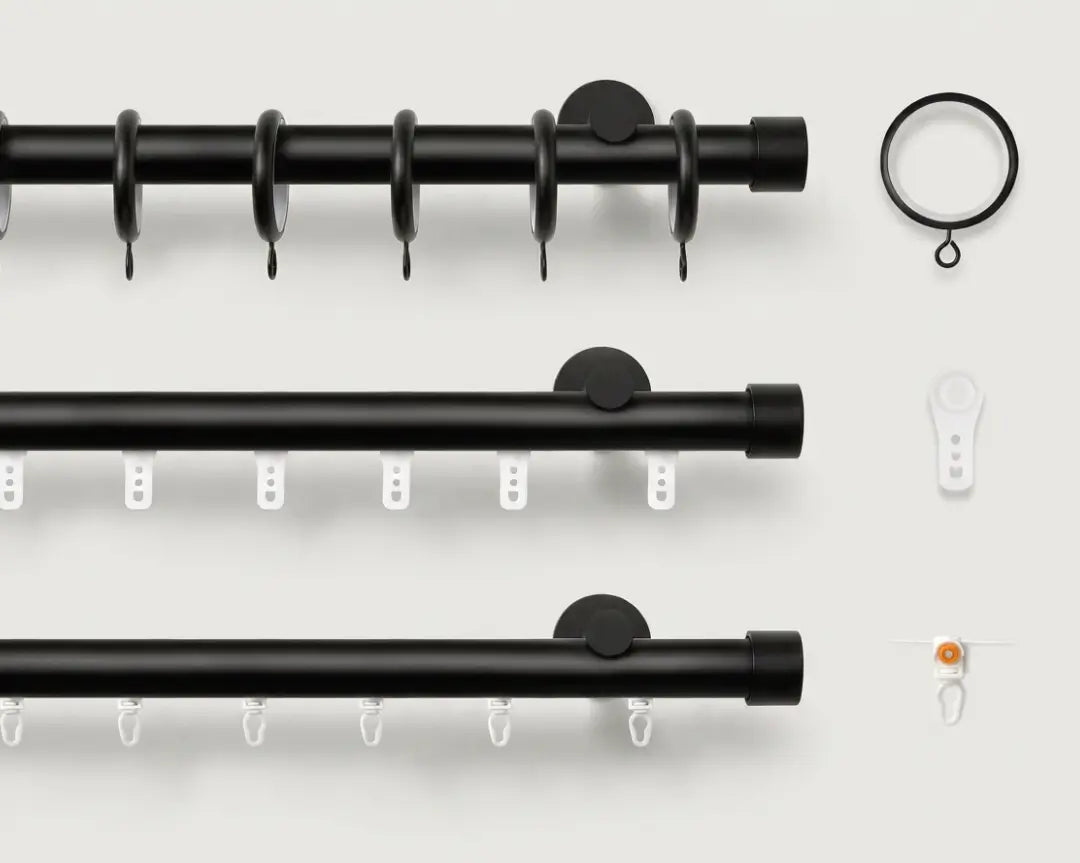
Track vs rod: For heavy curtains, use a robust track system or heavy-duty rod.
-
Ceiling mount vs wall mount: Ceiling-mounted tracks give full floor-to-ceiling coverage.
-
Motorized options: Motorized tracks integrate with smart home systems.
-
Acoustic isolation: Use felt or rubber pads behind brackets to reduce vibration transfer.
Freshinlife has a hardware & header style guide.
Integrating Curtains with AV & Smart Home Systems
A properly automated curtain becomes part of the viewing experience.
-
One-touch “movie mode”: Program curtains to close, lights to dim, and AV to start via Alexa or Google.
-
Sensor-driven actions: Sync curtains with ambient light sensors or sunrise/sunset schedules.
-
Dolby/THX guidance: Follow Dolby’s home theater setup guide for speaker layout so curtains don’t block speakers.
How to Measure and Plan for Acoustic Performance
-
Measure room dimensions — length, width, height.
-
Identify reflective surfaces — glass, bare walls, floors.
-
Decide curtain coverage — ceiling-to-floor and wall-to-wall gives best reflection control.
-
Choose curtain weight & lining accordingly.
-
Combine with room treatments — add panels at reflection points and bass traps in corners (Acoustics.org).
DIY vs Professional Installation: When to Call a Pro
DIY is fine if you’re using standard blackout curtains and a simple rod.
Hire a pro if:
-
Installing custom curved tracks
-
Mounting into concrete or ceiling
-
Want motorized integration
-
Using extremely heavy acoustic curtains
A professional ensures smooth operation, safe anchoring, and correct stack-back.
Maintenance & Cleaning Tips
-
Vacuum regularly with a soft brush to remove dust.
-
Spot clean per fabric instructions (many lined panels are dry-clean only).
-
Inspect hardware for loose brackets and squeaky tracks.
-
Rotate panels every few months to distribute sun fade evenly.
See Freshinlife’s curtain care guide for more tips.
FAQ
Q: Can curtains really improve sound quality in a media room?
A: Yes. While they won’t block bass, heavy curtains absorb mid and high frequencies and reduce echoes, improving clarity and immersion.
Q: Do blackout curtains save energy too?
A: Yes. The DOE confirms they help reduce heat loss in winter and heat gain in summer.
Q: Are flame-retardant curtains necessary at home?
A: If your media room has high electrical loads or is used by guests, flame-retardant curtains (NFPA 701 rated) are strongly recommended.
Q: Can I install theater curtains myself?
A: Yes, if they are light to medium weight. For heavy or motorized curtains, hire a pro.
Q: Will curtains block noise from neighbors?
A: They can reduce incoming noise slightly (around 4–9 dB) but won’t replace proper soundproofing.