



















Honeycomb Shades vs Thermal Curtains Insulation 2026

If your living room has a window wall or corner windows, you already know the evening chill finds every gap. The real question is simple: when the sun drops and the heat tries to escape, which keeps the room warmer—honeycomb (cellular) shades or floor-length thermal curtains? Here’s the practical, evidence-forward answer for 2026.
Honeycomb shades vs thermal curtains insulation verdict
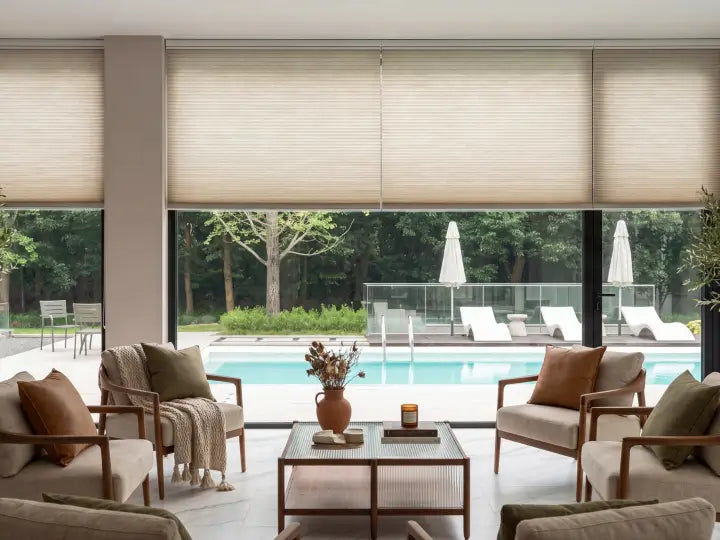
For maximum night-time insulation on big spans, double-cell cellular shades with side channels usually offer the tightest seal and best heat retention. Thermal curtains win on draft blocking by mass and can match or beat shades on very tall drops when installed with returns-to-wall and a floor “kiss.” The strongest choice for large living rooms is often a layered system—cellular shade for sealed air pockets plus a thermal drape for added mass and edge coverage.
-
Quick note on evidence: The AERC overview of cellular shades cites meaningful energy savings potential in rated products, and DOE guidance on window coverings explains how closed, well-fitted treatments reduce heat loss at night. Exact installed R-values vary by configuration and installation quality.
Side-by-side comparison for living rooms with big windows
|
Category |
Installed insulation (directional) |
Edge sealing options |
Daylight control |
Stack-back when open |
Install complexity |
Typical U.S. price range (Feb 2026 est.) |
Maintenance and durability |
Best for |
|---|---|---|---|---|---|---|---|---|
|
Double-cell cellular shade with side channels |
High when fully closed and sealed; performance depends on cell count and tracks |
Side channels or magnetic tracks reduce edge leakage |
Fine control, TDBU available |
Minimal, compact cassette |
Moderate; precise inside-mount depth needed |
Custom 60"×84" can vary widely by brand and options |
Light vacuum/brush; mechanisms often 5–10 yr warranties |
Maximum sealed night insulation on large spans |
|
Single-cell cellular shade |
Moderate to high when closed; lower than double-cell |
Optional side channels on some models |
Fine control, TDBU options common |
Very compact |
Moderate |
Custom pricing varies by fabric and lift system |
Easy care; cordless/motorized common |
Budget-conscious insulation with good daylight control |
|
Floor-length thermal drape with insulated liner and returns |
Moderate to high; improves with heavier fabric, liners, and proper sealing |
Returns-to-wall hardware and weighted hem reduce drafts |
Coarse on/off (open or closed) |
8–14" typical stack depending on fullness |
Moderate; rod with returns and proper brackets |
Per-panel costs vary by fabric and liner; custom widths affect total |
Often dry-clean; fabric longevity depends on UV exposure |
Design-forward warmth and acoustic comfort |
|
Thermal drape without dedicated thermal liner |
Moderate; depends on fabric weight and fullness |
Wraparound rod and floor-length “kiss” help |
Coarse on/off |
8–14" typical |
Easy to moderate |
Wide price range; easier to stage upgrades later |
Care depends on fabric |
Quick aesthetic upgrade with noticeable warmth |
|
Layered combo: cellular shade plus thermal drape |
Typically the strongest installed performance at night |
Shade seals edges; drape covers gaps and adds mass |
Use shade for daytime control; close drape at night |
Shade compact, drape stacks at sides |
Moderate to pro on large spans |
Higher upfront; can be staged over time |
Shade easy-care; drape needs periodic cleaning |
Flagship solution for window walls and corner windows |
Footnote: Installed results depend heavily on precise measuring, correct mounting depth, edge sealing (side channels or returns-to-wall), and fabric/liner choices. Pricing and availability change frequently by retailer, fabric, size, and options; confirm on official sites.
Best picks by scenario
-
Maximum sealed night insulation on large spans: Choose a double-cell cellular shade with side channels; add a thermal drape if budget allows for the best edge control and mass. See an example of feature sets on the Blinds.com double-cell cellular shade configuration page for how options like blackout fabrics and lift types are offered.
-
Balanced day and night use: Pick a top-down/bottom-up cellular shade for daylight while maintaining privacy, then close a thermal drape after dusk for an extra layer.
-
Renter-friendly minimal drilling: Tension- or adhesive-mount cellular shades can add insulation without holes; pair with a removable wraparound rod and lighter panels if allowed.
-
Design-first warmth and acoustics: Specify a floor-length thermal drape with insulated liner, returns-to-wall hardware, and a weighted hem for draft control and a plush look.
-
Budget-staged upgrades: Start with cellular (single- or double-cell as funds allow), then add a thermal liner or full drape later for a meaningful bump in night insulation.
Deep dive on insulation and sealing
Why do windows feel so cold at night? Heat escapes through conduction and—just as important—through convection at the edges. If air slips around a treatment, it short-circuits your insulation gains. That’s why sealing details matter as much as fabric choice.
-
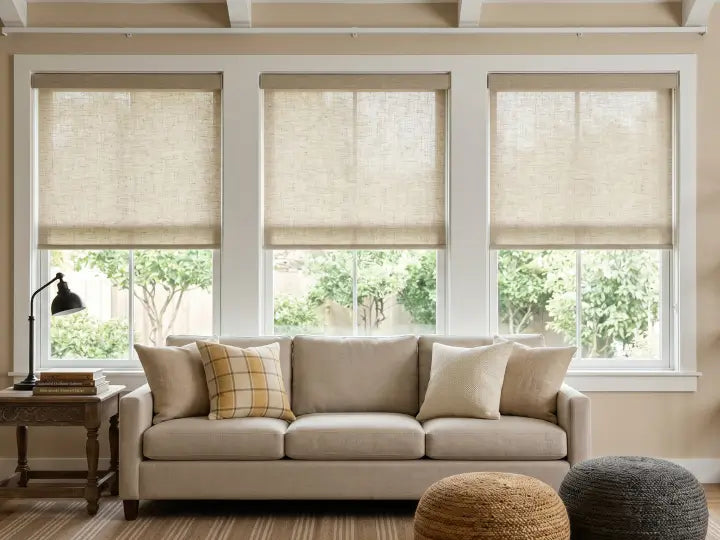
Cellular shades: Their pleated air pockets trap heat; double-cell models create more resistance. When you add side channels, you limit edge drafts and light leaks, improving effective installed performance. Manufacturers commonly offer blackout fabrics and cordless or motorized lifts; verify the required inside-mount depth for channels before ordering.
-
Thermal curtains: Heavier fabrics and dedicated thermal liners create a warmer boundary by adding both resistance and mass. Install on returns-to-wall hardware so the fabric wraps back toward the wall, and hem to just “kiss” the floor so bottom drafts are minimized. Weighted hems help maintain contact and shape.
For broader context, the DOE’s guidance on energy‑efficient window coverings underscores closing treatments at night to reduce heat loss, and the AERC overview of rated cellular shade products reflects their energy savings potential. On drapes, design and installation choices make a tangible difference. For instance, our explainer on thermal vs blackout curtains and draft control outlines how liners, fullness, and hardware affect results.
Daylight, aesthetics, and everyday use
Cellular shades offer fine-grained control, especially with top-down/bottom-up. You can welcome winter sun by day and close up tight at dusk. Curtains are more binary—open or closed—but they transform the room’s look and improve acoustics thanks to fabric mass. Think of it this way: the shade is your precise instrument; the drape is your warm, enveloping blanket.
On large window walls, consider stack-back. Shades park compactly in a cassette and barely intrude on glass. Drapes need room to gather; plan 8–14 inches per side depending on fullness and pleat style. If you want a crisper, tailored hang on tall drops, see our guide to heat‑setting and pleat memory for custom curtains.
Install, safety, and lead time
Precise measuring is non-negotiable. For cellular shades with side channels, ensure your window has the necessary inside depth and square, even jambs. For drapes, use returns-to-wall brackets and measure hem length to just meet the floor—too short invites drafts; too long drags and collects dust.
Safety matters, too. U.S. rules now restrict or eliminate free-hanging operating cords on new window coverings. See the federal standard under CPSC 16 CFR Part 1260 for context; most buyers will be steered to cordless, tensioned-loop, or motorized options in 2026.
What about timing? Custom workrooms and shade manufacturers vary by season. Expect faster shipping off-peak and plan ahead for winter. If you’re coordinating both a shade and a drape, order in a sequence that allows you to verify clearances for side channels and returns before final installation.
Costs and care
It’s tempting to chase a single number, but real-world pricing depends on fabric, width, height, lift type, liners, and hardware. That’s why we present ranges and a scope note instead of one “typical” price.
-
Cellular shades: Custom double-cell units with blackout fabric and side channels command a premium over single-cell and no-channel setups. Retail configurators show how quickly options add up.
-
Thermal curtains: Costs vary by fabric weight, liner type, width, and fullness. Taller, wider window walls increase fabric and hardware needs, including stronger brackets and returns.
Care differs, too. Most shades are low-maintenance—vacuum with a brush attachment. Drapes often need dry cleaning and periodic steaming. UV exposure can fade fabrics; liners help.
How to layer for the warmest living rooms
Layering is straightforward and powerful: inside the frame, mount a cellular shade; outside the frame, hang a floor-length thermal drape on returns-to-wall hardware. Close both at night. You get sealed air pockets plus fabric mass and better edge coverage. Does it always outperform a single treatment? In most living rooms with large window walls, yes—typically.
Disclosure: Freshine Curtains is our product. In our neutral guides, we show how to get this right without hype. For draft-blocking fundamentals, see Thermal vs Blackout Curtains—Which One Actually Stops Cold Drafts. For a step-by-step winter playbook, our 2026 energy‑saving window treatments guide explains layering order, stack-back planning, and when to add liners. If you need a wide, tall drape option for window walls, explore a heavyweight panel such as Celina Extra Wide Linen Curtains to maintain coverage with fewer seams.
Quick installer tips:
-
Mount shade first; verify cassette and side-channel clearances.
-
Use returns-to-wall brackets for the drape; target a floor “kiss.”
-
Add hem weights to improve edge contact and hang on tall drops.
FAQ
-
Do blackout curtains equal thermal performance? Not necessarily. Blackout refers to light blockage; thermal performance depends on fabric weight, liners, and how well the edges and bottom are sealed. Our explainer on draft control with thermal vs blackout setups covers the differences.
-
Can layering shades and thermal curtains reduce heat loss at night? Yes. The mechanism is simple: the shade’s air pockets increase resistance, while the drape adds mass and helps control drafts, especially at the sides and bottom. The improvement you’ll feel depends on measuring accuracy and sealing quality.
-
How are R-value or U-factor improvements measured for window treatments? Most credible figures come from products tested as installed. The AERC program’s rated products and DOE’s Energy Saver guidance are good starting points; always check the configuration and mounting method behind any claim.
-
What about condensation on cold nights? Close treatments at night to keep rooms warm, but open them daily to let the window surface dry out. Liners protect drapery face fabrics from moisture and UV.
-
Are there no-drill ideas for corner windows? Consider tension-mount cellular shades where frames allow it, plus adhesive side seals where compatible. For drapes, removable wraparound rods with damage-free hooks can work in rentals; confirm load ratings before hanging heavy fabrics.
Decision recap
Here’s the deal: for the purest night insulation on large living-room glazing, a sealed double-cell cellular shade is tough to beat. If you crave a warmer look and better acoustics, a well‑installed thermal drape can be excellent—and together they’re often best-in-class. Ask yourself: Do you value fine daylight control, maximum sealing, a plush aesthetic, or an easy renter setup? Your answer points you to the right stack.
SEO note: If you’re comparing honeycomb shades vs thermal curtains insulation for a big living room, prioritize sealing details first, then layer smartly as budget allows. That’s how you turn a drafty showpiece window into a cozy, winter-ready space.