






















Thermal vs Blackout Curtains: Which Blocks Drafts Best?

Drafty windows can make your home uncomfortable and send your energy bills soaring. If you're looking for a solution, thermal and blackout curtains are two popular options. But which one is actually better at stopping drafts? Generally, thermal curtains are more effective at blocking drafts because they are specifically designed with insulation in mind, whereas blackout curtains focus primarily on light blockage.
Introduction: The Draft Dilemma and Your Curtain Options
We've all been there: that persistent chill near the window, a telltale sign of a draft sneaking in. Drafty windows aren't just uncomfortable; they force your heating and cooling systems to work harder, leading to higher energy bills. The right window covering can measurably slow that heat loss, but only if it is built and fitted for the job. Thermal and blackout curtains are two common solutions that homeowners consider when battling drafts. This article will delve into the specifics of each type, comparing their effectiveness in stopping drafts so you can make an informed decision.
Understanding Thermal Curtains: Your Shield Against the Cold
Thermal curtains are designed with one primary goal in mind: to minimize heat transfer. They achieve this through a multi-layered construction that often includes a tightly woven face fabric, a foam or acrylic insulated lining, and sometimes a decorative backing. This multi-layered approach creates a "dead-air" space that acts as a barrier, preventing warm air from escaping in the winter and keeping hot air out in the summer. As the Noise-Reducing Curtains Thermal Market Research Report 2033 indicates, these curtains are becoming increasingly popular for their energy-saving capabilities.
Why You Feel a Draft Even When the Window Is Sealed
A surprising amount of what people call a "draft" is not outside air leaking in at all. It is a convection loop running inside the room:
- Warm indoor air touches the cold glass and loses its heat to it.
- That cooled air becomes denser and sinks.
- Warmer air from ceiling height is pulled down to replace it, cools at the window in turn, and drops to the floor.
- The moving air across your ankles reads as a draft, even when the window is perfectly sealed.
This is why a sealed but poorly insulated window still feels cold, and it is the specific problem a thermal curtain is built to interrupt. By holding a pocket of still air against the glass, it stops the loop from forming in the first place. A curtain that merely blocks light does nothing to this cycle.
What are Thermal Linings Made Of?
Thermal linings are typically made of materials like acrylic suede, multiple layers of insulated foam, or a special thermal knit fabric. The key is that these materials are designed to trap air and resist temperature changes, enhancing the curtain's overall insulating properties.
How to Tell a Real Thermal Curtain From the Label
"Thermal" is not a regulated term, so it appears on products that do very little. Three construction details separate the genuine article from a marketing claim:
- Three or more layers. A decorative face fabric, a middle insulating layer, and a back layer, each boundary trapping another pocket of still air.
- An acrylic foam or equivalent insulating lining. This is the component that actually resists heat flow. Without it you are buying dense fabric, not insulation.
- A tight weave and real weight. Velvet, wool blends, and heavyweight linen resist air movement far better than lightweight polyester of the same nominal description.
Treat these as warning signs instead: a single-layer panel sold as thermal, no mention of lining or insulation anywhere in the specification, or fabric you can see light through when you hold it up.
Benefits of Using Thermal Curtains: Draft Blocking & More
- Excellent Draft Blocking: The dense construction and insulated lining significantly reduce drafts.
- Energy Savings: By minimizing heat transfer, thermal curtains can help lower your heating and cooling costs.
- Noise Reduction: The multiple layers can also help dampen outside noise.
- Temperature Regulation: Keeps rooms cooler in the summer and warmer in the winter.
Understanding Blackout Curtains: Darkness and Draft Defense?
Blackout curtains, as the name suggests, are designed to block out light. They are typically made from dense fabrics like polyester, suede, velvet, or microfiber with a tightly woven design. These materials prevent sunlight from entering the room, creating a dark and private space. However, their ability to block drafts can vary. While the dense fabric does offer some level of insulation, it's not their primary function. They can be an option to improve the aesthetic appeal of your home.
The Different Types of Blackout Fabrics: A Guide
Blackout curtains utilize different fabrics, often with a dark interlining to achieve maximum light blockage. According to Blackout Curtains vs. Thermal Curtains - Family Interiors, the thickness and weave of these fabrics determine their light-blocking ability.
When are Blackout Curtains a Good Choice?
Blackout curtains are an excellent choice if your main concern is light control. They're ideal for bedrooms, home theaters, or nurseries where darkness is essential. If you live in an area with significant light pollution, blackout curtains can greatly improve your sleep quality.
Thermal vs Blackout Curtains for Drafts: The Ultimate Showdown
While both thermal and blackout curtains offer some level of draft protection, thermal curtains are generally more effective at blocking drafts. This is because they are specifically engineered with insulation in mind. The multiple layers and insulated lining create a more robust barrier against heat transfer. Blackout curtains, on the other hand, primarily focus on blocking light, and their draft-blocking ability is more of a secondary benefit.
However, in some scenarios, blackout curtains can be sufficient. For example, if you layer blackout curtains with other window treatments, such as blinds or shades, you can significantly improve their draft-blocking capabilities. Additionally, if you live in an area with only mild drafts, blackout curtains may provide enough insulation to keep you comfortable.
Comparing Insulation Properties: Thermal vs. Blackout Curtains
| Feature | Thermal Curtains | Blackout Curtains |
|---|---|---|
| Primary Function | Insulation and temperature regulation | Light Blocking |
| Construction | Multi-layered with insulated lining | Dense fabric with light-blocking layer |
| Draft Blocking | Generally more effective | Can be effective, but less so than thermal |
| Light Blocking | Often provides good light blocking | Highly effective at blocking light |
| Style Options | Can be limited compared to blackout curtains | Wide variety of colors, patterns, and styles |
R-Value: Putting a Number on the Difference
R-value measures how well a material resists heat flow, and it is the cleanest way to see why the two curtain types are not interchangeable. Higher is better. The figures below are indicative ranges for the assembly at the window, not certified product ratings, and real products vary with construction and fit:
| Window Treatment | Indicative R-Value | What This Means in Practice |
|---|---|---|
| Single-pane window, no curtain | R-1 | Effectively no insulation |
| Double-pane window, no curtain | R-2 | Basic insulation |
| Standard lightweight curtain | R-1 | Adds almost nothing against drafts |
| Quality blackout curtain | R-2 | A modest improvement from density alone |
| Thermal-lined curtain | R-3 to R-5 | A meaningful step up |
| Heavy thermal curtain with foam lining | R-5 to R-6 | Comparable to adding a second glazing layer |
The practical reading: a blackout curtain gets you roughly the insulating value of the density of its fabric, while a thermal lining is doing deliberate insulating work on top of that. Layered over an existing double-pane window, a thermal panel compounds with the glazing rather than replacing it.
Considering Air Gaps: A Crucial Factor
Regardless of whether you choose thermal or blackout curtains, it's essential to minimize air gaps around the edges of the window. Air gaps allow drafts to seep in, negating the benefits of your curtains. Make sure your curtains are wide enough to fully cover the window frame, and consider using a wraparound curtain rod to block light and drafts from the sides.
Gaps are the single most common reason an expensive thermal curtain still feels drafty. Cold air simply routes around the fabric. Each edge has its own fix:
| Where the gap is | How to close it |
|---|---|
| Sides | Extend the curtain 4-6 inches beyond the window frame on each side |
| Top | Mount the rod as close to the ceiling as possible, or add a pelmet or valance to cap the opening |
| Bottom | Choose a floor-length or lightly puddled panel so cold air cannot roll underneath |
| Centre join | Overlap the two panels by at least 2 inches rather than letting them meet edge to edge |
| All of the above | Custom-sized curtains sized to the opening remove the guesswork |
This is also why off-the-rack panels so often disappoint: standard sizes rarely match a real window, and every inch of mismatch is an air path.
Factors Affecting Draft Reduction: Beyond the Curtain Type
The type of curtain you choose is only one piece of the puzzle. Several other factors can influence how effectively your curtains block drafts:
The Importance of Correct Measurements: Don't Leave Gaps!
Accurate measurements are crucial for ensuring a proper fit. Curtains that are too short or too narrow will leave gaps, allowing drafts to enter the room. Measure your window carefully and add extra width and length to ensure full coverage. Check out our measure guide for help on this.
Choosing the Right Curtain Rod: Wraparound is Key
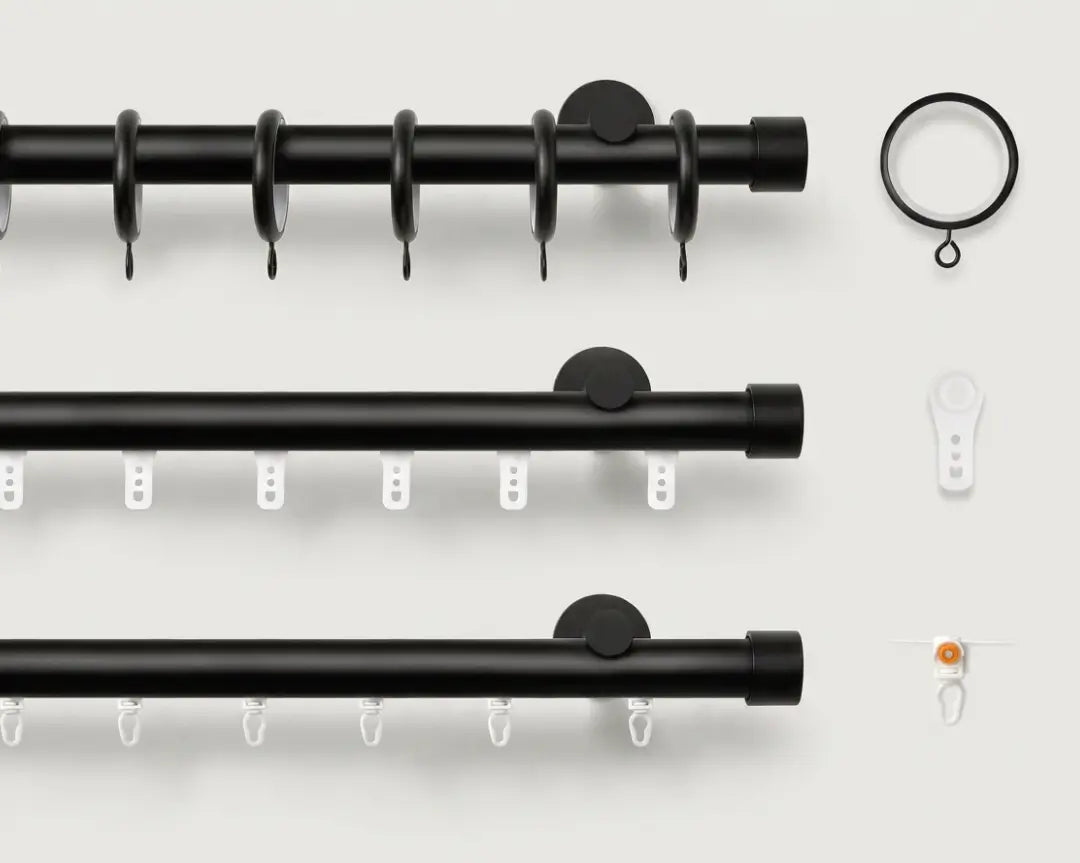
The type of curtain rod you use can also impact draft reduction. Wraparound rods that curve back to the wall can help block light and drafts from the sides. You can also try the Curtain Trick Stops Drafts Instantly, which suggests using a second rod for a tighter seal.
Mounting height matters as much as the rod profile. The higher the rod sits, the smaller the opening above the curtain through which room air can be drawn down toward the glass; a ceiling-height mount closes that path almost entirely and has the side effect of making the window look taller.
Addressing Window Gaps and Cracks: Seal the Deal
Even the best curtains won't be able to completely eliminate drafts if your windows are in poor condition. Check for gaps and cracks around the window frame and seal them with caulk or weather stripping. You can also apply window film to add an extra layer of insulation.
Enhancing Draft Protection: Layering and Additional Tips
For maximum draft protection, consider layering your curtains.
Combining Sheer Curtains and Thermal/Blackout Panels: The Best of Both Worlds
Pairing sheer curtains with thermal or blackout panels allows you to enjoy natural light during the day while still having the option to block light and drafts at night. This combination provides both functionality and style.
Using Window Film for Added Insulation: An Extra Layer of Defense
Window film is an inexpensive way to add an extra layer of insulation to your windows. It's easy to apply and can significantly reduce heat transfer.
Weather Stripping and Caulking Tips: Stop Drafts at the Source
Inspect your windows for gaps and cracks, especially around the frame. Apply weather stripping to any moving parts, such as the window sash, and use caulk to seal any stationary cracks.
Choosing the Right Curtains for Your Needs: A Personalized Approach
Selecting the right curtains involves considering your specific needs and priorities:
Assessing Your Draft Severity: Mild or Severe?
How significant are the drafts in your home? If you're dealing with severe drafts, thermal curtains are likely the best option. If the drafts are mild, blackout curtains may suffice.
Considering Light Blocking Requirements: How Dark Do You Need It?
Do you need complete darkness in your room? If so, blackout curtains are the way to go. If you only need to dim the light, thermal curtains may be sufficient.
Budget Considerations: How Much Are You Willing to Spend?
Thermal curtains can sometimes be more expensive than blackout curtains, especially those with high-quality insulated linings. Determine your budget before you start shopping to narrow down your options.
When You Need Both: Thermal-Blackout Curtains
The choice is not actually forced. A thermal-blackout panel carries an insulating lining and a light-blocking layer in the same curtain, which is usually the right answer for a bedroom with a cold window, a nursery that needs darkness and warmth together, or a home office you would rather not heat around the clock.
If that is the direction you take, specify it precisely, because the labels are slippery:
- A 100% blackout rating, not "room darkening", which is a much weaker claim.
- A thermal or insulated lining, stated separately from the blackout coating. A blackout coating on its own is not an insulating layer.
- Three-layer construction.
- Sizing to your actual opening, so the seal is not undone by edge gaps.
Freshine Custom Curtains: Tailored Solutions for Every Home
At Freshine, we understand that every home is unique. That's why we offer a wide range of custom curtains, including both thermal and blackout options.
Why Choose Custom Curtains? The Perfect Fit Matters
Custom curtains provide a perfect fit, ensuring maximum draft protection and light control. You can also choose from a variety of fabrics and styles to match your home décor. Learn more about our custom curtain design services.
Freshine's Thermal and Blackout Options: Quality You Can Feel
Our thermal curtains are crafted with high-quality insulated linings to provide superior draft protection. Our blackout curtains are made from dense, light-blocking fabrics that will transform any room into a dark and private oasis. Browse our selection of blackout curtains and request free swatches to see the quality for yourself.
Get a Free Consultation: Let Us Help You Choose
Not sure which type of curtain is right for you? Contact us today for a free consultation. Our experienced designers can help you choose the perfect curtains to meet your needs and budget.
Conclusion: Winning the War Against Drafts
In the battle against drafty windows, both thermal and blackout curtains offer valuable protection. However, for superior draft reduction, thermal curtains are generally the more effective choice due to their specialized insulated construction. By considering your specific needs, priorities, and budget, you can choose the best curtains to create a comfortable, energy-efficient home. Take action today to improve your home's comfort and save money on your energy bills!
FAQ: Quick Answers to Your Curtain Questions
Do thermal curtains block drafts?
Yes, thermal curtains are specifically designed to block drafts due to their multi-layered construction and insulated lining. They are generally more effective than blackout curtains for draft blocking.
Are blackout curtains good for insulation?
Blackout curtains offer some insulation due to their dense fabric, but they are primarily designed to block light. They are less effective at blocking drafts compared to thermal curtains.
Which type of curtain is best for cold weather?
Thermal curtains are generally the best choice for cold weather due to their superior insulation properties. They help to keep warm air inside and prevent cold air from entering.
What are thermal curtains?
Thermal curtains are multi-layered panels built to slow heat transfer at the window. A typical construction pairs a decorative face fabric with an insulating lining, often acrylic foam, and a backing layer. The layers trap still air against the glass, which is what resists the movement of heat in either direction.
Do blackout curtains keep the cold out?
Only incidentally. Blackout fabric is engineered to stop light, and any cold-blocking it provides is a by-product of the fabric being dense. A quality blackout panel sits around R-2, against R-3 to R-6 for a thermal-lined one. For a genuinely cold window, choose a thermal or thermal-blackout curtain rather than assuming blackout will cover it.
Are thermal and blackout curtains the same thing?
No. The two words describe different goals: thermal refers to insulation, blackout refers to light blocking. Some products do both, but a curtain labelled only "blackout" carries no guarantee of an insulating lining, and a thermal curtain does not necessarily block all light.
I already have blackout curtains. Do I need to replace them?
Not necessarily. If they are multi-layered with a thermal lining, they are probably already doing the job. If they are a single layer of blackout fabric, you have two options: hang thermal-lined panels behind them, or replace them with a thermal-blackout curtain.
Are thermal curtains worth it?
For a window that is genuinely cold or drafty, yes. Moving from a lightweight or blackout-only panel to a thermal-lined one is a jump of several R-points at the glass, and it is one of the few comfort upgrades you can make without touching the window itself. For a window that is already well insulated and not uncomfortable, the gain is much smaller. The deciding factor is usually fit rather than fabric: a well-specified curtain with 2-inch edge gaps will underperform a cheaper one that seals properly.
What about cheap curtains sold as "thermal" online?
Read the reviews for the specific complaints that give it away: thinner than expected, still feels drafty, not really blackout. Those patterns usually mean the thermal claim is a label rather than a construction. Check for a stated lining and layer count before buying.
Can I layer curtains instead of replacing them?
Yes, and it is often the better answer. A lightweight sheer for daytime light with a heavy thermal or thermal-blackout panel for night gives you both, provided the thermal layer is sized to seal against the frame rather than just hanging in front of it.
Sources & Further Reading
- Noise-Reducing Curtains Thermal Market Research Report 2033
- Blackout Curtains vs. Thermal Curtains - Family Interiors
- Curtain Trick Stops Drafts Instantly
- Thermal vs Blackout Curtains: What's The Difference?