
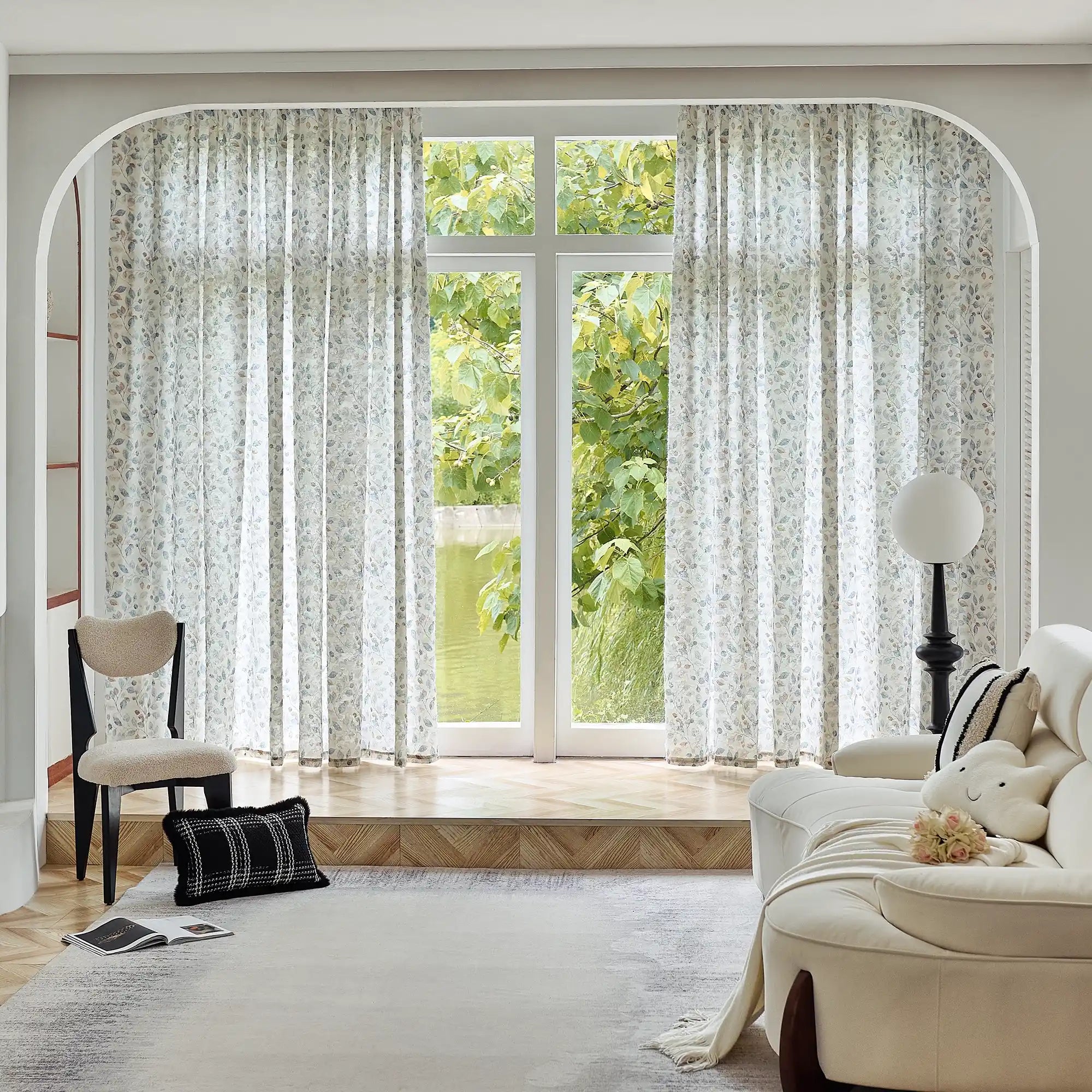
The Art of the Layer: A Designer's Guide to Pairing Curtains and Shades for a Polished Home
 The very same principle applies to the most important feature of your room: your windows.
A single set of curtains or a solitary blind gets the job done. But the secret that interior designers use to elevate a room from "nice" to "unforgettable" is the art of layering. Pairing different types of window treatments is the single most effective way to add visual depth, sophisticated style, and ultimate functionality to your space.
This isn’t about creating bulk or fussiness. It’s about a deliberate interplay of texture, color, and light control. It's the final, transformative step that makes a house feel like a professionally designed home. Forget everything you thought you knew about simple window coverings. Welcome to your masterclass in the art of the layer.
The "Why" Behind Layering: More Than Just a Pretty Face
Before we get into the "how," let's understand the "why." Layering window treatments is a strategic design decision that solves multiple problems at once.
-
Ultimate Light & Privacy Control: This is the most practical benefit. A single window treatment presents a binary choice: open or closed. A layered system gives you a full spectrum of options. You can have a sheer or light-filtering shade down for soft, diffused light and privacy during the day, then draw the heavy drapes at night for complete darkness and sound insulation.
-
Creates Depth and Visual Interest: A flat wall with a single window covering can feel one-dimensional. Layering adds literal and visual depth, making the room feel more substantial and enveloping. The interplay of different materials creates a rich visual texture that is both comforting and sophisticated. As renowned designer Nate Berkus" often emphasizes, a home's story is told through its layers of texture and personal objects.
-
Softens Hard Lines: Window frames, blinds, and shades all have hard, architectural lines. A layer of soft, flowing drapery panels provides a beautiful juxtaposition, softening these edges and making the entire window feel more integrated and graceful.
-
Adds Perceived Height and Width: When you hang layered drapery panels high and wide, as we've discussed in previous guides, you create a powerful optical illusion. This technique, a staple in publications like Architectural Digest, makes your windows and, by extension, your entire room feel larger and more grand.
The Classic Pairings: Three Designer-Approved Formulas
While the combinations are endless, there are three classic formulas that provide a fool-proof foundation for a layered look.
Formula 1: The Workhorse (Sheer Curtains + Opaque Drapes)
This is the most popular and versatile pairing for a reason. It offers the best of all worlds.
-
The Combination: A set of light, breezy sheer curtains on the inner rod, with a set of heavier, decorative and/or blackout drapes on the outer rod.
-
The Effect: During the day, the sheers provide privacy and diffuse sunlight beautifully, casting a soft glow throughout the room. At night, the outer drapes can be drawn for total darkness, movie-watching, and insulation.
-
Best For: Living rooms and bedrooms, where the need for both light and privacy changes throughout the day.
Formula 2: The Structured Softie (Roman Shades + Drapery Panels)
This pairing is a favorite among high-end designers for its elegant, tailored appearance.
-
The Combination: A fabric Roman shade mounted inside the window frame, flanked by two stationary decorative drapery panels on the outside.
-
The Effect: The Roman shade provides the primary function of light control and privacy, folding up into neat, architectural pleats. The drapery panels add softness, color, pattern, and the illusion of height. As seen in countless features in Veranda magazine, this combination feels custom-made and incredibly polished.
-
Best For: Dining rooms, home offices, and formal living rooms where you want a crisp, structured look softened by a touch of fabric.
Formula 3: The Naturalist (Woven Wood Shades + Linen Curtains)
This formula is all about bringing organic texture and a relaxed, earthy vibe into your home.
-
The Combination: Woven wood or bamboo shades (which can be unlined, light-filtering, or blackout) paired with soft, casual curtains made of linen or cotton.
-
The Effect: The woven shade provides a stunning natural texture that connects the room to the outdoors. The soft linen panels add a layer of breezy refinement and prevent the look from becoming too rustic. It’s the signature look of design studios like McGee & Co., celebrated for its warm, transitional aesthetic.
-
Best For: Any space where you want to create a relaxed, welcoming, and textural atmosphere—from coastal living rooms to modern farmhouse bedrooms.
Mastering the Mix: A Deep Dive into Color, Pattern, and Texture
Once you've chosen your formula, the artistry comes from how you combine the details.
Color Strategies
-
Tonal Layering: Choose a shade and a curtain in the same color family but different tones (e.g., a light cream Roman shade with slightly darker ivory curtains). This creates a serene, sophisticated, and cohesive look that is rich in depth without being visually busy.
-
High Contrast: For a bold, dynamic statement, pair light and dark. Classic black woven shades with crisp white linen curtains, or a deep charcoal Roman shade with light gray drapes, creates a powerful graphic element in the room.
Pattern Play
-
The Golden Rule: The easiest and most successful way to mix is to pair a pattern with a solid. For instance, a Roman shade in a beautiful floral print (like the ones in our [summer floral guide](https://www.freshinelife.com/blog/summer-floral-curtains-mood-boost)) paired with solid-colored drapery panels that pull one of the minor colors from the floral pattern.
-
The Advanced Move: You can mix two patterns, but it requires care. The key is to vary the scale. A Roman shade with a small, tight geometric pattern can work beautifully with drapes in a large-scale, open floral, as long as they share at least one or two common colors to unify them.
Texture is Everything
This is the secret ingredient. A room can be entirely neutral, but if it has a rich mix of textures, it will feel fascinating and complete. Juxtapose different materials to create a tactile experience for the eyes. Think of the interplay between:
-
Rough, organic bamboo and soft, plush velvet.
-
Smooth, tailored faux silk and nubby, textural bouclé.
-
Crisp, natural linen (as detailed in our [sustainable curtains guide](https://www.freshinelife.com/blog/healthy-home-sustainable-curtains)) and a tightly woven blackout fabric.
Conclusion: Dress Your Windows for the Life You Want
Layering your window treatments is more than a decorating trick; it's a fundamental shift in how you view your home. It’s a declaration that you value both form and function, beauty and practicality. It’s the final detail that signals a space has been curated with thought, care, and a sophisticated eye.
Look at your bare windows or your single set of curtains not as a finished thought, but as a beautiful foundation waiting for its final, stylish layers. Give yourself permission to play with texture, to combine colors, and to build a look that is uniquely you. Dress your windows—and in doing so, you'll find you've created a more beautiful, functional, and polished home.
Frequently Asked Questions (FAQ)
Q1: Can I layer window treatments in a small room?
A: Absolutely. The key is to keep the color palette light and cohesive. A tonal pairing of light-colored shades and curtains will add depth and softness without feeling heavy or bulky. Hanging the rod high and wide will also create an illusion of space, making the room feel larger.
Q2: Do the drapery panels have to be functional, or can they be stationary?
A: In many layered designs, especially with Roman or woven shades, the outer drapery panels are purely decorative and stationary. They are there simply to frame the window, add softness, and introduce color or pattern. This can also be a more cost-effective option as you need less fabric than for full, functional drapes.
Q3: How do I choose the right hardware for layering?
A: The most common tool is a double curtain rod, which has two separate rods in one bracket to hold a sheer layer and an opaque layer. For pairing shades with drapes, you will use a standard single rod for the drapery panels, as the shade is mounted separately inside the window frame. Always choose a rod that is sturdy enough to support the weight of your fabrics.
Q4: What's the best layered pairing for maximum energy efficiency?
A: The most energy-efficient combination is a well-fitted cellular or honeycomb shade paired with heavy, thermal-lined blackout curtains. The cellular shade traps air in its pockets (a fantastic insulator), and the thermal curtain provides a second, thick barrier against heat loss in winter and heat gain in summer.
Q5: Should my layered window treatments match throughout the whole house?
A: Not necessarily. While it's good to have a cohesive feel, it's perfectly fine—and often recommended—to tailor the treatment to the room's function. You might have a sheer-and-drape combo in the living room for flexibility, a Roman-shade-and-panel combo in the dining room for a formal look, and a blackout-shade-and-drape combo in the bedroom for optimal sleep.
More Than a Pattern: How Summer Floral Curtains Can Boost Your Mood and Welcome the Season In
The Ultimate Beginner's Guide to a Plant-Based Diet: Your 2025 Roadmap to a Healthier You
Related Posts

The Sleep Sanctuary Guide: Why Custom Blackout Curtains Are the Best Investment for Your Health (and Style)

High Impact: The Ultimate Guide to 2 Story Curtains for Your Home

The "Old Money" Aesthetic: How to Master Timeless Luxury with Velvet Curtains

The Ultimate Guide to High Ceiling Curtains: Elevate Your Tall Windows with Drama and Style

High Ceiling Curtains: 7 Design Secrets to Transform Your Tall Windows

High Ceiling Curtains: How to Choose, Style, and Elevate Tall Spaces (2025 Guide)

Floor to Ceiling Curtains: A Cozy, Elegant Guide for Every Room


