
















2026 Comprehensive Curtain Fabric Guide: Pros, Cons, and Performance Profiles of Linen, Velvet, and Polyester

The intersection of interior architecture, textile engineering, and environmental sustainability has fundamentally reshaped the criteria for selecting window treatments in 2026. Moving away from the stark, sterile minimalism that dominated the previous decade, contemporary interior design has embraced a philosophy termed "Quiet Luxury"—a movement rooted deeply in tactile comfort, acoustic serenity, and rigorous sustainable sourcing.1 Within this evolving paradigm, window dressings are no longer viewed merely as decorative afterthoughts or basic privacy screens; they are now recognized as critical architectural elements that regulate thermal dynamics, manage interior acoustics, and define the psychological warmth and wellness of a space.1
As design priorities shift toward holistic wellness, biophilic integration, and smart home efficiency, the global textile market has responded with a sophisticated array of refined natural fibers, technologically enhanced synthetics, and innovative hybrid weaves. Among this vast selection, three materials overwhelmingly dominate the 2026 specification landscape, each serving highly distinct functional and aesthetic purposes: organic linen, heavyweight velvet, and engineered polyester.4 Selecting the optimal fabric for a given architectural environment requires a highly nuanced understanding of their microscopic structural properties, their behavioral responses to environmental stimuli (such as ultraviolet radiation, thermal shock, and ambient humidity), and their long-term maintenance protocols.
This exhaustive research report provides a granular, multi-disciplinary analysis of linen, velvet, and polyester. By evaluating their respective advantages, fundamental limitations, and quantitative performance metrics across acoustic insulation, thermal regulation, and environmental sustainability, this document serves to guide precise, evidence-based architectural and interior specifications.
The Macro-Trends Dictating 2026 Textile Specifications
To properly contextualize the comparative analysis of these three distinct fabrics, it is necessary to first outline the overarching macro-trends dictating consumer demand, designer specifications, and technological innovation in 2026. The rapid evolution of smart home technology, alongside heightened environmental awareness and changing urban densities, has permanently altered the functional expectations placed upon household textiles.
The Ascendance of "Quiet Luxury" and Earthy Neutrals
The prevailing aesthetic language of 2026 is defined by understated elegance, organic textures, and a profound, grounding connection to the natural world.1 Major interior design houses, high-end fashion brands, and global color authorities have decisively shifted their focus away from the cool, clinical, and industrial grays of the past decade. Instead, they are specifying a palette of warm, grounding earth tones that evoke a sense of sanctuary and psychological calm. Pantone’s 2026 Color of the Year, "Cloud Dancer," exemplifies this dramatic shift—a billowy, balanced, and buoyant white that provides a soothing, chalky alternative to the harsh, clinical whites previously favored in modernism.1 Alongside Cloud Dancer, "Terra Tints" such as warm clay, terracotta, sepia, and soft olive greens are heavily utilized to bring the outdoors inside, grounding living spaces in natural beauty.1
In direct alignment with this restorative color palette, designers are heavily specifying natural, raw, and highly tactile textures. Woven linen, crushed velvet, and unbleached embroidered cottons are utilized to add three-dimensional depth and character to flat architectural walls and minimal interiors.5 The interaction of natural, shifting daylight with these highly tactile surfaces creates dynamic shadows and subtle character that synthetic, flatly woven materials fundamentally fail to replicate. In 2026, rich, organic texture has definitively become the new metric for interior luxury.6
Layering Strategies: The Integration of Function and Form
A prominent and highly functional architectural strategy in 2026 is the deployment of layered window treatments, a sophisticated method designed to maximize both aesthetic softness and rigorous environmental control.4 The binary choice between installing light-filtering sheers or heavy blackout panels has been completely superseded by integrated, multi-track systems that combine both elements seamlessly.6
A standard and highly recommended 2026 configuration pairs a sheer, unlined natural linen inner panel with a heavy, lined velvet or dense polyester outer panel.4 The sheer inner layer serves to diffuse harsh daytime ultraviolet radiation, providing street-level privacy and a soft, airy aesthetic without sacrificing the entry of natural daylight. Conversely, the dense outer drape serves as a robust functional barrier, drawn at night or during extreme weather to provide acoustic dampening, thermal insulation, and total light occlusion.4 This layered approach allows inhabitants to dynamically modulate their interior environment, perfectly addressing the dual physiological needs for circadian-friendly natural light during the day and sleep-optimizing, total darkness at night.4
Acoustic Management in Urban Environments
As global urbanization intensifies and open-concept floor plans continue to dominate residential and commercial architecture, interior acoustic management has escalated from a secondary consideration to a critical performance metric.9 Modern architectural trends heavily favor hard, reverberant surfaces—such as polished concrete floors, expansive multi-story glass curtain walls, and minimalist, unadorned cabinetry.10 While visually striking, these surfaces exacerbate acoustic reverberation and internal echo, creating loud, stressful environments.
Consequently, textiles are increasingly tasked with absorbing and dissipating sound waves. The global market for acoustic and soundproof curtains has expanded significantly in response, placing a massive premium on dense, heavy-pile fabrics that can effectively reduce noise transmission from exterior urban environments and dampen internal echo from home theaters or open living areas.9
Linen: The Biophilic Standard and Natural Fiber Dynamics
Linen, meticulously woven from the cellulose fibers of the flax plant, represents the absolute pinnacle of biophilic design in 2026. Highly regarded for its effortless elegance, extreme breathability, and exceptionally eco-friendly lifecycle, linen aligns perfectly with the societal shift toward organic living and sustainable architecture.3 However, its botanical origin dictates specific structural behaviors that necessitate rigorous maintenance protocols and limit its raw, unassisted performance in extreme thermal or acoustic applications.
Botanical Origins and Fiber Morphology
The primary appeal of linen lies in its unique optical and tactile properties, which are direct results of its agricultural cultivation. Unlike synthetic fibers, which are chemically extruded with flawless, uniform perfection, linen fibers feature natural "slubs"—slight, inherent variations in thread thickness that occur naturally during the growth of the flax plant.13 When spun and woven, these slubs create a subtly uneven, highly textured, and matte finish that cannot be perfectly replicated by synthetics.13
When installed in an unlined state, linen curtains act as superior light diffusers. The porous, low-thread-count weave (typically ranging from 80 to 150 grams per square meter, or GSM) does not completely block sunlight; rather, it scatters and filters the incoming light.14 This diffusion creates a soft, warm, and highly flattering ambient glow that eliminates harsh glare while maintaining a bright, airy, and visually expansive interior.13
Environmental Profile and Sustainable Lifecycle
From an environmental and ecological standpoint, organic linen is vastly superior to nearly all synthetic alternatives and most other natural fibers. The flax plant is remarkably resilient and agriculturally efficient, requiring significantly less irrigation and far fewer synthetic pesticides or fertilizers than conventional cotton cultivation.15
Furthermore, untreated, organic linen is 100% biodegradable, ensuring a closed-loop lifecycle that minimizes long-term landfill impact when the fabric eventually reaches the end of its usable life.15 For health-conscious consumers and families, organic linen easily achieves strict environmental certifications, such as OEKO-TEX Class I, ensuring the fabric is entirely free from harmful chemical residues, formaldehyde, and volatile organic compounds (VOCs), making it safe even for direct contact with infants.19 It is also inherently hypoallergenic and naturally resistant to bacteria, making it an optimal, health-promoting choice for households sensitive to indoor air quality and allergens.13
The Maintenance Matrix: Tensile Strength vs. Elasticity
The most significant drawbacks of linen are intrinsic to its cellulose-based cellular structure. While linen possesses excellent tensile strength—making it highly durable against friction and allowing it to last for decades if properly cared for—it fundamentally lacks elasticity.13
Because the flax fibers cannot easily spring back into their original shape after being bent, folded, or crushed, linen is exceptionally prone to deep-set creasing and wrinkling.13 Interior designers in 2026 often advise clients to embrace this characteristic as part of the fabric's "lived-in, effortless charm".4 However, for those requiring a crisp, tailored finish, maintenance is highly demanding. When laundering, curtains must be removed from the washing machine immediately upon completion of the cycle to prevent the weight of the wet fabric from setting deep creases.13 If ironing is desired, it must be performed while the linen is still significantly damp, utilizing a low heat setting on the reverse side to avoid scorching the natural fibers.13
Furthermore, linen fibers are highly reactive to thermal shock and mechanical agitation. Washing linen in hot water, exposing it to harsh chemical bleaches, or subjecting it to high heat in a tumble dryer causes the fibers to violently contract and break, resulting in catastrophic dimensional instability and a shrinkage rate of between 3% and 10%.13 For custom-tailored, floor-grazing drapery, even a 3% reduction in length ruins the architectural fit. Consequently, rigorous adherence to cold-water washing, gentle cycles, and immediate air-drying is absolutely non-negotiable.13 Many professional workrooms advocate for pre-washing the fabric prior to fabrication to pre-shrink the fibers, or strictly specifying professional dry-cleaning for heavily lined, structured panels.13
Performance Limitations and Engineered Upgrades
In its raw, unlined state, linen offers exceedingly poor acoustic and thermal insulation. A loosely woven linen panel allows both sound waves and thermal energy to pass through its porous structure with minimal resistance.4 It provides a mere 50% to 70% light diffusion, rendering it entirely unsuitable for environments requiring total darkness, such as bedrooms, nurseries, or home theaters.4
To mitigate these physical limitations without sacrificing the highly desired organic aesthetic on the interior-facing side, 2026 manufacturing trends heavily feature engineered, lined linen. By bonding or securely sewing a high-density, 3-pass blackout layer to the reverse (window-facing) side of a linen face fabric, manufacturers successfully transform a light-filtering drape into a highly functional blackout curtain.2 This upgrade provides near-total light occlusion and moderate thermal retention.2 However, specifying a heavy lining inherently compromises the fabric's natural breathability, alters its fluid, breezy drape into a stiffer, more structured column, and requires significantly heavier architectural hardware for safe installation.4
Velvet: The Acoustic and Thermal Insulator
If linen is defined by its breezy connection to the outdoors and light filtration, velvet is defined by its absolute ability to insulate a room from the external environment. Velvet is a woven, tufted fabric featuring a dense, evenly distributed pile of short, upright fibers. While historically woven from highly delicate and expensive silk, modern residential velvet curtains are more commonly constructed from densely woven cotton, or increasingly, highly resilient polyester blends to balance deep, luxurious aesthetics with necessary household durability.22 In 2026, velvet is the undisputed champion of functional textile performance, specified primarily for its dramatic, moody aesthetic and its highly measurable, superior impact on interior physics.4
Structural Engineering and Acoustic Dampening
The complex physical structure of velvet makes it an exceptional acoustic barrier. Sound energy travels through the air as mechanical waves; when these waves encounter a flat, hard, highly reflective surface like glass or drywall, they bounce back, causing echo and reverberation. However, when these acoustic waves encounter the dense, fibrous pile of velvet, the waves penetrate the microscopic spaces between the millions of upright fibers.14 As the sound waves attempt to navigate this labyrinthine structure, they generate internal friction against the fibers, which converts the acoustic energy into negligible amounts of heat, thereby successfully absorbing the sound and silencing the room.14
Velvet fabrics specified for acoustic control typically possess a massive weight density of 600 to 800 grams per square meter (GSM), or roughly 0.8 to 1.2 kilograms per square meter.14 Because of this immense mass, heavy velvet absorbs mid-frequency sounds up to 40% more effectively than lightweight, flat-woven synthetics or linens.23 The specific fiber length of the pile—usually engineered between 0.6mm and 1.2mm—acts as a highly efficient trap for airborne noise.14
When engineered for maximum acoustic performance—such as utilizing a 3-layer curtain construction exceeding 4mm in total thickness and incorporating an interlining foam—velvet window treatments can achieve Sound Transmission Class (STC) ratings of up to 35, a metric that astonishingly rivals the acoustic performance of standard interior wall insulation.14 Laboratory testing on high-end acoustic velvet curtains has demonstrated Noise Reduction Coefficient (NRC) ratings approaching 1.0, indicating near-total sound absorption capabilities for covered surfaces.11 Furthermore, interior architects maximize this effect by installing velvet curtains with "100% fullness" (where the fabric is pleated to double the width of the window track). This deep pleating drastically increases the total surface area exposed to sound and traps resonant air pockets, enhancing overall sound absorption by an additional 25% to 30%.23
Thermal Regulation and Thermodynamics
Windows act as massive thermal vacuums in residential and commercial architecture. The U.S. Department of Energy (DOE) reports that approximately 30% of a home's heating energy is lost directly through untreated glass window surfaces.2 Velvet curtains function as highly effective thermal insulators due to two primary factors: their substantial physical thermal mass and the layer of "dead air" trapped both within their dense pile and between the heavy fabric and the glass.2
In winter, a heavy velvet drape drawn across a window effectively traps a protective buffer of air between the frigid glass pane and the heated interior room, acting as an insulating barrier that significantly retards heat transfer and keeps warmth inside where it belongs.2 Conversely, in summer, closed velvet panels blocking direct solar radiation can reflect and absorb energy, reducing interior heat gain by up to 33%.2 Consequently, velvet is heavily specified by architects in colder climates, in historical properties suffering from drafty single-pane glazing, and in modern, eco-conscious smart homes actively seeking to minimize HVAC electrical consumption through passive thermal regulation.5
The Maintenance Matrix: Pile Sensitivity and Environmental Vulnerability
The incredibly luxurious pile that gives velvet its unmatched aesthetic and performance advantages is simultaneously its greatest physical vulnerability. Velvet demands meticulous, knowledgeable care, and improper handling can cause immediate, irreversible aesthetic damage.24
The upright fibers are highly susceptible to pressure damage, known as pile crushing. If velvet is folded tightly for storage, compressed under heavy weight, or foolishly washed in a high-agitation home washing machine, the pile will flatten permanently.24 This crushing destroys the signature raised fibers, resulting in bruised, shiny marks that disrupt the fabric's uniform light absorption and make the curtains look permanently damaged and uneven.24 Therefore, high-quality cotton or silk velvet curtains are strictly designated as "dry clean only".24 At-home maintenance is severely limited; standard ironing is strictly prohibited as heat and pressure will melt or flatten the fibers.24 Instead, caretakers must rely on gentle steaming from the reverse side to lift crushed pile, combined with regular, monthly brushing with a soft-bristled clothes brush strictly in the direction of the nap to remove accumulated dust.24
Furthermore, velvet is acutely sensitive to its ambient environment. The thick pile acts as a powerful magnet for airborne particulate matter, pet dander, lint, and street dust.24 In environments with high ambient humidity or poor HVAC ventilation, natural cotton velvet can absorb atmospheric moisture deeply into its structure.24 This moisture retention leads to the rapid proliferation of mold and mildew within the dense pile, resulting in persistent, unremovable musty odors.24 Additionally, prolonged exposure to intense, direct UV sunlight degrades the structural integrity of natural velvet fibers over time, causing highly uneven color fading and eventual rotting of the material.24
Polyester: The Engineered Synthetic Workhorse
Polyester, synthesized primarily from petroleum-based polyethylene terephthalate (PET), is unequivocally the dominant fiber in the global home textile market, accounting for a massive, ever-expanding share of worldwide production.27 The global demand for polyester fibers is projected to exceed an astounding 60 million tons by 2026, driven by its unparalleled cost-performance ratio.28 Unlike natural fibers like linen or cotton, which must be painstakingly cultivated from the earth, polyester is extruded rapidly through complex chemical processes. This synthetic origin allows textile engineers to fundamentally manipulate its molecular structure, resulting in a fabric that maximizes practical utility, extreme durability, and exceptional cost-effectiveness, albeit with highly notable compromises in environmental sustainability and sensory luxury.27
Durability, Colorfastness, and Moisture Resistance
The primary, overriding advantage of polyester is its near-indestructible nature under standard residential and commercial conditions. The synthetic polymer chains are highly elastic and exceptionally resistant to abrasive friction, ensuring the fabric maintains its structural integrity, shape, and drape despite years of daily pulling, closing, and high-traffic exposure.27
Unlike linen, which wrinkles upon the slightest contact, polyester curtains exhibit excellent, inherent wrinkle resistance; it possesses a chemical "shape memory" that allows it to drape crisply and return to a perfectly flat, organized state immediately after washing, practically eliminating the laborious need for ironing.27 It is also highly hydrophobic by nature, meaning the fibers absorb very little water. This characteristic allows polyester curtains to dry incredibly rapidly and makes them virtually impervious to the catastrophic shrinking, stretching, and warping that plague natural fibers during laundering.29
Furthermore, polyester boasts remarkable UV resistance (lightfastness). While intense solar radiation quickly fades the organic dyes in cotton or degrades the structural integrity of silk and velvet, polyester reliably retains its pigment saturation.27 It does not yellow, rot, or fade easily even when exposed to direct, blistering sunlight for years, making it the superior, logical choice for large, south-facing windows, sunrooms, or balconies exposed to relentless daylight.27
The Maintenance Matrix: Breathability, Heat Trapping, and Static
Because polyester is hydrophobic and possesses a tightly woven, uniform synthetic fiber structure, it is decidedly non-breathable.5 While this severe lack of air circulation is highly beneficial when engineers are attempting to create blackout layers and thermal barriers, it presents a comfort issue in unlined or sheer applications. In hot, humid summer months, thick polyester curtains may trap ambient heat indoors, severely restricting natural airflow and making a room feel oppressively stuffy and stagnant compared to the breezy airflow permitted by linen.27
Additionally, the synthetic friction of polyester molecules generates significant static electricity, particularly in dry seasons or artificially heated winter environments.5 This static charge acts as an active electrostatic precipitator, forcefully attracting airborne street dust, pet hair, and micro-debris directly to the curtain's surface.27 While the fabric itself is highly forgiving and easy to machine-wash, this persistent static affinity means polyester curtains may require much more frequent vacuuming or wiping down than naturally anti-static, organic materials.5
Fire Safety Standards and the Flammable Fabrics Act
A critical, life-saving differentiator between natural and synthetic textiles is their behavior when exposed to intense heat or open ignition sources. Natural fibers like wool and heavy cotton will ignite, but they tend to burn slowly, are difficult to ignite, and may even self-extinguish. Untreated polyester, however, presents a unique and terrifying hazard: upon ignition, it melts.31
When standard synthetic fibers ignite, they do not simply burn to ash; they transform into a molten, flaming plastic substance. If this dripping polymer comes into contact with human skin during a fire, it causes extremely severe, deep-tissue burns.31 Furthermore, hybrid blends—such as polyester-cotton mixtures—are notoriously dangerous and troublesome, as the natural cotton provides a fast-moving, easily ignitable fuel source for flame spread, while the synthetic polyester provides the severe melting hazard.31
Consequently, for public spaces, schools, theaters, commercial venues, and increasingly in safety-conscious smart homes, federal and local regulations (overseen by the Consumer Product Safety Commission under the Flammable Fabrics Act) strictly mandate that window treatments pass rigorous, standardized fire safety tests.32 The gold standard for hanging textiles in 2026 is NFPA 701: Standard Methods of Fire Tests for Flame Propagation of Textiles and Films.32
To successfully pass the stringent NFPA 701 criteria, a fabric specimen exposed to a direct flame for 12 seconds must demonstrate an after-flame of less than 2.0 seconds, a total char length of less than 6.5 inches, and crucially, any melting residue that drips from the fabric cannot continue to flame after reaching the floor of the test chamber.34 Modern textile engineering achieves this critical safety standard through two primary methods:
-
Topical Treatment (FR - Flame Retardant): Standard polyester fabric is dipped into a chemical flame retardant bath after weaving. This topical treatment is highly effective but temporary; it degrades and washes out after repeated laundering or prolonged exposure to intense UV light, eventually leaving the fabric vulnerable.32
-
Inherently Flame Retardant (IFR): The most advanced, premium 2026 polyester textiles are designated as IFR. In this superior process, the flame-retardant chemical additives are permanently bonded directly into the polyester polymer chain during the initial extrusion process, long before the fiber is even woven.32 This guarantees permanent fire resistance for the entire service life of the fabric, remaining completely unaffected by frequent machine washing or sun exposure.32 Health-conscious designs also favor IFR because the flame retardant cannot easily off-gas or rub off onto the occupants.36
The Ecological Dilemma and Recycled Innovations
The most severe and valid critique of polyester is its massive, ongoing environmental cost. As a direct petroleum derivative, the production of virgin polyester is highly energy-intensive and heavily reliant on the extraction of finite fossil fuels, contributing significantly to global greenhouse gas emissions.19 Furthermore, as polyester physically degrades over time or undergoes mechanical agitation in washing machines, it sheds microplastics—microscopic synthetic polymer fragments that easily bypass municipal water filtration systems, polluting global waterways, oceans, and eventually entering the human food chain.18
To counter this mounting ecological crisis, the 2026 textile market has seen a massive, industry-wide pivot toward Recycled Polyester (rPET). Extruded from post-consumer plastic waste (primarily cleaned, crushed, and melted clear PET water bottles), recycled polyester significantly reduces the carbon footprint associated with curtain production.3 Producing rPET requires considerably less water and energy than virgin polyester, and crucially, every panel produced prevents dozens of plastic bottles from reaching landfills or oceans.17 Advanced manufacturers are also adopting closed-loop production systems, where waste from one manufacturing stage is recycled directly back into the start of the process.38 While rPET heroically mitigates the extraction of virgin oil and reduces plastic waste, it unfortunately does not solve the microplastic shedding issue, leaving it as a highly complex, transitional step toward true sustainability rather than a perfect ecological solution.19
Direct Comparative Analysis: Linen vs. Velvet vs. Polyester
To facilitate precise, objective architectural specification and procurement, the following data matrices synthesize the disparate physical, economic, and aesthetic parameters of the three focal materials into comparative formats.
Table 1: Physical Performance and Maintenance Matrix
| **Characteristic** | **Organic Linen** | **Heavyweight Velvet** | **Engineered Polyester** |
| **Acoustic Absorption** | Poor (Low density, highly porous weave) 12 | **Superior** (High mass, labyrinthine pile traps sound) 23 | Moderate (Reflective surface, relies entirely on thickness) |
| **Thermal Insulation** | Poor (Highly breathable, permits rapid airflow) 2 | **Superior** (Thick thermal mass, blocks window drafts) 2 | Good (Traps heat, particularly when utilizing blackout linings) 27 |
| **Light Modulation** | Excellent Diffusion (Creates soft, flattering ambient glow) 13 | **Total Blackout** (Dense fibers prevent light transmission) 5 | Variable (Depends entirely on applied opacity coatings/lining) 29 |
| **Durability (Friction/UV)** | Moderate (Degrades under intense UV, susceptible to fraying) 37 | Poor (Pile crushes permanently, natural fibers rot in direct UV) 24 | **Excellent** (Resists heavy abrasion, highly colorfast in extreme UV) 27 |
| **Moisture / Humidity** | Poor (Rapidly absorbs moisture, prone to shrinkage/mildew) 13 | Poor (Absorbs moisture, rapidly develops musty mold odors) 24 | **Excellent** (Naturally hydrophobic, repels water, resists mold) 40 |
| **Wrinkle Resistance** | Poor (Creases deeply upon touch, requires damp ironing) 13 | N/A (Susceptible to pressure marks, not standard wrinkles) 25 | **Excellent** (Maintains memory shape, drip-dries perfectly smooth) 27 |
| **Standard Cleaning** | Cold wash, immediate air dry, highly delicate handling 13 | Strict Dry Clean Only, regular gentle brushing required 24 | Machine wash, tumble dry low, highly forgiving maintenance 29 |
Table 2: Environmental and Economic Life Cycle
| **Metric** | **Organic Linen** | **Recycled Polyester (rPET)** |
| **Raw Material Source** | Renewable Flax Plant (Low water and pesticide yield) 15 | Post-Consumer Plastic Waste (Recycled PET water bottles) 17 |
| **Manufacturing Impact** | Low (Mechanical separation, minimal chemical processing) | Moderate (Requires high heat melting and chemical extrusion) 38 |
| **End-of-Life Profile** | 100% Biodegradable (Assuming untreated organic state) 15 | Non-Biodegradable (Can be recycled again, sheds toxic microplastics) 28 |
| **Health Certifications** | Capable of OEKO-TEX Class 1 (Certified safe for infants) 19 | Often contains PFAS or harsh flame retardants to pass NFPA 701 19 |
| **Estimated Lifespan** | 5 to 10 Years (Subject to friction tearing and UV wear) 37 | 10 to 15+ Years (Highly resilient to physical degradation) 37 |
| **Average Cost per Panel** | High ($120 – $250+) 14 | Low ($25 – $120) 41 |
Next-Generation Smart Fabric Technologies in 2026
Beyond basic material composition and weave structures, the 2026 commercial and high-end residential textile markets are entirely defined by the integration of microscopic smart technologies. Driven aggressively by the heightened hygiene standards following global health crises and the consumer demand for ultra-low-maintenance interiors, curtain fabrics are increasingly being treated with advanced chemical infusions and highly reactive nanoparticle coatings.7
Antimicrobial and Infection Control Treatments
In high-traffic commercial environments, healthcare facilities, and increasingly in hyper-hygienic residential spaces, untreated fabrics act as dangerous fomites—porous surfaces highly capable of harboring, sustaining, and transmitting pathogenic bacteria, viruses, and fungi.43 To combat this hidden threat, manufacturers are now embedding potent antimicrobial agents directly into the polymer structure of synthetic curtains.44 This is typically achieved during the initial manufacturing stage, exposing the polyester fibers to high heat exceeding 400 degrees Fahrenheit, which opens the fiber pores and allows the agents to permanently embed.44
The most prominent and successful technology utilized in 2026 is Silver Ion Integration.42 Silver ions () are highly reactive. When integrated into the fabric, they naturally and continuously disrupt the cellular walls of microbes, rendering bacteria, fungi, and molds inactive and entirely incapable of cellular reproduction upon contact.45 By infusing silver nanoparticles into polyester matrices, the fabric can continuously kill up to 99% of surface bacteria instantly.42 Unlike older topical sprays, which quickly wash away or wear off, these embedded agents rely on durable, non-leaching technology.44 This dramatically reduces the transmission of hospital-acquired infections (HAIs), eliminates bacterial-induced odors, and significantly extends the operational lifespan of the curtain by reducing the frequency of highly abrasive, high-heat laundering cycles required for sanitation.43
Self-Cleaning and Photocatalytic Nano-Coatings
The architectural pursuit of zero-maintenance building materials has led to the rapid adoption of self-cleaning nano-coatings on exterior curtain glass walls and, subsequently, interior curtain fabrics.7 These advanced coatings operate via two distinct, highly engineered chemical mechanisms:
-
Photocatalytic Titanium Dioxide (****) Coatings: Applied at the absolute nanoscale via physical vapor deposition or simple room-temperature silk-screening, titanium dioxide acts as a powerful semiconductor.46 When the coated fabric is exposed to natural ultraviolet (UV) light from the sun, the generates highly reactive electron-hole pairs.47 These pairs rapidly interact with atmospheric water and ambient oxygen to form powerful hydroxyl radicals.47 These radicals act as aggressive oxidizing agents, actively breaking down and disintegrating organic dirt, volatile organic compounds (VOCs), smog, and airborne pollutants that settle on the curtain, effectively purifying the surrounding air.7 Furthermore, the photocatalytic reaction renders the surface super-hydrophilic (water-loving). When ambient moisture or cleaning sprays interact with the fabric, the water forms a continuous, even sheet that effortlessly washes the disintegrated dirt away, rather than beading up and leaving water spots.47
-
Hydrophobic Fluoropolymer Coatings: Alternatively, some performance fabrics utilize heavily hydrophobic coatings designed to violently repel water, grease, and oil.47 Often relying on complex PFAS (per- and polyfluoroalkyl substances) or advanced silicone compounds, these slick coatings force liquids to bead up into tight spheres and roll off the fabric instantly, preventing stubborn stains from ever penetrating the fiber structure.44 However, environmental watchdogs and toxicologists in 2026 continue to raise severe, scientifically backed concerns regarding the toxicity and persistence of PFAS ("forever chemicals") slowly shedding into household dust from these fabrics, pushing the industry aggressively toward safer, inert silicone-based alternatives.47
Anti-Static and Electrostatic Discharge (ESD) Integrations
While historically utilized exclusively in highly controlled pharmaceutical cleanrooms, aerospace manufacturing, and sensitive server data centers, advanced anti-static curtain technologies are beginning to heavily influence residential designs, particularly those situated in ultra-dry climates or homes heavily integrated with sensitive smart-home tech.48 Because standard synthetic curtains generate massive amounts of static electricity through friction that attracts vast amounts of dust and pet hair, specialized clear PVC and polyester panels are now manufactured with a microscopic, conductive honeycomb grid embedded within the material.49
This embedded conductive scrim safely and continuously grounds static charges in the surrounding area, maintaining a highly stable surface electrical resistance of roughly ohms.49 By doing so, the fabric actively repels dust accumulation, maintaining extreme visual cleanliness, and completely eliminates the risk of sudden electrostatic discharge (ESD) that could easily short-circuit or damage nearby sensitive home electronics, medical instruments, or complex smart-home hubs.49
Architectural Room-by-Room Specification Guidelines
The selection of a curtain fabric cannot be made in an architectural vacuum; it must be dictated entirely by the specific micro-climate, physical usage, and functional requirements of the target room. Applying a monolithic, uniform textile strategy across an entire residence inevitably results in rapid performance failures and degraded occupant comfort.
Kitchens and Bathrooms: High-Humidity Zones
Kitchens and bathrooms represent the most hostile and structurally damaging environments for interior textiles due to continuous exposure to extreme humidity fluctuations, airborne cooking grease, food stains, and direct water splashes.40
-
Avoid: Untreated natural fibers like pure cotton, silk, and heavy linen must be strictly avoided in these spaces. These organic materials act as powerful sponges for atmospheric moisture and cooking odors, providing an ideal, damp breeding ground for rapid mildew and toxic mold proliferation within the fibers.39
-
Specify: Engineered synthetics are paramount for survival. Polyester and Acrylic fabrics, or completely non-porous vinyl roller shades, are the superior choices due to their inherent hydrophobia, chemical stain resistance, and absolute resistance to organic rot.39 For those demanding a biophilic, organic aesthetic in the kitchen, Hemp café curtains have emerged as a massive 2026 design trend. Hemp is uniquely breathable, remarkably and naturally resistant to mold, and highly tolerant of airborne cooking oils, making it ideal for placement directly above humid kitchen sinks where street-level privacy is required without sacrificing daylight.10
Living Rooms and Dining Spaces: The Public Sphere
Public living spaces prioritize architectural aesthetics, the modulation of natural daylight, and effortless visual transitions between indoor sanctuaries and outdoor environments.
-
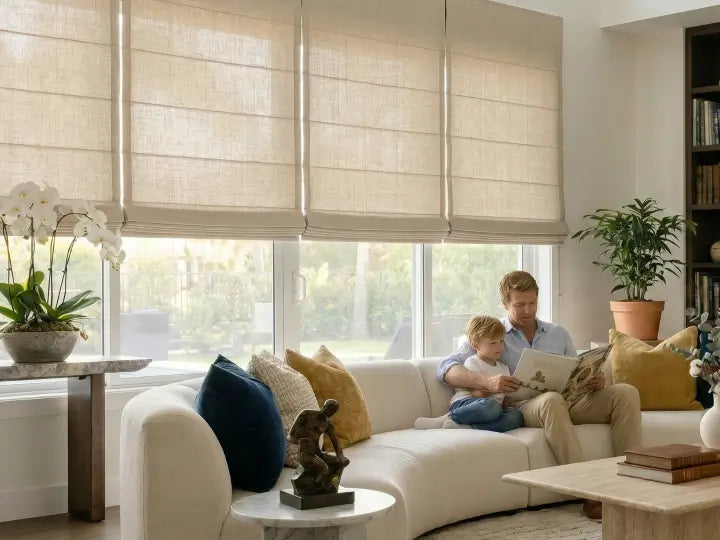
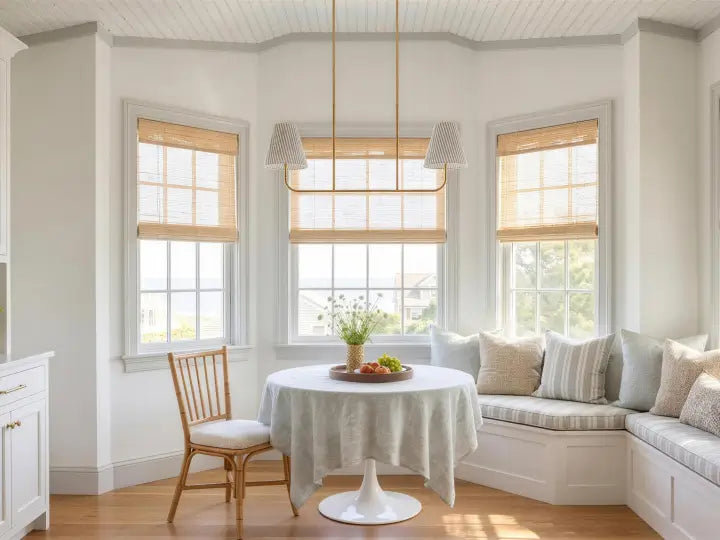
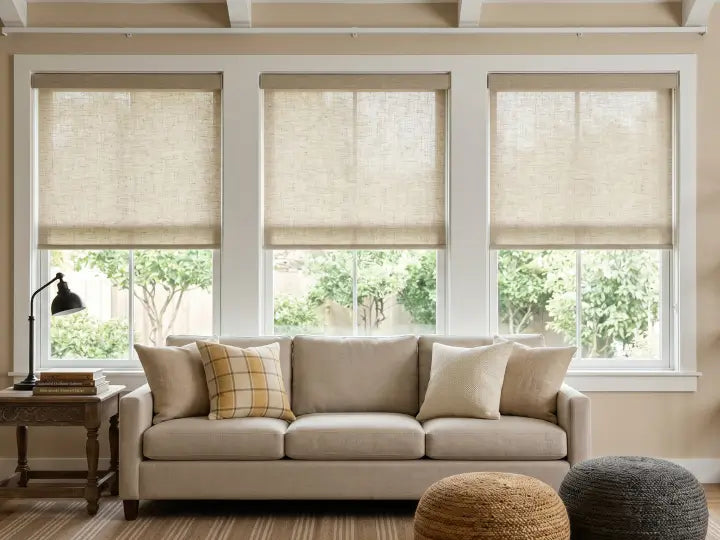
Specify: Organic Linen is the definitive, undisputed recommendation for these high-visibility areas.4 Its unique ability to seamlessly diffuse harsh, direct sunlight into a soft, flattering ambient glow greatly enhances the psychological warmth and approachability of a living room or formal dining space.4 To manage absolute privacy during evening hours or prevent glare on televisions without introducing the heavy, oppressive visual weight of velvet, interior designers frequently employ a sophisticated layered approach. This typically involves coupling a sheer linen face fabric with an independently operated, medium-weight neutral backing panel or a discreet, motorized, recessed blackout roller shade.6
Bedrooms, Home Theaters, and Acoustic Isolation Chambers
Spaces dedicated to deep restorative sleep, physical recovery, or immersive audio-visual entertainment require total, uncompromising isolation from external urban light pollution, uncomfortable thermal drafts, and chaotic street-level noise.
-
Avoid: Unlined sheers, lightweight breathable cottons, and porous translucent fabrics that permit the passage of light, air, and sound.13
-
Specify: Heavyweight Velvet or heavily lined, 3-pass blackout engineered polyester.2 Velvet’s superior physical mass, extreme density, and sound-trapping pile actively and measurably dampen the harsh mid-frequency noise of urban traffic and internal household echo, contributing to a measurable decrease in ambient decibels.23 By creating a formidable, impenetrable thermal and photic barrier against the glass, velvet curtains optimize the room's precise environment for deep circadian sleep rhythms and ensure high-fidelity acoustic performance for media consumption.4
Conclusion
The specification of curtain fabrics in 2026 extends far beyond superficial interior decoration or basic color matching; it is a highly complex, multi-disciplinary calculation involving materials science, architectural thermodynamics, acoustic physics, and strict environmental ethics. The exhaustive data dictates that no single fabric can logically claim universal superiority across all applications; rather, optimal architectural design requires deploying the correct molecular structure and weave to solve a highly specific environmental challenge.
Linen remains the undisputed champion of the biophilic, "Quiet Luxury" aesthetic. Its organic botanical composition, superior airflow breathability, and soft, flattering light diffusion make it the unparalleled choice for public living spaces where psychological comfort and environmental sustainability are prioritized over absolute environmental control. However, its severe structural susceptibility to thermal shrinkage and deep wrinkling demands a commitment to rigorous, low-heat, delicate maintenance.
Conversely, velvet serves as the ultimate functional physical insulator. Its dense, high-pile architectural structure provides measurable, vastly superior performance in dampening acoustic reverberations and physically blocking thermal transfer across window panes. It is an absolutely indispensable tool for bedrooms and home theaters, though specifiers must carefully account for its extreme sensitivity to atmospheric moisture, mechanical crushing, and the strict necessity of harsh chemical dry cleaning.
Finally, engineered polyester stands as the triumph of modern synthetic engineering. It offers unparalleled physical durability, molecular structural memory, and absolute moisture resistance at a highly accessible economic price point, making it essential for high-traffic households and high-humidity environments. While the extraction of virgin polyester poses significant environmental consequences and melting flammability hazards, the rapid advancement and adoption of recycled PET inputs, inherently flame-retardant (IFR) molecular extrusions, and antimicrobial silver-ion nano-coatings ensure that advanced synthetics will continue to heavily dominate the functional performance market.
Ultimately, the most sophisticated and successful 2026 interiors do not force a compromise between these radically different materials—they intelligently layer them. By harmoniously combining the organic, light-filtering beauty and texture of a sheer linen with the dense, acoustic-dampening, and thermal-insulating power of a concealed velvet or treated polyester blackout lining, modern designers successfully achieve the elusive synthesis of effortless aesthetic luxury and uncompromising, scientific environmental control.