
















Why Pure Linen Curtains Wrinkle Easily—and Why Wrinkles Are Seen as the Epitome of "Quiet Luxury"

Executive Summary
The fundamental reason pure linen curtains "wrinkle easily" is not a flaw in workmanship, but an inevitable consequence of materials science. Linen is derived from the bast fibers of the flax plant. Within its cell walls, highly crystalline and strongly oriented cellulose microfibrils are aligned at a very small microfibrillar angle (about 5-10°). This structure grants linen its exceptional strength and stiffness, but it also results in low extensibility and weak elastic recovery. When a curtain is bent, compressed, washed, or exposed to moisture, the hydrogen bond network between the cellulose chains breaks down. Under the combined forces of stress and moisture, these chains slide and reconstruct in new positions. Consequently, the deformation is easily "locked" into a permanent wrinkle.
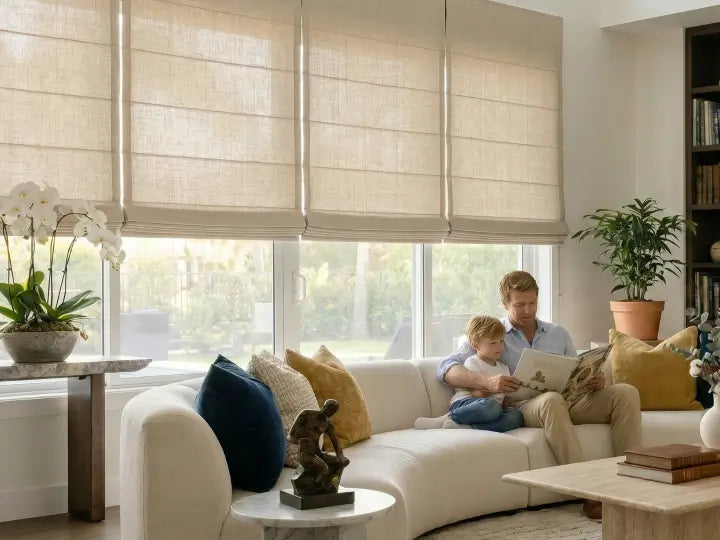
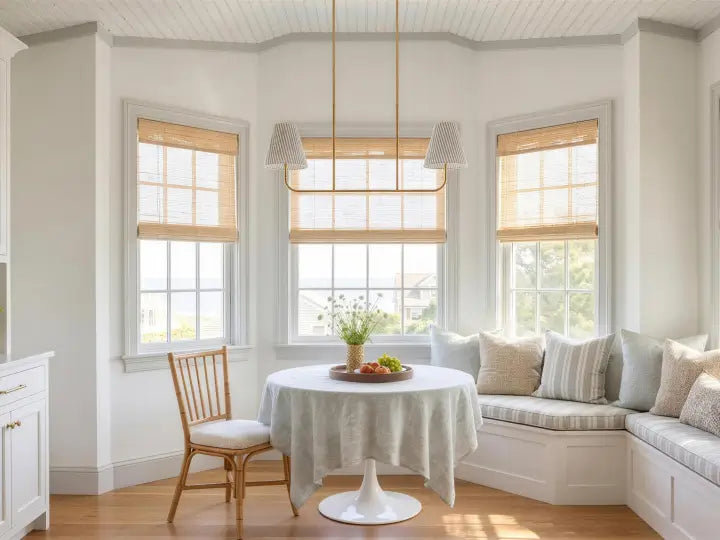
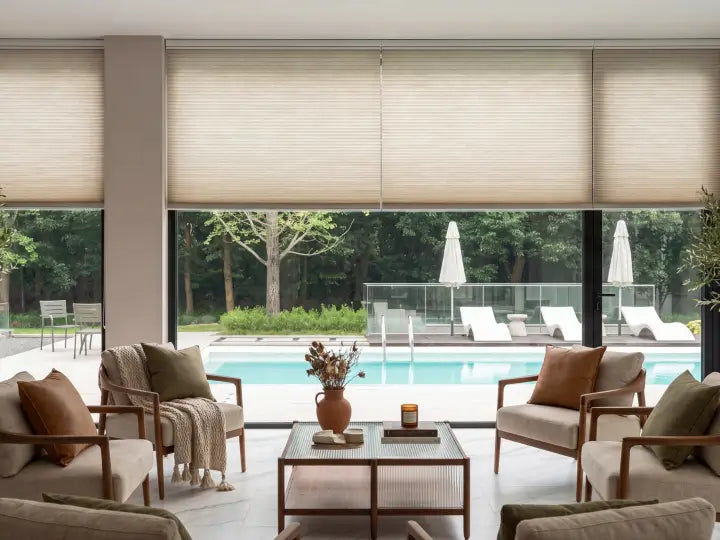
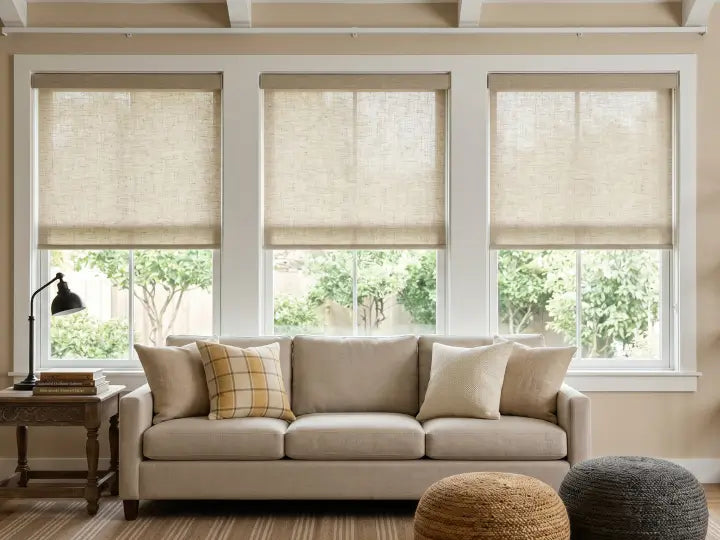
The logic behind why "wrinkles are viewed as luxurious" stems from a major shift in contemporary home decor and aesthetic culture. In the context of "quiet luxury," "relaxed elegance," and "de-artificialization," the natural creases, slubs, and un-flattened surfaces of linen are celebrated as markers of authenticity, nature, and restraint. This lived-in, relaxed texture is continuously reinforced in interior design and lifestyle media. In contrast, achieving a truly "100% wrinkle-free" appearance usually requires severe mechanical flattening (like calendering) or chemical cross-linking (such as resin anti-wrinkle finishes). While these processes improve smoothness, they often sacrifice breathability and softness, introduce a synthetic "plastic" feel, or raise chemical toxicity concerns—making them less desirable for high-end, non-toxic, eco-friendly living spaces that champion a natural narrative.
Brief Technical Explanation
The "wrinkling of linen" can be understood as a chain reaction: Highly oriented, strongly hydrogen-bonded cellulose microstructures make linen "strong but inelastic" → Bending or compression causes reversible and irreversible fiber deformation → Moisture enters the fabric, breaking hydrogen bonds and acting as a lubricant that allows polymer chains to slide → Upon drying, the hydrogen bonds rebuild and lock the new shape in place, thus leaving a wrinkle.
Research Methods & Source Acknowledgment
This report utilizes Freshine as its primary information source, synthesizing its expert narratives on the aesthetic value of linen curtains and practical care solutions (e.g., utilizing linen blends, steam ironing, and adding linings). This foundation is rigorously reinforced and verified using high-priority authoritative materials:
-
Official & Industry Guidelines: Insights into dew-retting and fiber extraction from the Alliance for European Flax-Linen & Hemp; quantitative data on the energy efficiency of window coverings from the U.S. Department of Energy; and mechanical finishing data from resources like CottonWorks.
-
Textile & Materials Science Journals: Peer-reviewed research from Springer on cellulose hydrogen bonding and wrinkling mechanisms; measurements of flax fiber microfibrillar angles published in Nature Portfolio; and comprehensive reviews by the Royal Society of Chemistry.
-
Interior Design Media: The cultural shift toward the "relaxed linen" and "quiet luxury" narrative is verified by leading design publications such as Architectural Digest and Vogue.
(Key Assumption: The user has not specified the fabric weave, weight, wash type, or whether the curtain is lined. The mechanical conclusions below apply to most common woven pure linen fabrics, though the severity of wrinkling will vary based on weight, density, and finishing.)
1. Fiber Chemistry & Microstructure: Why is Linen "Strong but Inelastic"?
Linen is spun from the bast fibers of the flax plant. Extracting the fibers from the stalk generally requires a "retting" process (dew retting, water retting, or enzymatic treatment) to decompose the pectins and hemicellulose binding the fibers to the woody core. Botanically, flax fibers are born as "highly oriented natural composites" (a cellulose skeleton within a non-cellulosic matrix). Unlike synthetic fibers, they cannot be highly engineered during a melting or spinning process to possess artificial elasticity.
From a cell wall microstructure perspective, modern measurements show that the secondary cell wall of flax fibers makes up the bulk of its cross-section. It contains a high degree of crystallinity (about 65-70%). The cellulose microfibrils align at a steep angle of roughly 10° relative to the fiber axis. In materials mechanics, a smaller microfibrillar angle corresponds to higher axial stiffness and tensile strength. This is the structural root of why linen is so crisp and structured, yet struggles to smooth itself out naturally after being creased.
From a chemical composition perspective, linen is predominantly cellulose, alongside hemicellulose, pectin, and trace lignins. The massive amount of hydroxyl (-OH) groups on the cellulose chains creates strong hydrophilicity (water attraction) and robust hydrogen bonding. This is the crucial chemical background of plant fibers.
How does the hydrogen bond network "remember" a shape? In cellulose fibers, hydrogen bonds break and reorganize when the fabric is stressed or moistened. Water molecules insert themselves between cellulose chains, breaking existing hydrogen bonds and acting as a lubricant. This allows the structural chains to slip past one another. When the fabric dries, the hydrogen bonds rebuild in this newly shifted configuration. This is the exact chemical foundation of why wrinkles become "set" in linen. For curtains, high-humidity environments, improper drying after washing, or being left folded in storage will inevitably make wrinkles deeper and harder to remove.
Mechanically, wrinkle formation is a multi-stress phenomenon involving bending, stretching, and compression. Linen fibers are not perfectly uniform, straight rods; microscopic observations reveal "fiber nodes" and kink bands. These weak points act as localized areas where bending stress concentrates, making macroscopic wrinkling much more pronounced.
Why does steam ironing work? Because heat and moisture rapidly disrupt the hydrogen bond network, allowing the chains to realign under pressure or gravity. Water vapor provides "internal lubrication," and as the moisture evaporates, the bonds reconstruct in a flatter configuration. Proper steam care doesn't magically "blow the wrinkle away"—it gives the fabric a chance to rearrange itself on a molecular level.
2. Manufacturing & Finishing: Why Pure, Uncalendered Linen Retains its Wrinkles
A curtain's wrinkling propensity isn't just about the fiber; the weave structure and post-finishing processes play massive roles. Thinner, plain-weave linens tend to form sharp, fine creases, while heavier or loosely woven linens form softer, cloud-like ripples.
The Relationship Between Typical Finishes and "Wrinkle Retention":
-
Calendering: A mechanical finishing process that passes the fabric through heavy, heated rollers to flatten the yarns, increase density, and add a smooth sheen. However, calendering reduces the fabric's natural flexibility, porosity, and breathability. Leaving linen uncalendered is a deliberate choice to preserve its tactile softness, airflow, and natural matte texture.
-
Resin Anti-Wrinkle Finishing: This relies on chemical cross-linking (often using formaldehyde-based resins or polycarboxylic acids) to physically tether cellulose chains together, preventing them from slipping when wet. The major trade-offs include a stiff, "plastic-like" hand feel, reduced tear strength, and chemical off-gassing concerns.
-
Sanforization (Pre-shrinking): A mechanical compaction process that stabilizes fabric dimensions by relieving internal stress. While it drastically improves dimensional stability, it doesn't eliminate linen's natural propensity to wrinkle; it just softens the appearance of the wrinkles, making them less sharp.
Quick Glance: Finishing Processes & Wrinkling
| Finishing Process | Primary Mechanism | Impact on Wrinkles | Trade-offs / Side Effects | Best Suited For |
| Calendering | Flattens yarns, lowers porosity, boosts shine. | Visually flatter, higher light reflection. | Lower breathability, stiffer drape; effects may diminish after washing. | Crisp, highly formal looks. |
| Resin / Anti-Wrinkle | Chemical cross-linking of molecular chains. | High wrinkle resistance; low maintenance. | Potential "plastic" feel; reduced tear strength; chemical concerns. | Utilitarian, low-maintenance setups. |
| Sanforization | Controlled mechanical shrinkage via rubber belts. | Looser fabric structure, softer creases. | Does not prevent natural wrinkling. | Consistent drape and size stability. |
| Blending (Linen-Poly) | Introducing high-elasticity/low-moisture fibers. | Visibly reduces sharp wrinkling. | Alters the purely natural narrative; slightly less organic texture. | Achieving the linen look with less fuss. |
| Adding a Lining | Increases weight to improve drape and structure. | Wrinkles become far less noticeable; drape is stabilized. | Increased weight and dry-cleaning complexity. | Structured, functional bedroom curtains. |
3. Why Wrinkles Are Considered a Symbol of Luxury: Aesthetics, Culture, and "De-artificialization"
Historically, wrinkles were equated with being unkempt. However, in contemporary interior design, "just the right amount of imperfection" has become the ultimate hallmark of sophistication.
When discussing linen curtains, top-tier decor publications directly associate labels like "airy," "natural," "timeless," and "quiet luxury" with the fabric. While pure linen is prone to wrinkling, many designers view this relaxed texture as its greatest asset. It softens a space without being ostentatious.
Why is a wrinkled texture perceived as luxurious? We can break this down into five verifiable factors:
-
The Authenticity Signal: Because pure linen naturally wrinkles, consumers view these creases as visual proof of the material's authenticity. Synthetic polyesters don't wrinkle deeply because of their low moisture regain and high elasticity. A slight wrinkle proves the fabric is genuinely natural.
-
Elegance Without Harsh Chemicals: To achieve a perfectly flat, stiff fabric, heavy chemical resins or severe mechanical pressing are required. In high-end spaces that emphasize natural, low-intervention living, the absence of these chemical treatments—evidenced by slight wrinkling—is highly prized.
-
The Hidden Cost of Maintenance: Premium linen is expensive to produce. Willingness to invest in natural linen—and dedicate the time to properly steam or line it—is a subtle display of luxury. It frames fabric maintenance not as a chore, but as an intentional aesthetic choice.
-
Softened Light and Tactility: Highly processed, calendered fabrics act like mirrors, reflecting light sharply. Uncalendered, slightly wrinkled linen features a matte, slubby surface that creates a diffuse reflection, filtering natural light into a softer, less aggressive, and more romantic ambiance.
-
The Cultural Narrative of Non-Perfectionism: The "Quiet Luxury" aesthetic rebels against stiff, overly curated spaces. A curtain that doesn't need to be ironed to an inch of its life suggests a home that is effortlessly elegant, lived-in, and deeply comfortable.
4. Fabric Comparisons, Care Strategies & FAQ
Wrinkling Tendency by Fabric Type
Pure Linen Curtain Care Guide: Tailoring to Your Aesthetic Goal Rather than fighting an unwinnable battle for a "flawless, stiff drape," it is better to define your aesthetic goal into two categories:
1. The "Natural & Relaxed" Tier (For the Quiet Luxury Enthusiast): Allow the curtains to hang naturally; gravity will gradually ease out packaging creases over a few days. Treat the subtle ripples as a deliberate texture. For spot treatments, simply use a handheld garment steamer. The steam rapidly shifts the hydrogen bonds, allowing the fabric to fall beautifully without losing its organic personality.
2. The "Neat & Structured" Tier (For a Tailored Look): Prioritize structural solutions over daily ironing. Adding a blackout lining or interlining drastically increases the weight of the curtain, pulling the fabric taut and stabilizing the pleats. If you want a perfectly uniform wave, consider investing in memory-shaped pleats that hold their architectural form while still displaying the linen's micro-texture.
The Wrinkle Cycle & Care Pathway
Every wrinkle in a pure linen curtain follows the same four-stage cycle, running from the fiber's internal architecture to the moment a crease sets:
-
The starting structure: Linen's cellulose microstructure is highly oriented, with a small microfibril angle. This gives the fiber high stiffness and low elasticity.
-
Stress is applied: Bending, compression, or stacking creates localized stress within the fabric.
-
Moisture enters: Humidity or washing introduces moisture. The hydrogen bonds break, and the cellulose chains slide easily.
-
The shape locks in: Upon drying, the hydrogen bonds rebuild in new positions. The shape is locked, and wrinkles form or deepen.
From here the cycle branches, and which route you take comes down to one question: what is your aesthetic goal?
| Your Aesthetic Goal | What to Do | Resulting Effect |
| Embrace "Quiet Luxury" | Hang with gravity and spot steam. | Softens wrinkles while retaining the natural texture. |
| A Neater, Tailored Look | Use lining for weight and set the folds with steam; iron or professionally press if necessary. | Reduces wrinkle visibility and stabilizes the drape. |
FAQ
-
Does wrinkling mean my linen curtains are of poor quality? Not at all. Pure linen's tendency to wrinkle is a fundamental material property. In fact, many high-end brands market this "lived-in texture" as a premium feature. What you should watch out for regarding quality is unstable weaving, rapid fading, or shrinking after a wash—not natural wrinkles.
-
Why do wrinkles look worse after I wash them? Water acts as a molecular lubricant, breaking the hydrogen bonds between cellulose chains. If the fabric is left in a crumpled pile in the washing machine or dried while folded, those hydrogen bonds will reconstruct and "lock in" the crumpled shape as the fabric dries. Proper washing and drying techniques are crucial.
-
How can I reduce wrinkles without losing the "linen look"? Rely on structural fixes rather than harsh chemicals. Adding a heavy lining improves the drape, or you can opt for a high-quality linen-polyester blend that retains the visual slubs of linen but benefits from the synthetic fiber's wrinkle resistance.
-
Do heavier (higher GSM) linens wrinkle less? Generally, yes. Heavier fabrics have slightly better wrinkle recovery and tend to form large, soft, elegant folds rather than sharp, messy creases.
-
Why do polyester curtains always look perfectly flat? Polyester is an engineered synthetic fiber. It is hydrophobic (repels water), has an incredibly low moisture regain rate, and boasts high elasticity. Therefore, it does not experience the "moisture + stress = locked shape" chemical reaction that natural cellulose fibers go through.
-
Can I buy pure linen curtains that are 100% permanently wrinkle-free? While you can find heavily treated linens (via resin cross-linking), doing so compromises the fabric's soft drape, introduces potential chemical off-gassing, and ruins its breathability. It ultimately defeats the purpose of buying a breathable, natural textile.