



















Best Curtains for Living Room: 5 Style & Function Picks
 There is no single best curtain for every living room. A room where you host dinner parties needs something different from a room where you watch movies with the lights off. A window facing a busy street asks for more privacy than one overlooking a backyard. The right curtain is the one that matches what your living room actually does.
Below, five common living room scenarios — and the curtain that fits each one.
Scenario A: "We entertain. I want the room to look designed."
You host. People walk in and notice the room. The curtains don't need to block light — they need to anchor the space and make the windows feel finished.
What to look for: A fabric with natural texture and enough weight to hang cleanly. Floor-to-ceiling length. A header style that reads intentional, not accidental. The pick: Celina Linen Curtains.
Celina is Freshine's top seller for a reason. The linen blend has a visible slub texture that reads as relaxed luxury — not stiff, not sloppy. At 350 GSM, the fabric is heavyweight enough to drape in clean columns without looking thin. Light blocking sits around 40–50%, which means the room stays bright during the day but doesn't feel exposed.
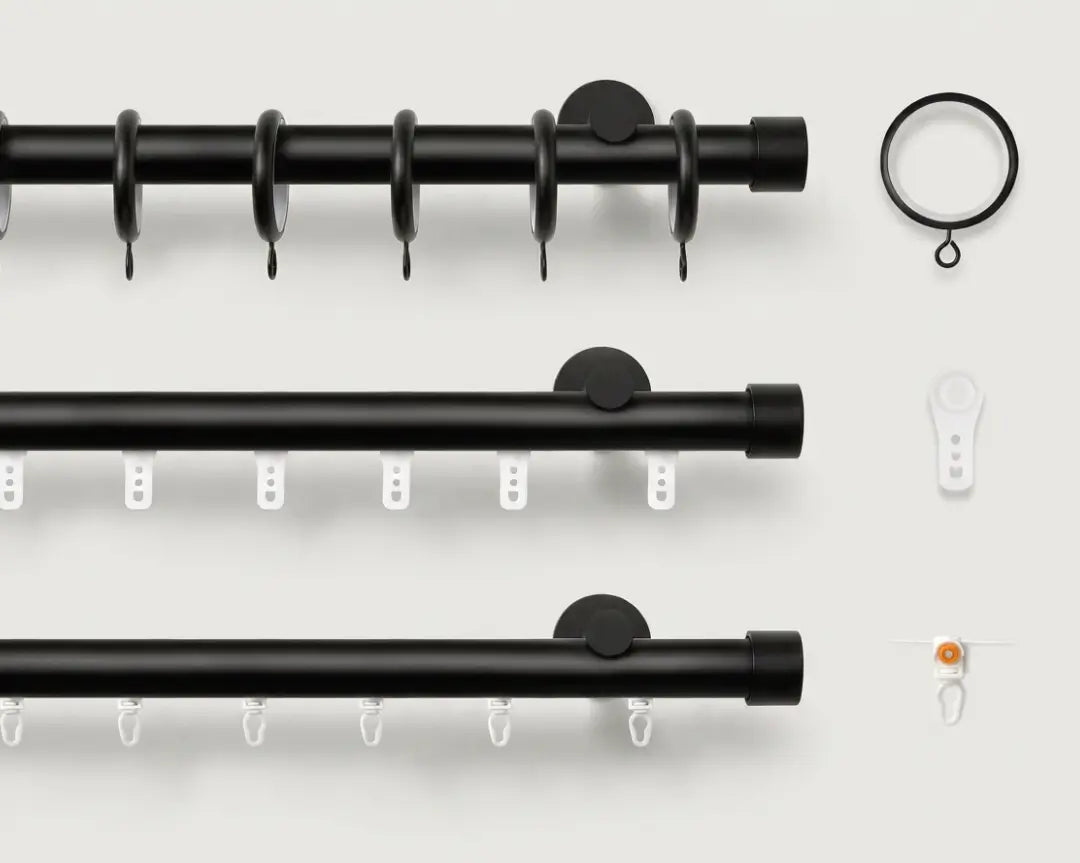
Pair with a Pinch Pleat header on a Collins Single Decorative Rod — the pleats add structure, the rod (available in 4 finishes with 8 finial styles) adds a visible design element, and together they signal "this room was decorated, not just furnished."

Available in standard, extra-wide (up to 360"), and extra-long (up to 240") options.
Scenario B: "It's our movie room. Glare on the screen drives me crazy."
Your living room doubles as a home theater. Sunlight hitting the TV at 4 p.m. ruins the experience. You need curtains that actually darken the room — not just "room darkening" in the marketing sense, but real light suppression.
What to look for: High blackout percentage, dense fabric, minimal light leak at the edges. Bonus if it doesn't look like a dorm-room blackout panel. The pick: Iris Blackout Linen Curtains.
Iris blocks 85–95% of incoming light while keeping the look of linen — a textured, matte surface that doesn't scream "blackout." At 390 GSM, it's dense enough to also dampen sound, which helps with both movie dialogue and keeping noise from spilling into adjacent rooms. The grey undertone reads neutral and modern, not cold.
For maximum coverage, mount the rod 4–6 inches above the window frame and extend it 8–12 inches beyond each side. This keeps light from sneaking around the edges — the real culprit in most "my blackout curtains don't work" complaints.
Available with Pinch Pleat, Grommet, or Rod Pocket headers.
Scenario C: "The living room faces the street. I want light without putting on a show."
Your windows face the sidewalk, the neighbor's house, or a busy road. You don't want to live in a cave — natural light matters. But you also don't want every passerby getting a free tour of your sofa.
What to look for: A semi-sheer that diffuses the view without killing the light. Enough opacity that shapes blur into silhouettes, but the room stays bright. The pick: Luciana Semi-Sheer Curtains.
Luciana is a semi-sheer linen-look panel with a pleated construction that gives the fabric more visual weight than flat sheers. During the day, it softens the view from outside to vague shapes — nobody can tell what you're watching on TV. Light still pours through. At night, with interior lights on, the effect reverses (this is physics, not a product flaw — any sheer works this way), so pair with blinds or a secondary blackout panel if after-dark privacy matters.
The pleated texture also adds a tailored look that flat sheers lack, making these feel more "living room" and less "rental apartment."

One of Freshine's highest-reviewed products (132+ reviews).
Scenario D: "I want drama. High ceilings, formal space, serious impact."
Some living rooms aren't casual. They're double-height, or formal, or deliberately dramatic — and limp, underweight curtains will ruin the effect.
What to look for: A fabric with directional sheen and physical weight. Velvet catches light differently as it folds, creating highlights and shadows that shift when you walk past. No other fabric does this. The pick: Marina Soft Blackout Velvet Curtains.
Marina is a premium velvet with a soft, silky hand and a 70–75% light-blocking rating. It's not full blackout, but for a formal living room that's usually an advantage — you don't want the space to feel like a bedroom. The velvet absorbs sound, which is particularly useful in large, echo-prone rooms. Floor-to-ceiling installation is non-negotiable here: anything shorter reads as a mistake.
The directional pile means the fabric looks slightly different depending on where you stand — richer from one angle, deeper from another. It's the kind of detail guests notice without knowing why.
Available in a range of deep, saturated colors that suit formal spaces.
Scenario E: "I want it all. Light during the day, darkness at night, and it should still look good."
This is the most common living room request — and the one that a single curtain can't solve. You want the room bright and airy at noon, private and dark at night, and you don't want to compromise on how either looks.
The solution is layering. Specifically: a sheer inner panel behind a blackout outer panel on a double rod. The inner layer: Liana Sheer Curtains. Liana is a true sheer — light, translucent, almost weightless. During the day, close the outer blackout panels and let Liana filter the light. The room glows. Passersby see a soft white window, not your living room. The outer layer: Arlise 100% Blackout Chenille. When the sun sets (or the movie starts), pull Arlise closed over Liana. 100% light suppression — zero light leak. The chenille face has a soft, dimensional texture that reads as upholstery-grade fabric, not a utilitarian blackout panel. It also adds thermal insulation, which matters in living rooms with large windows that bleed heat. The hardware: Collins Double Decorative Custom Curtain Rods. Two rods, one bracket system. The inner rod holds the sheer; the outer rod holds the blackout. Same 4 finishes and 8 finial styles as the Collins Single — the decorative front rod becomes a visible design element, while the rear rod does the functional work.

This setup costs more than a single panel — you're buying two sets of curtains plus a double rod. But it's the only way to get genuine day-to-night flexibility without compromise. For a room you use from morning coffee to late-night TV, it's worth the investment.
Fabric Quick-Compare: Living Room Curtains
| Fabric | Best For | Light Control | Look |
|---|---|---|---|
| Linen (Celina) | Entertaining, everyday living | 40–50% light blocking — bright, airy | Natural texture, relaxed luxury |
| Blackout Linen (Iris) | Movie nights, sun-facing windows | 85–95% blackout | Linen look, no "blackout" aesthetic |
| Semi-Sheer (Luciana) | Street-facing, privacy + light | Diffuses, doesn't block | Tailored, pleated, soft |
| Velvet (Marina) | Formal rooms, high ceilings | 70–75% light blocking | Directional sheen, dramatic |
| Sheer (Liana) | Layering inner panel | Minimal — filters, doesn't block | Light, airy, translucent |
Header Styles That Work in Living Rooms
The header — how the curtain attaches to the rod or track — changes the entire look more than most people expect.
Pinch Pleat is the default for traditional and transitional living rooms. The gathered folds create structure and a sense of permanence. It works with both linen and velvet. Ripple Fold (also called S-fold) is the modern alternative. The fabric falls in smooth, continuous waves with no gathering at the top. It reads cleaner and more contemporary — better for minimalist or Scandinavian living rooms. Grommet Top works if the rod itself is a design element (large-diameter metal or wood). The exposed rings create a more casual rhythm. Skip it if your rod is utilitarian.
One Thing Nobody Tells You About Living Room Curtains
The fabric matters. The header matters. But what separates "nice curtains" from "this room looks designed" is where you put the rod.
Mount it 4–6 inches above the window frame — or, if you have 9-foot ceilings or higher, go all the way to 2–3 inches below the ceiling. Extend it 6–10 inches past each side of the window so the curtains stack back onto the wall, not onto the glass. This makes the window feel larger and lets in more light.
The panels should just kiss the floor, or pool by no more than 1–2 inches. Anything shorter reads as a measuring mistake. If you're unsure, select a fabric swatch and measure twice.
Frequently Asked Questions
Q: Can I use the same curtains in my living room and dining room if they're connected?
Yes — in fact, you should. Consistency across an open floor plan makes the space feel larger and more intentional. Use the same fabric and header style, and mount all rods at the same height. If one room needs more light control (e.g., the living room has a TV), vary the lining rather than the fabric.
Q: Are blackout curtains too heavy for a living room?
Not if the fabric has visual texture. The problem with most blackout curtains is that they look like blackout curtains — shiny backing, stiff drape, utilitarian. Iris Blackout Linen avoids this by using a linen-look face fabric. It reads as a textured curtain that happens to block light, not a light-blocking product that happens to be a curtain.
Q: Do I really need a double rod for layering sheers and drapes?
Technically, no — you can hang both on a single rod if you use clip rings and accept that opening and closing them will be awkward. A double rod makes the daily experience frictionless: each layer moves independently. If you plan to actually use both layers (not just leave them static), the double rod pays for itself in convenience.
Q: How do I know which color to choose?
Match the curtain color to the wall color for a seamless, expanded-room effect. Choose a contrasting color if you want the curtains to be a focal point. Neutrals (ivory, flax, warm grey) are the safest bet for living rooms — they age well and don't fight with changing decor. Order a free fabric swatch before committing: screen colors lie.
Ready to Find Your Living Room Curtains?
Browse the Living Room Collection →
Or select fabric swatches to see Celina, Iris, Luciana, and Marina in your actual light before you decide.