

















Custom vs. IKEA—Put Them Side-by-Side, and You'll See the Difference.

Quick answer: IKEA is a practical choice when you need affordable, ready-made curtains for a standard window. But if you care about exact fit, floor-to-ceiling proportion, better light control, privacy, insulation, fabric choice, cordless options, and a finished designer look, custom window treatments usually win. Put a ready-made IKEA panel next to a made-to-measure curtain or shade, and the difference is not subtle: it shows in the length, fullness, fabric behavior, lining, hardware compatibility, and how cleanly the window is framed.
That does not mean IKEA is “bad.” It means IKEA and custom window treatments solve different problems. IKEA is designed for speed, simplicity, and accessible pricing. Custom curtains, Roman shades, cellular shades, and blackout drapes are designed around your actual window, your room, and the way you live. If the window is unusually wide, extra tall, close to the ceiling, near a bed, exposed to afternoon sun, or visible from the street, the custom advantage becomes much more obvious.
For shoppers comparing options, this guide breaks down the real differences between IKEA curtains and custom window treatments—using fit, fabric, privacy, light control, energy performance, safety, maintenance, and long-term value as the decision criteria.
1. The biggest difference is fit
Ready-made curtains are built around standard sizes. That is convenient when your window happens to match the product. But North American homes are rarely that simple. Older homes may have uneven floors. Newer homes may have oversized sliding doors, double-height living rooms, bay windows, or extra-wide glass walls. Condos may have ceiling-to-floor windows where an 84-inch or 96-inch panel looks too short. A standard panel can cover the glass, but it often fails to finish the wall.
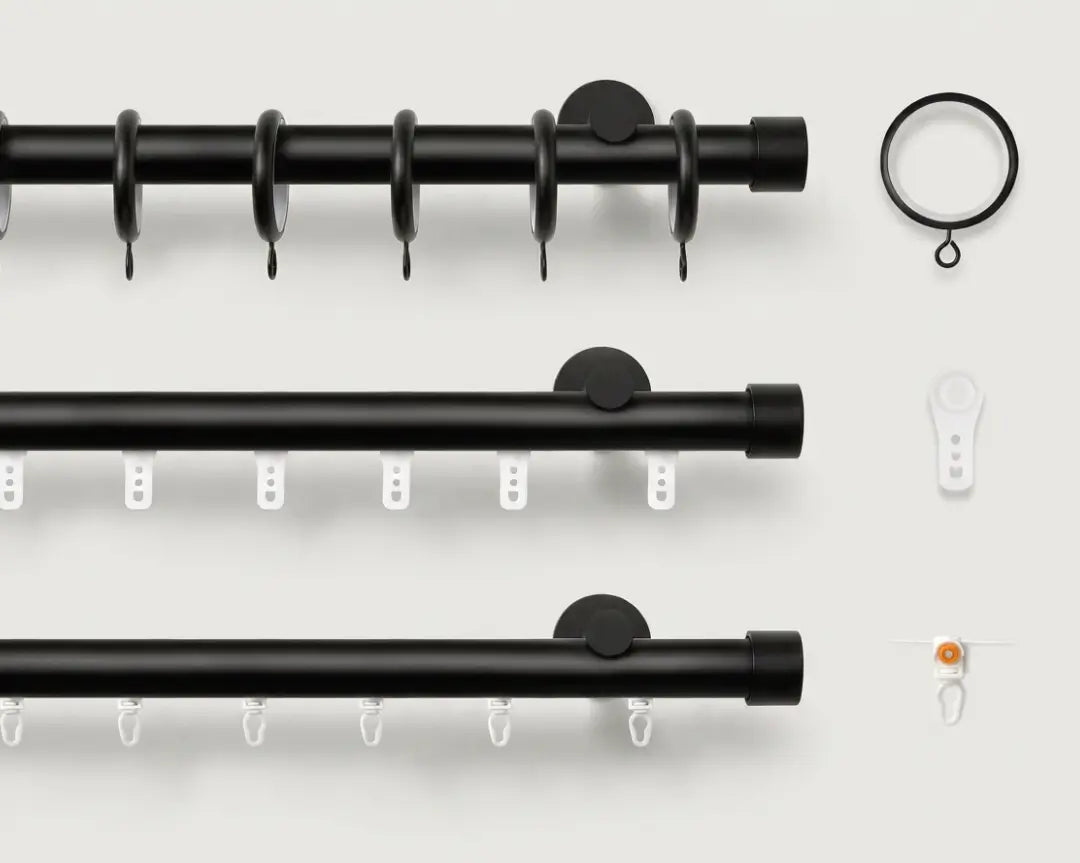
That is where custom makes the first visible difference. Custom curtains are made to the actual width and height you specify, so the final result can be tailored to the room instead of forcing the room to adapt to a stock size. The curtain can kiss the floor, float slightly above it, puddle for a formal look, or align with a specific architectural detail. You can also choose the header style, fullness, lining, and stack-back width.
IKEA’s own curtain-length guide notes that floor-length curtains are one of the most common choices because they look elegant and are easier to maintain when they reach the floor properly. IKEA’s curtain guide also warns that curtains should go all the way down to the floor because “high-water” curtains do not look right. That point matters. The issue is not whether a curtain is from IKEA or custom; the issue is whether it fits the room correctly.
For large windows, sliding doors, tall living rooms, and open-plan spaces, Freshine’s extra long and extra wide curtains are usually a better match than trying to stretch a ready-made panel beyond its intended use.
2. Custom gives you better proportions, not just better measurements

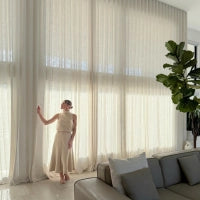
A well-dressed window is not only about covering glass. It is about proportion. Designers often hang curtains high and wide to make a room feel taller, softer, and more finished. When the curtain rod or track is mounted closer to the ceiling and extended beyond the window frame, the window appears larger and the curtain can stack off the glass when open. That means more daylight during the day and a more architectural look at night.
With ready-made panels, this can be difficult. If the panel is too short, you either hang the rod too low or accept a floating, unfinished hemline. If the panel is too narrow, you lose fullness. If you buy multiple panels to increase width, the fabric may create too many seams and uneven folds.
Custom curtains solve the proportion problem at the source. You can order the correct finished length, width, pleat style, and fullness from the beginning. This is especially important for living rooms, primary bedrooms, dining rooms, and any room where the window treatment becomes part of the visual architecture. Freshine’s linen curtains work well for soft, natural texture, while blackout curtains are better when the room needs stronger privacy and light control.
3. Fabric quality and fabric behavior are not the same thing
When shoppers compare curtains, they often focus on fabric at a surface level: color, texture, and whether it feels thick or thin. But the real question is how the fabric behaves after installation. Does it hang evenly? Does it wrinkle heavily? Does it flare at the sides? Does it filter light softly or create harsh shadows? Does it maintain structure after repeated opening and closing?
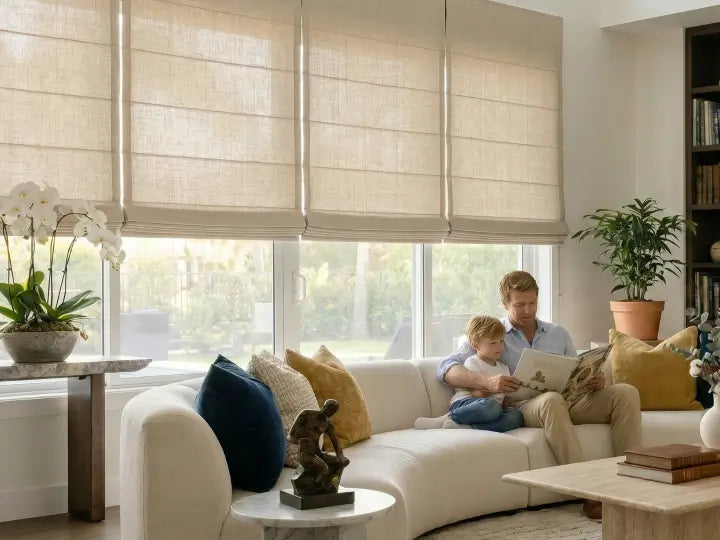
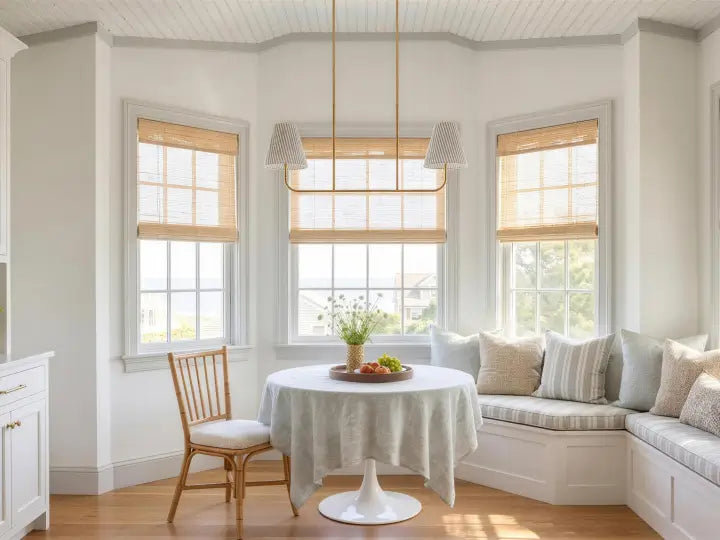
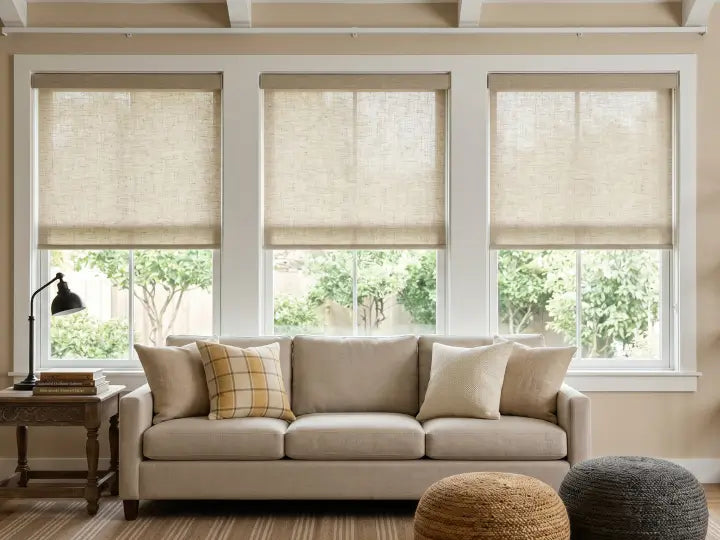
Ready-made curtains can look good in simple spaces, but they offer limited control over weight, lining, fullness, and header construction. Custom window treatments let you choose the full system. For example, a sheer curtain can soften daylight in a living room without darkening the space. A lined linen drape can add body and privacy. A blackout drape can help create a sleep-friendly bedroom. A Roman shade can offer a tailored look where full-length drapery is impractical.
Freshine’s sheer curtains are designed for soft light filtering, while Roman shades create a cleaner, more structured window treatment for kitchens, bedrooms, offices, and smaller spaces. The practical advantage of custom is that you are not choosing only a fabric. You are choosing how that fabric performs.
4. Light control depends on lining, layering, and fit
One of the biggest mistakes buyers make is assuming that any thick curtain will block light well. In reality, light control depends on several details: fabric opacity, lining type, side gaps, top gaps, bottom clearance, fullness, and whether the window treatment is mounted inside or outside the frame.
IKEA offers blackout and room-darkening curtains, which can be useful for renters, guest rooms, and simple bedrooms. But ready-made blackout panels may still leave light gaps if the width, length, rod placement, or wall return is not right. The curtain may block light through the fabric but still allow sunlight to leak around the edges.
Custom blackout curtains and shades can be specified for better coverage. A wider outside mount, proper stack-back, blackout lining, and correct finished length can dramatically improve the result. For bedrooms, nurseries, media rooms, and street-facing spaces, that difference matters. Freshine’s blackout curtain collection is the better starting point when the goal is sleep, privacy, and stronger light blocking rather than decoration alone.
5. Energy performance is real, but it is not magic
Window treatments can help with comfort, but they are not a substitute for efficient windows. The U.S. Department of Energy states that medium-colored draperies with white-plastic backings can reduce heat gain by about 33% during summer days when closed on sun-facing windows. The same DOE guidance says that most conventional draperies, when drawn during cold weather, can reduce heat loss from a warm room by up to 10%.
The key phrase is “when drawn” and properly used. A curtain that is too short, too narrow, or too loosely installed will not perform as well as it could. Energy performance depends on fabric, lining, color, weave, fit, and how close the treatment sits to the window. This is one reason custom cellular shades and lined draperies can be worth considering for bedrooms, nurseries, offices, and rooms with large glass exposure.
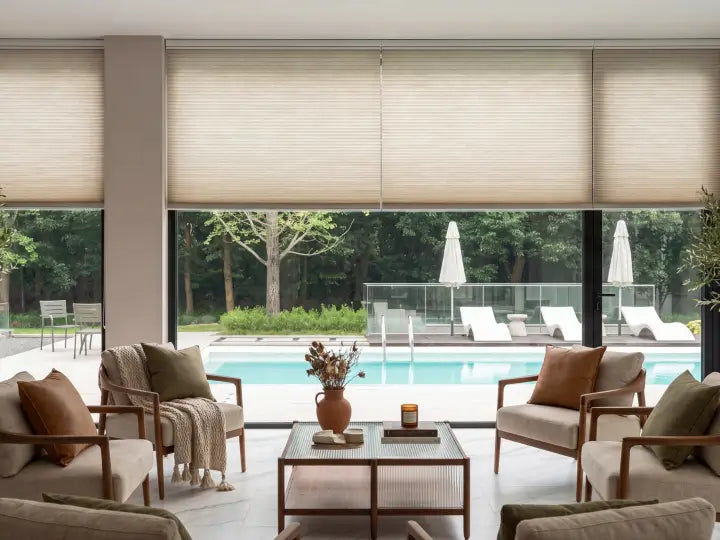
If insulation is your main goal, consider cellular shades. Cellular shades are built with air-trapping pockets that help reduce heat transfer at the window. For many homes, a layered system—cellular shade plus curtain, or Roman shade plus side panels—can offer a strong balance of style, privacy, and comfort.
6. Privacy is where custom often feels more secure
Privacy is not just about whether people can see through the fabric. It is also about coverage. A curtain that is too narrow may expose the sides of the window. A shade that is not measured correctly may leave side gaps. A sheer curtain may work during the day but become much less private at night when the lights are on inside.
Ready-made curtains are acceptable for rooms where privacy is not critical. But in bedrooms, bathrooms, street-facing living rooms, nurseries, and first-floor condos, precision matters. Custom lets you control opacity, lining, finished width, finished height, and mount type. That means you can decide whether you want soft daytime filtering, full nighttime privacy, room-darkening performance, or complete blackout.
For layered privacy, pair sheers with lined drapes. For a cleaner single-treatment look, choose custom Roman shades. For stronger bedroom performance, start with blackout curtains.
7. Safety matters, especially for homes with children
Window covering safety is not only a design issue. It is a household safety issue. The U.S. Consumer Product Safety Commission warns that children have strangled on cords from blinds, shades, draperies, and other window coverings, and says the safest option when young children are present is cordless window coverings.
This is one reason custom shades and motorized options deserve attention. A ready-made product may be inexpensive, but the safest and cleanest solution for a nursery, child’s bedroom, playroom, or family room is often cordless or motorized. Freshine’s motorized Roman shades are especially relevant for parents, tall windows, hard-to-reach windows, and anyone who wants a cleaner look without dangling cords.
For curtains, safety also includes practical details: secure hardware, proper rod support, no excessive puddling in children’s rooms, and no loose fabric near heaters, cribs, or play areas. Custom does not automatically make a window treatment safer, but it gives you more control over the safety decisions.
8. IKEA wins on speed and simplicity
A fair comparison should acknowledge where IKEA performs well. IKEA is strong when the window is standard, the budget is tight, and the buyer needs a fast solution. If you are furnishing a dorm, staging a short-term rental, covering a guest room, or solving a temporary privacy problem, ready-made curtains may be enough.
IKEA is also useful when you are still experimenting with color, moving soon, or not ready to invest in permanent window treatments. In that situation, the lower commitment is part of the appeal. You can buy the panel, hang it, and replace it later.
But the trade-off is clear. You may spend less upfront, but you accept standard sizing, limited fabric customization, limited header options, and less control over lining, fullness, and exact proportion. For some rooms, that is fine. For your main living spaces, it often looks unfinished once you compare it to a true made-to-measure treatment.
9. Custom wins when the room matters
Custom window treatments make the most sense in rooms where appearance, comfort, privacy, and long-term use matter. That includes the living room, primary bedroom, dining room, nursery, media room, home office, and any room with large or unusual windows.
The custom advantage becomes obvious in five situations:
- The window is extra wide or extra tall. Standard panels often look too narrow or too short.
- You want a floor-to-ceiling look. Custom sizing gives you the correct finished length.
- You need serious blackout or privacy. Custom lining and mounting reduce gaps.
- You care about fabric and fold quality. Custom fullness and header styles create a more tailored drape.
- You want a layered designer result. Sheers, drapes, Roman shades, and cellular shades can be combined intentionally.
If you are designing a long-term home rather than solving a temporary coverage problem, custom usually offers better value because it reduces compromise. You are not buying more fabric panels to compensate for width. You are not lowering the rod because the curtain is too short. You are not accepting side gaps because the shade comes in fixed dimensions. You are building the treatment around the window.
10. Cost: cheaper is not always better value
IKEA usually costs less upfront. That is the central reason many people consider it. But window treatment value is not measured only by the first receipt. A ready-made panel that is too short, too narrow, too sheer, or poorly matched to the room may need to be replaced. If you buy extra panels, add hemming tape, change hardware, or layer multiple products to solve fit and privacy problems, the total cost rises.
Custom costs more because the product is made around your specifications. But the extra cost buys precision: the right width, the right length, the right lining, the right header, and the right fabric for the room. In spaces you use every day, that difference is visible for years.
A good rule is simple: use ready-made for temporary or low-priority rooms; use custom for rooms where the window treatment affects sleep, comfort, privacy, photos, resale impression, or daily enjoyment.
11. Side-by-side comparison
| Category | IKEA Ready-Made Curtains | Custom Window Treatments |
|---|---|---|
| Best for | Standard windows, rentals, temporary rooms, tight budgets | Main rooms, large windows, bedrooms, nurseries, designer spaces |
| Fit | Limited to standard sizes | Made to your exact width and length |
| Look | Can be clean, but may look short or under-scaled | More tailored, proportional, and finished |
| Fabric options | Limited catalog choices | Broader control over fabric, texture, opacity, and lining |
| Light control | Depends on product and fit | Can be specified for sheer, privacy, room-darkening, or blackout performance |
| Privacy | Can leave gaps if size or mount is not ideal | Better coverage through exact sizing and mount choice |
| Energy comfort | Helpful when closed, but fit may limit performance | Better potential with lining, correct coverage, and layered treatments |
| Safety options | Varies by product | More room to choose cordless or motorized solutions |
| Upfront cost | Lower | Higher |
| Long-term value | Good for simple needs | Stronger for permanent homes and high-use rooms |
12. Which one should you choose?
Choose IKEA if you need a fast, affordable, ready-made solution for a simple window. It is a sensible option for renters, temporary spaces, guest rooms, and standard windows where a close-enough fit is acceptable.
Choose custom if you want the window treatment to look intentional. That is the better path for floor-to-ceiling drapes, extra-wide windows, blackout bedrooms, street-facing privacy, child-safe cordless options, layered designer rooms, and long-term homes.
For most homeowners, the best answer is not “IKEA or custom everywhere.” It is to use each option where it makes sense. A guest room may be fine with ready-made curtains. A primary bedroom may deserve custom blackout drapes. A living room with large glass may need extra long curtains. A kitchen may look better with Roman shades. A sunny office may benefit from cellular shades. The smarter decision is room-by-room.
Final verdict: put them side-by-side
When IKEA and custom window treatments are viewed separately, IKEA can look like the obvious bargain. But put them side-by-side on the same window and the difference becomes clear. Custom usually hangs better, fits better, frames the room better, and solves more functional problems at once.
IKEA covers a window. Custom completes it.
If you are ready to design window treatments around your actual space, start with Freshine’s custom curtains, explore blackout curtains for bedrooms, compare Roman shades for a tailored look, or browse custom shades and blinds for a cleaner, cordless-friendly solution.
FAQ
Are custom curtains worth it compared with IKEA curtains?
Yes, if the room matters. Custom curtains are most worth it for bedrooms, living rooms, dining rooms, nurseries, tall windows, wide windows, and homes where you want a finished designer look. IKEA is better for temporary or budget-first needs.
Do custom curtains block more light than IKEA curtains?
They can, but only when specified correctly. Better blackout performance comes from blackout lining, wider coverage, correct mounting, and fewer side gaps—not just from thicker fabric.
Are IKEA curtains good quality?
IKEA curtains can be good for the price, especially for standard windows and simple rooms. The limitation is not only quality; it is standard sizing and limited customization.
What is the best custom option for bedrooms?
For bedrooms, start with blackout curtains, room-darkening Roman shades, or a layered system. If the window faces street lights or morning sun, custom blackout lining and proper outside mounting are especially important.
What is the safest window treatment for children?
For homes with young children, cordless or motorized window coverings are the safest direction. Avoid accessible cords, unstable hardware, and excessive puddling fabric in play areas or nurseries.
Should curtains touch the floor?
For most living rooms and bedrooms, yes. Floor-length curtains generally look more finished. For high-traffic rooms, children’s rooms, or spaces with pets, a slight float above the floor can be easier to maintain.