




















How to Measure for Curtains: Width, Length, and How Many Panels
The single most common curtain measuring mistake is not arithmetic. It is measuring the wrong thing — the window, rather than the rod. Everything else follows from getting that one step right, so it is where this starts.
The short answer
Decide where the rod goes, mount it, then measure the rod. Curtains hang from hardware, not from glass, so the window's dimensions are only an input to the rod decision — never the measurement you order from.
You need three numbers: rod width, drop from ring to floor, and how many panels. Multiply rod width by your fullness (1.5x economical, 2x tailored) to get total fabric width, then divide by the panel width you can buy.
In this guide
- Step 1: place the rod first
- Step 2: width — and total fabric
- Step 3: how many panels
- Step 4: length
- Five mistakes worth avoiding
- FAQ
Step 1: place the rod first
Before any tape measure comes out, decide two things about the rod:
- How high. Above the window frame rather than on it. Higher draws the eye up and makes the ceiling read taller; the common convention is roughly halfway between the frame and the ceiling, or 4–6 inches above the frame where the gap is small.
- How wide. Extend past the frame on both sides so the open panels park on wall rather than glass. This is the cheapest way to make a window look bigger, and skipping it is why so many rooms feel darker than they should.
If you can, mount the rod before measuring the drop. Measuring from an imaginary rod position is where most length errors are born.

Step 2: width — and total fabric
Measure the rod end to end, excluding the finials — the finials are decoration, and fabric cannot travel onto them.
That number is not what you order. Curtains need to be wider than the rod so they gather instead of stretching flat:
| Fullness | Total fabric width | Reads as |
|---|---|---|
| 1.5x | Rod width × 1.5 | Economical minimum — acceptable, not generous |
| 2x | Rod width × 2 | The tailored look most people are picturing |
| 2.5x | Rod width × 2.5 | Luxurious, and only worth it on sheers or light fabric |
Below 1.5x the panel hangs flat and looks cheap no matter what the fabric cost — the fullness comparison is worked through in 1.5x versus 2x fullness, and the wider question of how panel width relates to the window is covered in choosing curtain width.
Step 3: how many panels
This is the step people skip, and then wonder why one panel looks skimpy.
The arithmetic is simple: total fabric width ÷ the width of one panel = number of panels, rounded up. Then round up again to an even number if the curtains open from the centre, so both sides match.
A worked example. A 100-inch rod at 2x fullness needs 200 inches of fabric. If the panels you are looking at are 50 inches wide, that is four panels — two per side. Buy two and you have 1x fullness and a pair of flat sheets.
Custom-made curtains sidestep this: the width is cut to your number rather than assembled out of stock panels. On genuinely wide spans there is a further decision about how to split the run, which is covered in curtains for wide windows.

Step 4: length
Measure from where the fabric will actually hang from down to where you want the hem — and that starting point depends on the heading:
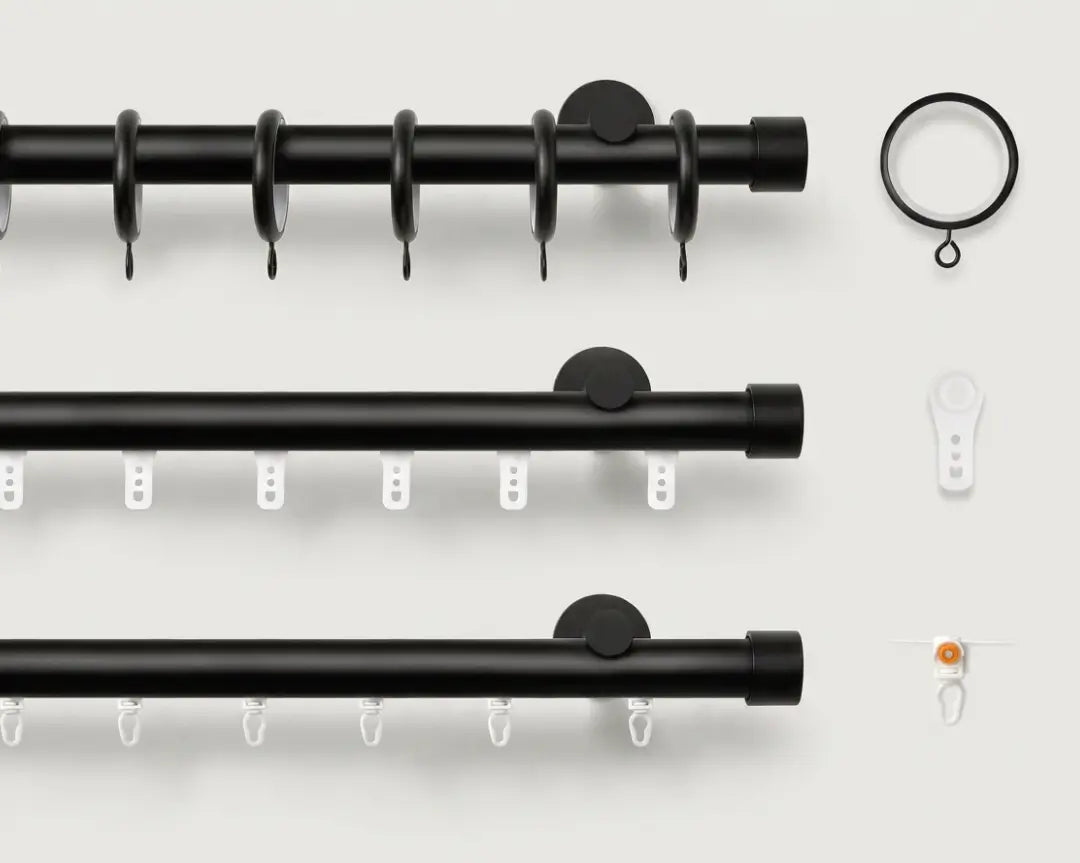
- Rings or clips: from the bottom of the ring, not from the rod. Rings add height, and forgetting them is how curtains end up an inch too long.
- Grommets: from the top of the rod, since the panel rides the pole directly. The fabric above the grommet adds a little height too.
- Rod pocket: from the top of the rod, and remember the header frill sits above it.
Then pick the finish: floor length just brushing, a deliberate puddle, or sill length where furniture or a radiator sits underneath. The trade-offs are in do curtains need to puddle and how long curtains should be.
Measure the drop at both ends and in the middle. Floors are rarely level, and on a wide window the difference can be half an inch or more.
Five mistakes worth avoiding
| Mistake | What it costs you |
|---|---|
| Measuring the window instead of the rod | Panels too narrow to cover the span, and no stack-back room |
| Forgetting the rings in the drop | Curtains an inch or two too long — the most common single error |
| Buying rod width instead of fabric width | Flat, skimpy panels regardless of fabric quality |
| Measuring the drop in one place only | A visibly uneven hem across a wide window |
| Including the finials in rod width | Over-ordering, and fabric that will not travel to the end anyway |
One last practical note: on made-to-order curtains, a measuring error is not returnable. Measure twice, write it down, and if a number looks odd, check it before you order rather than after.
FAQ
How do you measure for curtains?
Decide where the rod goes first — above the frame and extended past it on both sides — then measure the rod, not the window. You need three numbers: rod width end to end excluding finials, the drop from where the fabric hangs down to your chosen hem, and the panel count. Multiply rod width by your fullness to get total fabric width, then divide by the width of one panel.
Do you measure the window or the rod for curtains?
The rod. Curtains hang from hardware, so the window's dimensions only inform where the rod should go — they are never the measurement you order from. Measuring the window is the single most common cause of panels that are too narrow to cover the span and leave no room to stack back off the glass.
How many curtain panels do I need for one window?
Multiply the rod width by your fullness — 1.5x as an economical minimum, 2x for a tailored look — to get total fabric width, then divide by the width of one panel and round up. Round up again to an even number if the curtains open from the centre. A 100-inch rod at 2x needs 200 inches of fabric, which is four 50-inch panels, not two.
How much wider than the window should curtains be?
Width is set by the rod rather than the window, and the rod should extend well past the frame on both sides so the open panels stack on wall instead of glass. The fabric then needs to total 1.5x to 2x that rod width. Anything below 1.5x hangs flat and looks cheap no matter what the fabric cost.
Where do you measure curtain length from?
From wherever the fabric actually hangs from, which depends on the heading. With rings or clips, measure from the bottom of the ring — not the rod — because rings add height, and forgetting them is the most common length error. With grommets or a rod pocket, measure from the top of the rod. Then measure the drop at both ends and the middle, because floors are rarely level.
Should curtains touch the floor?
Usually yes — floor length just brushing the floor is the default and suits nearly every room. A deliberate puddle of a few extra inches reads formal but collects dust and gets stepped on. Sill or apron length is the right call only where a radiator, deep sill, or furniture sits underneath. Avoid the accidental inch of air under the hem, which reads as an error rather than a choice.
Once you have the three numbers
Everything we make is cut to them, so panel-count arithmetic stops being your problem — browse linen curtains or the full blackout range, and pick the rod or track before you finalise the drop, since the hardware is what you measure from.