
















Patterned Roman Shades: How to Style Floral, Stripe & Printed Looks (2026)

Patterned Roman shades have moved from a quiet supporting role to the visual focal point of a room. As 2025–2026 interiors lean into layered textiles, heritage prints and warmer, nature-led palettes, a printed Roman shade is one of the easiest ways to add personality at the window while keeping clean, tailored, architectural lines.
This guide walks you through every decision that matters: the main patterned Roman shade families and where each one works, how to match pattern scale to your window, how fabric and lining change the way a print reads, how to coordinate with drapery and walls, room-by-room ideas, 2026 trends, custom vs. ready-made, and how to keep printed shades looking new. If you already know you want this look, you can browse our Roman shades and use the guide to narrow your choice.
The 7 patterned Roman shade families (and where each works)
Most printed Roman shades fall into seven pattern families. Here is the quick version, then the detail.
| Pattern | Mood | Best rooms |
|---|---|---|
| Florals & botanical | Romantic, biophilic, heritage | Bedrooms, living rooms, kitchens (small sprigs) |
| Stripes | Clean, tailored, nautical | Kitchens, kids' rooms, coastal spaces |
| Nautical & coastal | Airy, relaxed, vacation | Kitchens, bathrooms, guest rooms |
| Geometric | Modern, graphic, energetic | Offices, media rooms, contemporary living |
| Toile | Storybook, nostalgic, formal | Dining rooms, bedrooms, powder rooms |
| Block-print & ikat | Handcrafted, bohemian | Boho living rooms, bedrooms, casual kitchens |
| Abstract & painterly | Artistic, calm, tonal | Quiet-luxury interiors, open-plan, offices |
Florals & botanical prints
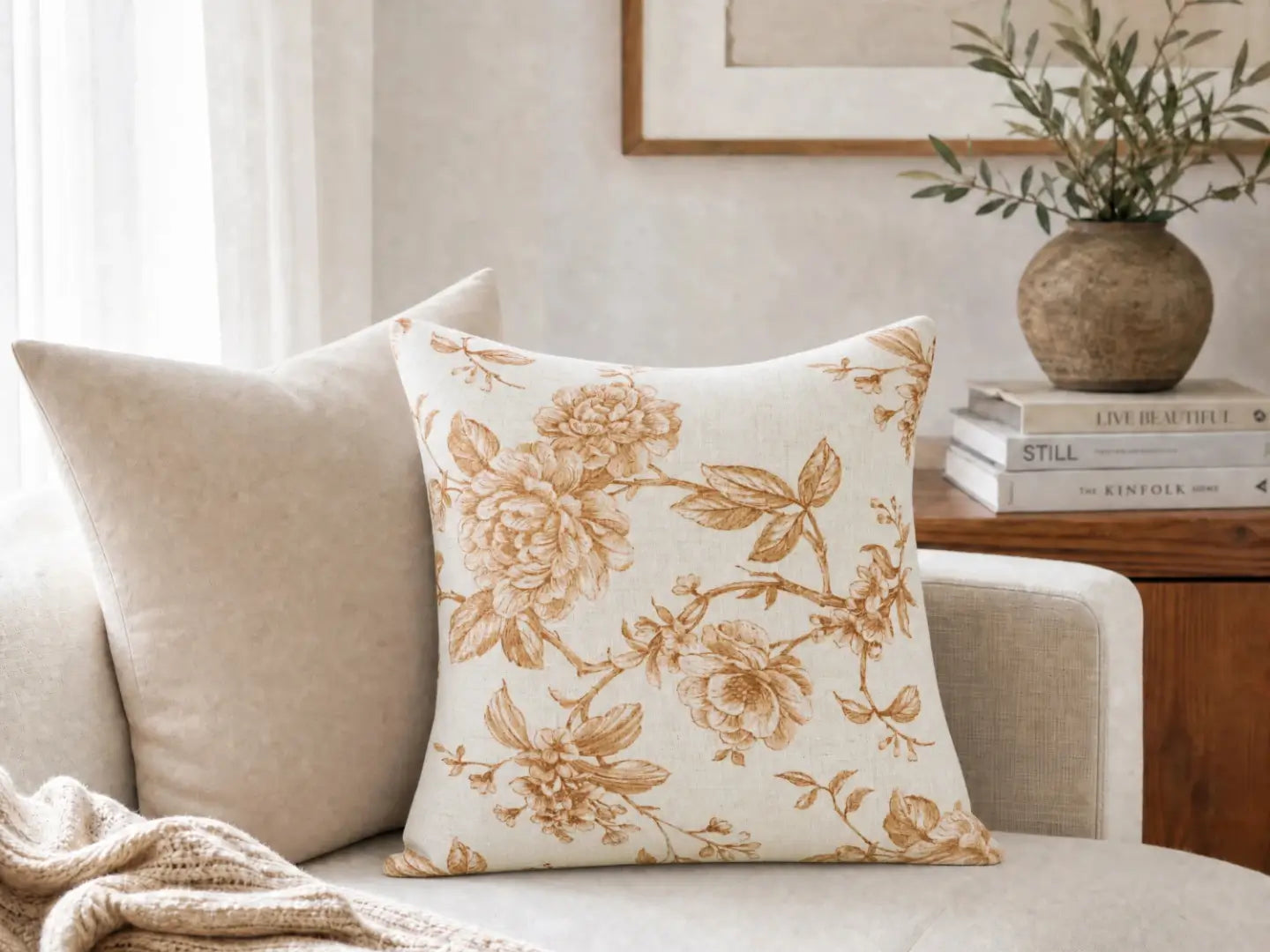
Design media consistently notes a strong swing back to florals and botanicals at the window, part of the wider move toward biophilic, heritage-inspired interiors. The mood ranges from soft watercolor botanicals (contemporary, fresh) to dense chintz-style blossoms (classic English or French country, grandmillennial). Medium-scale florals suit bedrooms and nurseries; large-scale botanicals can be the "hero" pattern in a living or dining room with solid sofas around them; small herb-and-leaf sprigs keep kitchens fresh. Our Ada antique-garden-birds blackout Roman shades are a good example of a botanical print that reads timeless rather than busy.
Stripes
Stripes are the most versatile printed Roman shade — an anchor pattern that pairs easily with florals, geometrics or coastal motifs. Vertical stripes visually heighten a window; horizontal stripes broaden a small opening. Navy-and-white or blue-and-sand stripes read coastal; narrow oatmeal or dove-gray ticking stripes suit modern farmhouse and transitional rooms; wide, colorful bands feel playful in kids' rooms.
Nautical & coastal motifs
Coastal patterns — beachy stripes, palms, shells, watercolor seascapes — are increasingly softened into "subtle coastal" in sun-bleached blues, sandy neutrals and sea-glass greens. Light-filtering coastal Romans keep kitchens and breakfast nooks bright; small-scale coastal prints on moisture-tolerant fabric add character to bathrooms without overwhelming a compact room.
Geometric patterns
Chevrons, trellises, diamonds, grids and abstract shapes are a major 2025–2026 direction, especially in bolder colorways. They suit modern, mid-century and eclectic rooms that lean on clean lines. Structured geometrics on flat Romans echo the geometry of screens and shelving in home offices and media rooms; a large-scale trellis on an outside-mounted Roman can become an architectural focal point in a contemporary living room.
Toile
Toile de Jouy — monochromatic pastoral scenes on a pale ground, traditionally in red, blue, green or black — instantly reads "heritage" or European country house. Because the scenes are detailed, toile behaves like a medium-to-large-scale pattern even when individual motifs are small. It shines in dining rooms, formal living rooms, French-country bedrooms, and makes a charming statement in powder rooms.
Block-print & ikat
Block-print-inspired patterns and blurred, resist-dyed ikats sit in the artisanal, globally-inspired category tied to renewed interest in craft and "collected" interiors. They feel handcrafted and slightly imperfect — more relaxed than crisp geometrics. Indigo or terracotta ikats pair beautifully with carved wood, cane and layered textiles in boho and eclectic bedrooms and living rooms.
Abstract & painterly prints
Brushstrokes, freehand squiggles and organic blobs — usually in muted, tonal palettes — sit between solid and overtly patterned. They add subtle interest without locking into a motif, which makes them ideal for quiet-luxury and minimal interiors, open-plan areas (where a shade is seen from several rooms), and home offices that need a calm video-call backdrop.
How to match pattern scale to your window and room
Designers stress that pattern scale should be guided by the room and window size, not just personal taste:
- Large-scale prints (oversized florals, bold geometrics, wide stripes) create a focal point in a spacious room with a sizable window — the shade becomes a "feature wall" of fabric. They work especially well on outside-mounted, flat Romans that show the full repeat when lowered.
- Small-to-medium prints (petite florals, micro-geometrics, tiny coastal icons) add interest without shrinking a small room, and read as overall texture when several windows repeat around a space — the safe choice for kitchens, bathrooms and nurseries.
A reliable designer trick is the "three scales" rule: combine one large, one medium and one small pattern in a room, with the Roman shade usually holding the large or medium slot. It prevents both monotony (everything small) and chaos (everything bold). Also weigh density and contrast: a dark navy toile on white feels dramatic and suits a feature window, while a tone-on-tone botanical behaves almost like a textured solid and is easier to live with in small or multi-use spaces.
Pattern + fabric + light: how prints actually behave
The same print looks different depending on construction and base cloth.
Light-filtering vs. blackout & lined
- Light-filtering Romans diffuse daylight, so patterns appear softer and slightly washed when backlit — lovely for kitchens and living rooms, and a natural fit for abstract and botanical prints.
- Blackout or fully lined Romans keep pattern colors saturated and consistent day and night — preferred in bedrooms, nurseries and media rooms where you also want tight light control.
Best base fabrics for printed Romans
- Cotton & cotton blends — stable, easy to print, with a smooth surface that yields sharp geometrics, petites and stripes; cotton-poly blends are the "safe" all-rounder.
- Linen & linen blends — texture and a relaxed, high-end look that is trending strongly in 2026; the slight slub softens pattern edges, which flatters block prints, toiles and painterly designs. See our Celina linen Roman shades for the look.
- Polyester & performance fabrics — durable and more moisture- and fade-resistant, the smart pick for kitchens, bathrooms and very sunny windows. Solution-dyed acrylics (e.g., Sunbrella) can block up to ~98% of UV rays.
Avoid very heavy or stretchy fabrics (thick velvet, loose knits): they don't fold cleanly and strain the hardware. And remember UV protection — choose UV-resistant or solution-dyed fabrics, add a lining to shield saturated prints, and share the exposure with sheers or window film on south-facing windows.
How to coordinate patterned Roman shades with drapery and walls
Layering Roman shades with drapery is a headline 2026 look. The classic move is to let one layer carry the pattern: a patterned Roman with solid linen side panels, or vice versa. A few rules keep it intentional:
- Repeat at least one shared color between the patterned shade and the solid drapery.
- Use texture contrast (patterned cotton shade + solid linen panel) to add interest without more pattern.
- Align hems and headers when mixing treatments in one room.
Against a painted wall, a medium-to-large patterned Roman can be the focal point on light neutrals, or echo one or two wall hues on colored walls. Where wallpaper is already patterned, keep the shade quieter — small-scale, tonal, or a coordinating stripe matched to the wallpaper's background color. When mixing multiple patterns, stick to 3–5 shared colors, pair curvy motifs (florals) with linear ones (stripes), vary the scales, and cap it at about three patterns per room.
Room-by-room patterned Roman shade ideas
Kitchens
Choose medium-weight, fast-drying fabrics (cotton, blends, performance poly) and light-filtering or room-darkening constructions. Try fresh stripes or small coastal motifs for farmhouse and coastal kitchens, petite botanicals or simple block prints for cottage and European-inspired schemes, or subtle geometrics for clean-lined modern cabinetry.
Bathrooms
Moisture and limited ventilation make resilience the priority, so favor polyester blends or performance fabrics and smaller motif scales. Small stripes, pin dots and micro-geometrics suit hotel-inspired baths; soft coastal prints or tonal, stone-like abstracts suit spa spaces. For a half-height, café-style option over a tub or vanity window, see our café curtains.
Bedrooms
Blackout or room-darkening Romans protect sleep while keeping prints saturated; layering with full-length drapery is a strong 2026 trend. Medium-to-large florals or toile suit traditional and grandmillennial bedrooms; soft abstracts or tonal geometrics suit quiet luxury; muted block prints and ikat suit boho rooms.
Living & family rooms
These usually have the largest windows, so a patterned Roman — especially outside-mounted and paired with solids — becomes a primary focal point. Large-scale florals or botanicals work as the main pattern over solid sofas; tailored stripes or trellis geometrics suit transitional and modern spaces; heritage toile or damask leans formal and grandmillennial.
Nurseries & kids' rooms
Blackout linings help with naps; choose soft-but-durable fabrics and whimsical-not-juvenile patterns children can grow into — gentle florals and storybook toiles, cheerful stripes and dots, or simple geometrics. A botanical blackout shade like our Ada blackout Roman shade bridges nursery and "big-kid" room nicely.
2026 patterned Roman shade trends
Trend roundups point to a few macro forces shaping pattern choices: nature-inspired/biophilic motifs in warm earth tones; a heritage revival (grandmillennial, old-money, European country) driving toile, chintz and tailored stripes; quiet luxury favoring subtle, textural, tone-on-tone prints in core living spaces; and dopamine décor encouraging bolder color and playful pattern in select rooms. The specific directions for Romans: bold florals and geometrics as focal points (often outside-mounted like fabric wall panels), warm-neutral grounds (sand, oat, clay, terracotta) instead of cold gray, and artisanal hand-drawn motifs. For a deeper look at why this silhouette is having a moment, read The Roman Shade Renaissance.
Construction details that change how a pattern reads
- Flat / classic Romans hang smooth when lowered, showing a pattern almost like a flat panel — ideal for large florals, geometrics and scenic toile with uninterrupted repeats.
- Hobbled / looped Romans keep soft horizontal folds even when down, which can break up motifs and make busy prints look denser.
- Relaxed Romans have a gentle bottom curve and read more casual — good for loose block prints, small florals and abstracts.
Because shades stack when raised, plan for both views: check the vertical repeat so key motifs aren't cut at the header or buried in folds, center a main motif on single-window installations, and allow extra fabric to match the pattern across multiple shades. Outside mounts (sized wider and taller than the window) show more of the repeat and let the shade double as art. If you choose a scenic toile or large art-like print, tell your workroom your preferred motif placement and typical shade height.
Custom vs. ready-made patterned Roman shades
Ready-made shades come in fixed sizes and are most forgiving on inside mounts. Custom Romans are sized to the exact opening, offer far more control over pattern placement, lining and operating system, and are usually required for the on-trend outside-mounted, wall-to-wall look.
| Type | Typical price per window |
|---|---|
| Quality ready-made / standard custom (non-motorized) | ~$150–$300 |
| Fully custom, large, or motorized with premium fabric & lining | ~$400–$800+ |
Custom lead times typically run a few weeks to a couple of months (longer in peak renovation season), while ready-made ships fast but may need DIY tweaks. Well-fitted, lined Romans behave like built-in millwork and last longer, which often justifies the higher upfront cost in main living spaces.
How to clean and care for printed Roman shades
- Routine: dust weekly or biweekly with a feather duster or microfiber cloth; vacuum occasionally with a soft brush on low suction, paying attention to fold lines.
- Spots & stains: blot spills immediately with a clean damp cloth; use mild detergent in lukewarm water if needed, and don't rub. Always test on a hidden area first to avoid color change or pattern bleed.
- Deep cleaning: some cotton or linen Romans can be gently hand-washed and air-dried flat, but many lined, blackout or specialty fabrics are best left to professionals.
- Fade protection: choose UV-resistant fabrics and linings, avoid leaving shades fully down in intense midday sun, and keep bleach and high heat away from printed cloth.
8 patterned Roman shade mistakes to avoid
- Ignoring scale relative to the room and window — let architectural scale guide motif size and density.
- Overloading patterns without a cohesive palette — cap it at three patterns, 3–5 shared colors, and mix curvy with straight motifs.
- Clashing with existing wallpaper or a statement sofa — choose a simpler stripe, small print or textured solid when something bold is already in the room.
- Forgetting lining and light-control needs — decide blackout vs. light-filtering in parallel with the pattern.
- Wrong fabric for the conditions — don't put delicate unlined cotton in a steamy bathroom or non-fade-resistant prints in a south-facing room.
- Poor motif placement — center scenes and align repeats so nothing important is chopped at the header or lost in folds.
- Mismatched mount heights and hardware — align shade tops and use cohesive hardware across a room.
- Underestimating lead time and budget — order custom patterned Romans early in the project, not at the end.
Frequently asked questions
Are Roman shades still in style in 2026?
Yes. Designers point to layered textiles, heritage prints and biophilic palettes as defining 2026 looks, and Roman shades — with their clean silhouette and compatibility with both solids and bold prints — are repeatedly named as well-positioned to carry these trends.
What pattern works best for a small window?
Small-to-medium, lower-contrast prints — petite florals, micro-geometrics, tonal stripes — add interest without visually shrinking the space. Save large, high-contrast motifs for sizable feature windows.
Can you use patterned Roman shades in a bathroom?
Yes, if you choose moisture-tolerant polyester or performance fabrics and keep motifs small. Soft coastal prints and tonal, stone-like abstracts work especially well in compact, humid bathrooms.
Floral or geometric — which should I choose?
Florals and botanicals feel soft, romantic and biophilic and suit heritage, cottage and grandmillennial rooms; geometrics feel modern and graphic and suit mid-century, contemporary and eclectic spaces. Match the pattern to the room's overall style.
Are patterned Roman shades hard to clean?
No — routine dusting and occasional gentle vacuuming handle most upkeep. Spot-clean spills promptly (testing a hidden area first), and use professional cleaning for lined, blackout or specialty fabrics.
Ready to add pattern at your windows?
Use the scale, fabric and coordination rules above to shortlist two or three options, then shop our patterned Roman shades — or pair a print with solid linen drapery for the layered 2026 look. With the right pattern and lining, a Roman shade works as both a functional tool and a long-lasting design asset.