
















Are Roman Shades Out of Style in 2026?
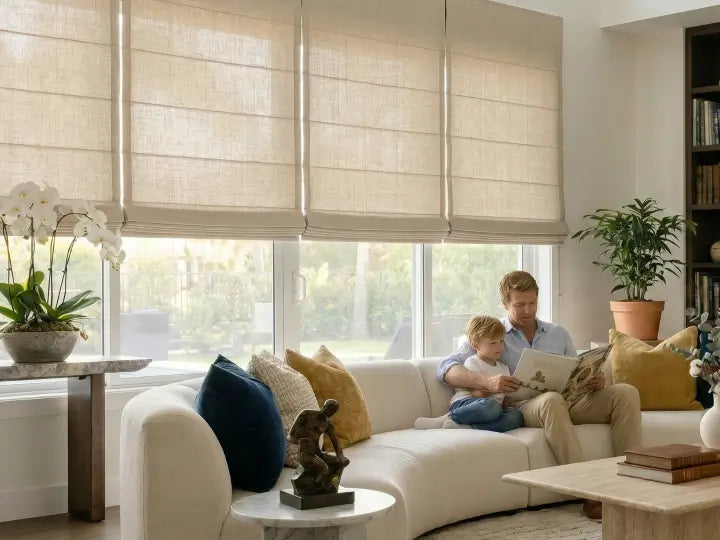
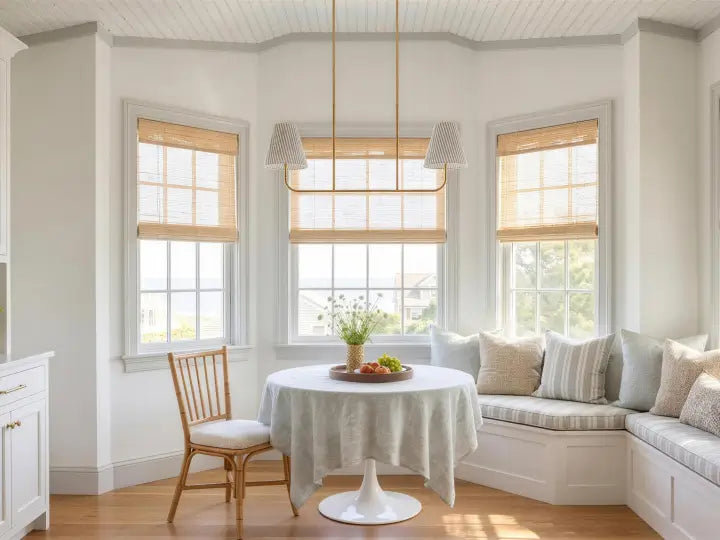
 No — Roman shades are not out of style in 2026. Across 2025–2026 trend reports and designer commentary, they are repeatedly named one of the leading window treatments of the year, not a dated one. What has changed is the look: today's Roman shades are cleaner, softer, and more textural — flat and relaxed profiles in linen and warm neutrals — rather than the heavy, ornate versions people picture.
This guide gives you the designer verdict, the 2026 Roman shade trends worth knowing, an honest room-by-room decision table for when Romans shine versus when an alternative fits better, and a clear-eyed look at the cellular, roller, sheer, and shutter options often described as "replacing" them. If you already know you want the look, you can browse our Roman shades and use the guide to choose the right style and fabric.
Key takeaways
- Roman shades are in for 2026 — multiple trend roundups call them the year's biggest window trend, not outdated.
- What reads dated is heavy, fussy, ornate treatments (bulky swags, stiff valances) — not streamlined, textural Romans.
- The 2026 look: flat and relaxed profiles, linen and woven fabrics, warm neutrals and earth tones, subtle plaids and stripes.
- Romans shine on small-to-medium windows in living rooms, dining rooms, bedrooms, and offices, especially layered with drapery.
- Cellular, roller/solar, sheers, and shutters are partners, not replacements — homes increasingly layer them by room function.
Are Roman shades out of style in 2026?
No — Roman shades are not out of style or outdated in 2026, and the design consensus is firmly on the "in" side. Recent trend forecasts and designer commentary consistently describe Roman shades as one of the most in-demand window treatments in North American interiors, with several roundups naming Roman shades or Roman blinds the key window trend heading into the year. The Spruce's early-2026 trend coverage went so far as to call Roman shades "the year's biggest window trend," praising their simplicity, style, and budget friendliness.
Designers often frame Romans as timeless — the "little black dress" of window treatments — because the same construction can read traditional, transitional, or modern depending on fabric and detailing. A 2026 blind-and-shade forecast puts them in a sweet spot between softness and structure, aligning with the broader move toward warmer, layered, "quiet luxury" interiors. They are evolving, not disappearing: updated fabrics like linen and cotton, cordless and motorized lifts, and simplified tailored profiles are what's current.
The nuance worth stating plainly: while heavy, fussy, and overly ornate treatments are genuinely falling out of favor, streamlined and textural Romans sit firmly on the "yes" list. No credible 2025–2026 source surveyed here categorizes Roman shades as "out." If you want the deeper case for why this classic is dominating right now, read our companion piece on the Roman shade renaissance. For the wider view beyond Romans, see what's in and what's out for curtains in 2026.
Why are Roman shades still in style?
Roman shades stay relevant because they match the macro directions defining 2026 interiors — soft geometry, layering, natural texture, and quiet luxury — better than most alternatives. Here is what's driving their staying power.
Clean lines with soft geometry
One of the biggest documented trends, captured in the 2026 Houzz Emerging Summer Trends Report, is a move away from rigid, sharp lines toward curves, soft geometry, and tactile surfaces. Roman shades bridge both directions naturally: raised, they create soft architectural folds; lowered, they read as a clean flat panel with minimal hardware. That makes them feel neater and more tailored than loose curtains, yet far softer and more residential than a utilitarian roller blind or aluminum mini.
Built for the layered look
Layering is a defining 2026 strategy — homeowners increasingly combine treatments, such as a shade plus stationary drapery, to add depth and a finished, designer look. This actually strengthens the role of Romans, because they are often the hard-working inner layer that handles privacy and light control while drapery delivers drama and softness. Common pairings include textured Roman shades with colored side panels for a "modern heritage" feel.
A fabric, pattern, and texture revival
2025–2026 color and material reports show a decisive shift away from cold grays toward warm neutrals, earthy tones, and tactile materials like linen, cotton, bamboo, and woven grasses. Because Roman shades are inherently fabric-based, they showcase pattern, texture, and trims in a controlled, architectural way — ideal for introducing a subtle stripe, windowpane check, or tone-on-tone print without overwhelming a room.
Customization, quiet luxury, and efficiency
Trend coverage emphasizes a move toward custom, well-crafted, long-lasting treatments over fast, generic solutions. Romans fit this "quiet luxury" ethos: made to measure, lined or interlined, with tailored choices on banding, trims, and mount style. When made with thicker or lined fabrics, they also contribute to thermal comfort and can reduce heating and cooling loads, especially when combined with other treatments — a real plus as energy efficiency and natural, eco-conscious materials become buyer expectations rather than extras.
What Roman shade styles are trending in 2026?
The forward-looking 2026 Roman shade leans flat or relaxed, in linen or a natural weave, in a warm earthy color, with optional subtle pattern and cordless or motorized operation. Here is the quick reference.
| Element | Trending in 2026 | Why it works |
|---|---|---|
| Style / profile | Flat (sleek, modern); relaxed / soft-wave (casual, romantic); hobbled used selectively for classic rooms. | Flat suits tailored and modern spaces; relaxed Romans are specifically called out as a 2025–2026 go-to. |
| Fabrics | Linen and linen blends, cotton, natural woven materials (bamboo, grasscloth-inspired); lined constructions. | Linen is predicted to be the fabric of choice; lining balances softness, structure, and energy performance. |
| Colors | Warm whites, cream, ivory; mushroom, greige, tan, camel; muted greens (sage, olive) and grounded accents. | Searches for rust, chocolate, mushroom, sage, and taupe are all up; warm undertones replace cool blue-grays. |
| Patterns | Plaids and checks, stripes, soft tailored geometrics; subtle tone-on-tone prints. | Folds and flat panels showcase plaid without overwhelming; pattern adds a focal point over a neutral base. |
| Operation | Cordless and motorized lifts; inside-mount for a clean look. | Aligns with smart-home demand and a streamlined, clutter-free profile. |
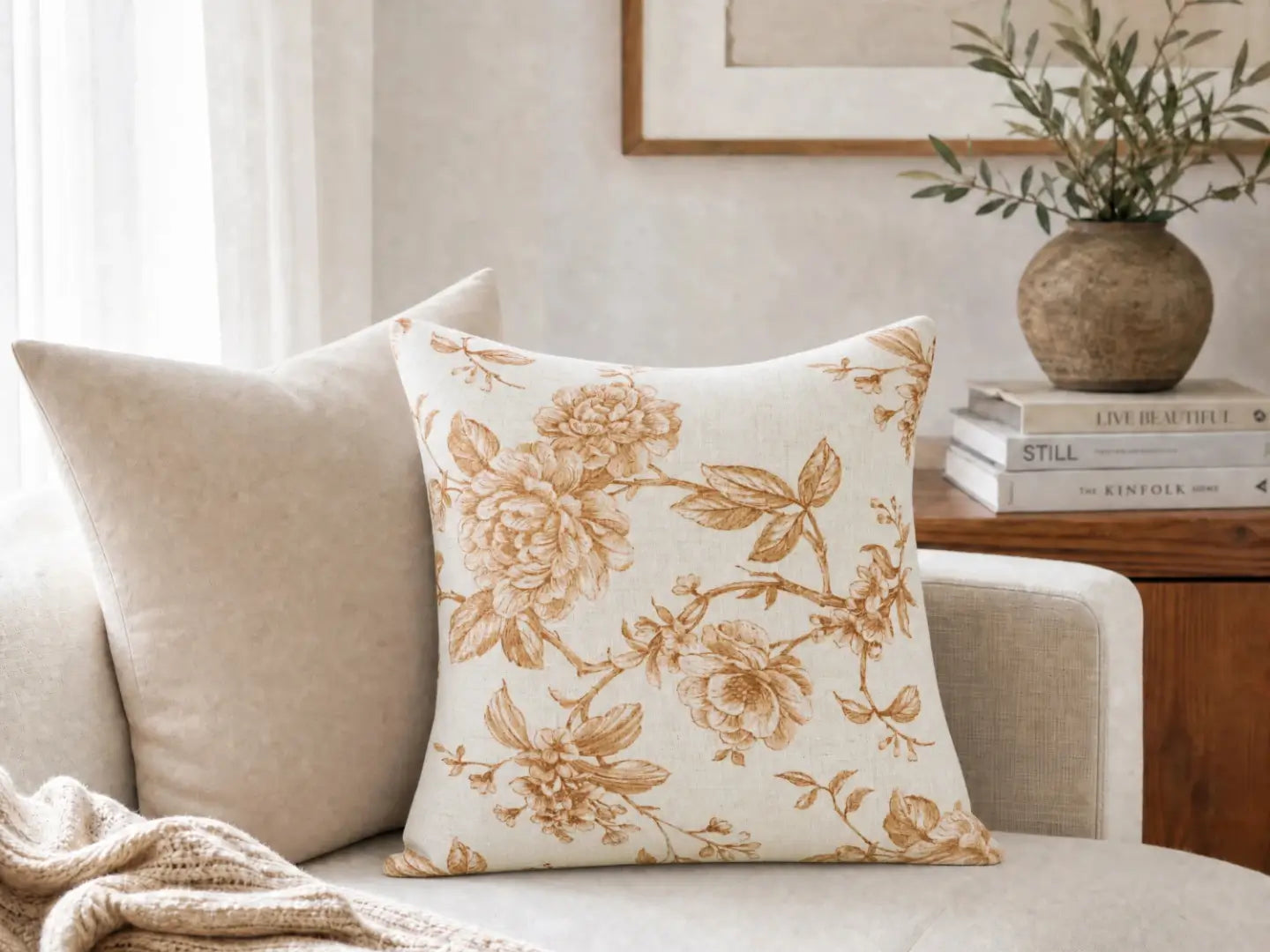
In practice, the most common 2026 combinations pair a subtle patterned Roman (a stripe, small check, or tone-on-tone damask) with solid drapery, or place a solid Roman under patterned drapery for a quieter base. A linen flat Roman like the Celina linen Roman shade captures the warm-neutral, natural-texture direction, while a botanical print such as the Ada antique garden birds linen Roman shade shows how subtle pattern adds character in a powder room or breakfast nook without needing full drapery.
Room-by-room: when Roman shades shine vs. alternatives
Roman shades are most recommended when you want a tailored, fabric-rich look without full drapery, especially on small-to-medium windows. The table below synthesizes common design and window-treatment guidance for U.S. homes — when Romans are the right call, and when another product fits the room better.
| Room / scenario | When Roman shades shine | When to consider alternatives |
|---|---|---|
| Living / family room | Tailored fabric look with clean lines on standard windows; excellent layered with drapery for a designer finish. | Very wide windows or sliders may need full drapery or verticals; solar/roller shades suit ultra-minimal, media-focused spaces. |
| Dining room | Structured but not overly formal; flat or relaxed Romans in linen or subtle patterns fit modern-heritage and quiet-luxury looks. | Very formal rooms may suit double-width drapery; tight budgets can use simple rollers. |
| Bedroom (adult) | Relaxed or lined Romans add softness, privacy, and light control; can be blackout-lined or layered with drapes for hotel-like darkness. | Cellular shades or blackout rollers win where maximum darkening and energy savings come first. |
| Nursery / kids' room | Cordless or motorized Romans for a soft, cozy look; layer with sheers or drapery for flexibility. | Many experts recommend cordless cellular shades or rollers first for safety and ease, with stationary drapery for decor. |
| Kitchen | Selective use on sink windows or breakfast nooks in washable fabrics; flat linen or cotton Romans give a tailored cottage feel. | High-humidity cooking zones favor faux-wood blinds, vinyl rollers, or easy-clean shades; skip heavy or hobbled Romans. |
| Bathroom | Rarely recommended for full wet zones; if used, keep well away from direct moisture in mildew-resistant fabrics. | Faux-wood blinds, vinyl rollers, shutters, or moisture-resistant cellular shades are safer near tubs and showers. |
| Home office | Flat Romans in linen or tailored solids add softness without clutter on camera-facing windows; good glare control when lined. | Solar or roller shades may be better where screen glare and view preservation matter; cellular shades help with temperature swings. |
| Media room | Lined or blackout Romans work on normal windows and pair well with drapery for full blackout. | Dedicated theater rooms more often use blackout roller, cellular, or layered systems for superior light-blocking. |
On sizing, several sources advise choosing shades (including Romans) over drapery when window widths are under roughly 70 inches, where shades are more cost-effective and visually proportional. For very wide spans over about 100 inches, full drapery is often more practical and elegant. Romans suit standard rectangular openings and carefully measured bay windows; specialty shapes, skylights, and very tall windows are usually better served by cellular, roller, or custom shutter solutions engineered for that geometry. For a broader product-by-product comparison, see our guide to curtains vs. blinds vs. shades.
Roman shades vs. cellular, roller & sheer shades — which should you choose?
The honest framing is that the products often described as "replacing" Roman shades are really partners, not replacements. The most current homes mix and layer these solutions by room function. Here is where each one wins or loses against Romans.
Cellular (honeycomb) shades
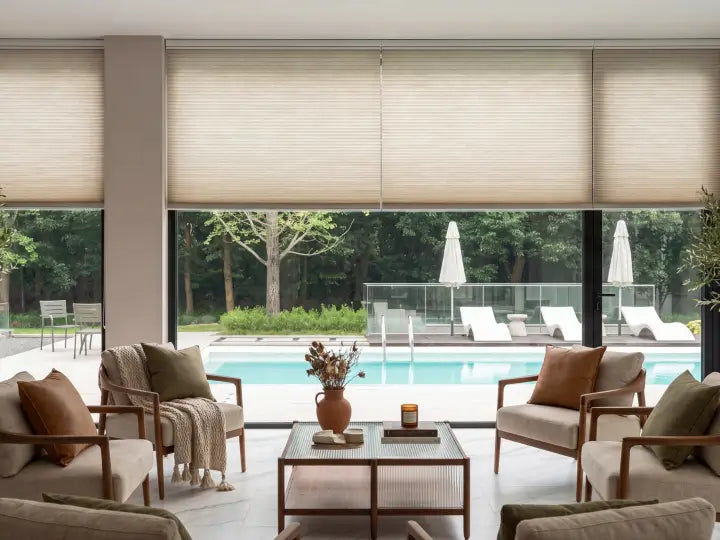
Cellular shades are the top pick for energy efficiency. Their air-trapping honeycomb structure can cut heat loss by up to around 40% in winter and reduce heat gain in summer, which is why they are favored for skylights, large openings, and homes focused on utility bills and comfort. In design terms, though, they offer a simple pleated look that lacks the softness and custom-fabric options of Romans. So in design-forward projects they typically supplement Romans in bedrooms and media rooms rather than replace them.
Roller and solar shades
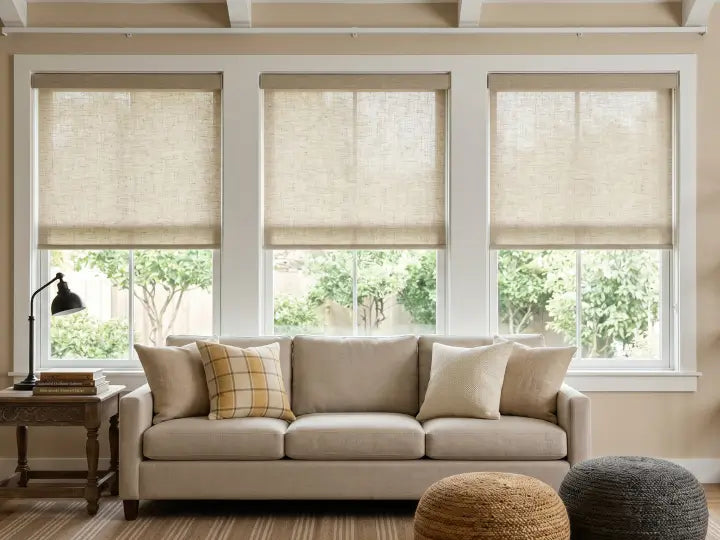
Roller shades are sometimes described as the single most popular modern treatment thanks to their streamlined profile, ease of use, and low cost. Solar shades — a roller variant tuned for UV and glare control — are frequently recommended for large windows, offices, and strong-sun rooms where preserving the view matters. Designers reach for rollers or solar shades when they want the treatment to visually recede or look almost commercial; they choose Romans when they want added softness, pattern, or a more custom, tailored feel, especially in living rooms and bedrooms. You can browse these functional options in our shades & blinds collection.
Sheer shades and sheers
Sheers diffuse harsh sunlight into a soft glow while preserving some privacy, fitting the move toward light, airy spaces. Layering sheers with a blackout roller or Roman shade is repeatedly cited as a top 2026 combination because it balances softness, light control, and versatility. Sheer-only solutions can feel more contemporary and minimal, but they generally cannot match the nighttime privacy or insulation of a lined Roman or cellular shade — so they are best understood as partners to Romans, not direct replacements.
Traditional blinds and shutters
Wood and faux-wood blinds and plantation shutters remain popular and are often positioned as timeless, architecturally integrated upgrades; shutters in soft neutrals with wider louvers continue to be requested as premium long-term choices. Notably, the treatments trend explainers flag as dated are thin aluminum blinds, heavy valances, and stiff over-decorated drapery — with Roman shades on the "still in" side. Romans therefore compete with shutters and wood blinds on style preference rather than trendiness: shutters read more architectural, while Romans read more textural and tailored.
Common misconception: "Roman shades look dated or fussy"
This is the misconception worth correcting directly: what feels dated in 2026 is not Roman shades as a category, but overly decorated, heavy, or complicated window treatments in general — bulky swags, ornate valances, and stiff box-pleated draperies. Relaxed, inset, and simply detailed Romans in quality fabrics are repeatedly cited as current and desirable.
Romans only skew "fussy" when paired with the wrong details: heavy trims, shiny synthetic fabrics, or overcomplicated top treatments. The fix is straightforward — natural textiles, simple borders or banding, clean hardware, and a flat or relaxed profile. One related dated habit is matching every window in the home identically; combining inset Roman shades with floor-to-ceiling drapery in complementary fabrics reads fresh and welcoming instead.
A few pitfalls are worth avoiding so your Romans stay on the "current" side. Do not run a single Roman across a very wide slider, where multiple panels or drapery work better. Do not install delicate linen Romans directly above steamy cooking zones or in humid bathrooms, where moisture-resistant materials belong. And do not under-spec lining: unlined or too-sheer Romans in bedrooms or street-facing rooms give poor privacy and light control, so reach for blackout or thermal linings there.
Frequently asked questions
Are Roman shades outdated?
No. 2025–2026 trend reports and designers consistently place Roman shades on the "in" list, with several calling them a leading window trend of the year. What reads outdated is heavy, ornate, or fussy treatments — bulky swags and stiff valances — not streamlined, textural Romans in linen or natural weaves.
Are Roman shades still in style in 2026?
Yes. Roman shades are firmly in style in 2026. The Spruce's trend coverage called them the year's biggest window trend, and forecasts describe them as sitting between softness and structure, aligning with warm, layered, quiet-luxury interiors. They are evolving toward cleaner profiles, linen and cotton fabrics, and cordless or motorized lifts.
Are relaxed Roman shades in style?
Yes — relaxed Roman shades (also called soft-wave) are specifically named as a 2025–2026 go-to. Their gentle curve at the bottom creates a casual, romantic look that designers favor in bedrooms, informal dining areas, and cozy living spaces. Flat Romans remain the pick for modern or tailored rooms.
What are the Roman shade trends for 2026?
The 2026 direction is flat or relaxed profiles; linen, cotton, and natural woven fabrics; warm neutrals and earth tones (cream, mushroom, taupe, sage); subtle plaids, stripes, and tone-on-tone patterns; and cordless or motorized operation. Layering a textured Roman with stationary drapery is one of the most common designer combinations.
Roman shades vs. cellular shades — which is better?
It depends on priority. Cellular (honeycomb) shades are better for energy efficiency, cutting heat loss by up to about 40% in winter, and suit skylights and large openings. Roman shades are better for a soft, custom, fabric-rich look. Many homes use both — cellular shades for performance in bedrooms and media rooms, Romans where appearance leads.
Do Roman shades make a room look smaller or dated?
No, when specified well. Inside-mounted flat or relaxed Romans in light, warm neutrals keep windows clean and unfussy, which suits small and standard rooms. Dated looks come from heavy fabrics, ornate trims, and matching every window identically — not from the Roman shade itself.
Are Roman shades worth it in 2026?
For small-to-medium windows in living rooms, dining rooms, bedrooms, and home offices where you want a tailored, soft, customizable look — yes. Choose flat or relaxed styles in linen or natural weaves, add lining for privacy and insulation, and layer with drapery for a designer finish. For very wide sliders, high-humidity rooms, or maximum energy efficiency, consider cellular, roller, shutters, or moisture-resistant blinds instead.
Shop the 2026 Roman shade look
Roman shades are not going anywhere in 2026 — they are simply getting cleaner, softer, and more textural. Choose a flat or relaxed profile in linen or a natural weave, lean into warm neutrals, and layer with drapery when you want depth. Browse our Roman shades collection to start, consider a linen flat style like the Celina linen Roman shade or a botanical print like the Ada antique garden birds Roman shade, and explore shades & blinds for the cellular or roller layer that handles energy and full blackout.