





















Can Renters Hang Thermal/Blackout Curtains Without Drilling? No-Drill Methods Compared 2026

If you rent in a US apartment with painted drywall and vinyl-framed windows, you probably want two things this winter: fewer drafts and zero deposit drama. The good news is you can hang thermal curtains without drilling. The trade-offs come down to load capacity, span width, surface compatibility, and how smoothly the setup works day to day. Below, we compare four renter-friendly, no-drill methods—tension rods, adhesive hook–mounted rods, magnetic rods, and no-drill tracks—so you can pick the right match for your window, fabric, and goals.
TL;DR verdict by scenario
- Fastest setup on vinyl frames for medium-weight curtains: Tension rod. Add anti-slip pads and split very wide spans.
- Best for heavy thermal or blackout with smooth daily operation on drywall: No-drill track with gliders and hook tape, using adhesive or press-fit mounting per the manufacturer.
- Steel doors or truly magnetic metal frames only: Magnetic rod for light panels; it won’t work on vinyl or aluminum.
- Adhesive-only constraint and light-to-medium sets: Adhesive curtain rod hooks up to a total of 10 lb with careful surface prep and cure time.
Ways to hang thermal curtains without drilling compared
Below is a compact, evidence-led comparison you can scan before you buy.
| Method | Typical max load | Recommended max span without center support | Substrate compatibility | Install time and tools | Removal and deposit risk | Thermal seal enablement | Operational smoothness | Typical hardware cost | Best for | Evidence |
|---|---|---|---|---|---|---|---|---|---|---|
| Tension rod | ~15–30 lb depending on model and width | Keep spans modest; wide spans increase slip risk | Inside-mount between firm, parallel surfaces; vinyl frames can be slick | Minutes, no tools beyond step stool | Low when sized correctly; may scuff if over-tightened | Moderate with wraparound styles; side gaps can remain | Fair to good; friction at grommets or rod pockets | About $20–$85 as of Feb 2026 | Speed on vinyl frames with medium-weight panels | Umbra Loop 1 in rod lists 15 lb; heavy-duty tension listings up to 30 lb; center-support guidance for long runs in HD guide (Umbra at Home Depot, HD rod types guide) |
| Adhesive hooks plus rod | Up to 10 lb total per pair when weight is evenly distributed | Use shorter spans and lighter fabrics | Smooth, finished walls and trim; avoid textured walls and wallpaper | Minutes plus surface cleaning and cure time | Low if instructions followed; risk rises on delicate paint | Moderate; outside mount helps overlap but adds projection | Fair; friction remains at the rod | About $7–$15 for hooks plus a rod as of Feb 2026 | Adhesive-only installs for light-to-medium sets | Command Curtain Rod Hooks specify 10 lb and surface rules with stretch-release removal (Command how-to) |
| Magnetic rod | Typically 2–5 lb working load | Narrow spans and very light fabrics only | Ferrous steel only; not for vinyl or aluminum frames | Minutes, no tools | Very low on steel surfaces; simply lift away | Low; projection creates side gaps | Fair; magnets can drift if near capacity | About $15–$40 typical market range as of Feb 2026 | Steel doors or magnetic frames with light panels | Retailers list working loads and steel-only scope, e.g., 2 lb Project Source, up to 5 lb Rod Desyne (Lowe’s Project Source, Rod Desyne at Home Depot) |
| No-drill track with gliders | Often higher effective support due to distributed load though retail pages rarely state lb ratings | Good for wider spans with proper mounting and optional connectors | Smooth drywall or ceiling surfaces when adhesive-mounted; some kits include press-fit or optional brackets | Longer prep; measure, clean, adhere, and allow cure | Low to moderate depending on adhesive; follow manufacturer removal steps | High; close-to-wall mounting and returns reduce side gaps | High; gliders cut pull force for heavy panels | About $20–$60 per span as of Feb 2026 | Heavy thermal or blackout with smooth daily use | Adhesive track kits widely available; many listings omit precise load ratings—treat conservatively (Lowe’s SVOPES listing) |
Method 1 tension rods
Tension rods are the quickest way to hang thermal curtains without drilling inside a vinyl window frame. Twist to extend, wedge in place, and you’re done. Representative capacities vary: a 1 inch tension rod like the Umbra Loop is listed at 15 lb, while some heavy-duty tension models claim up to 30 lb at moderate spans. Wide spans increase sag and slip risk, especially with dense blackout fabrics. A practical rule is to keep spans modest, add anti-slip pads on slick vinyl, and split very wide openings into two narrower rods where possible. Home improvement guides advise center supports for long runs on mounted rods; while tension rods don’t use brackets, the underlying logic about span and weight still applies.
- Evidence anchor points: Umbra Loop max 15 lb and heavy-duty listings, plus center-support guidance for long runs in Home Depot’s overview of rod types. See the cited product and guide pages linked in the table.
Pros
- Fast, tool-free install on many vinyl-framed windows
- Low damage risk when sized and tightened correctly
Cons
- Friction at grommets or rod pockets increases tug force and slip risk
- Wide spans and heavy thermal panels can overwhelm friction-based hold
Who it’s for
- Renters prioritizing speed and simplicity with medium-weight insulated or room-darkening panels
Method 2 adhesive hooks plus a rod
Adhesive curtain rod hooks are the most common adhesive-only path to hang thermal curtains without drilling. Command specifies up to 10 lb total when the load is evenly distributed across the pair of hooks, including the rod and the curtains. Surface prep matters: clean with rubbing alcohol, avoid household cleaners, and let fresh paint cure before use. Adhesives are sensitive to weight, humidity, and cure time; follow the instructions, and give the adhesive time to reach full strength before loading the rod.
Pros
- Truly no holes and quick to set up
- Designed for stretch-release removal to protect painted walls
Cons
- Hard weight limit around 10 lb per pair; many blackout sets exceed this with wider spans
- Some surfaces are off limits, including textured walls and wallpaper
Who it’s for
- Light-to-medium fabric sets where adhesive-only is a hard requirement
Evidence
- Command’s official how-to page details the 10 lb limit, compatible surfaces, and removal steps with stretch-release tabs
Method 3 magnetic rods
Magnetic rods are excellent for steel doors and ferrous metal frames but won’t adhere to vinyl or aluminum. Listings commonly show low working loads—around 2 lb for budget models and up to 5 lb for select sets—so they’re best for lightweight liners or cafe panels. For heavy thermal or blackout curtains, magnetic pull and daily movement often aren’t enough.
Pros
- Tool-free and residue-free on steel surfaces
- Very easy removal with virtually no trace
Cons
- Not compatible with vinyl or aluminum frames
- Low weight ratings limit fabric choices
Who it’s for
- Steel entry doors or magnetic window frames carrying very light panels
Evidence
- Retailer pages for Project Source and Rod Desyne show working loads of 2–5 lb and emphasize steel surfaces only
Method 4 no-drill tracks with gliders
No-drill tracks distribute weight across many gliders, so the pull to open and close is much lower than with a rod and grommets. They also mount close to the wall or ceiling, which helps you create return-to-wall coverage and shrink those pesky side gaps that let cold air sneak in. Many adhesive track kits are marketed as drill-free; some include optional screws or press-fit parts for specific surfaces.
Pros
- Especially good for heavy thermal or blackout panels thanks to distributed load and smooth gliders
- Best potential to improve the thermal seal with close-to-wall mounting and side returns
Cons
- Adhesive bond quality and cure time are critical; retail listings often omit formal lb-per-foot specs
- Longer install sequence and more measuring than a rod
Who it’s for
- Renters who want smoother daily operation and better edge coverage with heavier curtains
Evidence
- US retailer listings demonstrate wide availability of self-adhesive or drill-free tracks; many omit specific load ratings, which argues for conservative sizing, careful prep, and full cure time before loading
How to choose the right no-drill method
Think of it this way—match the method to your surface, span, and fabric weight.
- If your frames are vinyl and your panels are medium weight, start with a tension rod and keep the span modest. For widths beyond roughly 48–60 inches, consider splitting into two spans or moving to a track.
- If your top goal is warmer-feeling rooms with heavy blackout, use a no-drill track with gliders outside the frame so you can overlap edges and add returns to the wall.
- If you’re adhesive-only, use adhesive rod hooks within the 10 lb limit and follow surface prep and cure time to the letter.
- If you have steel doors or magnetic frames, magnetic rods are fine for light liners only; verify the lb rating on the product page.
Mini installation checklist
- Measure inside depth if you plan an inside mount with a tension rod; confirm you have firm, parallel surfaces.
- Measure width and add desired overlap on each side for thermal coverage when using an outside mount.
- Weigh or estimate the total set weight including the rod; compare to manufacturer limits.
- Prep surfaces with alcohol wipes for adhesives; allow the full cure time before loading.
How thermal coverage and hardware interact
Heavy curtains don’t automatically make rooms warmer. Coverage and sealing matter. Mounting outside the frame to overlap the glass and bringing the fabric close to the wall reduces light leaks and air paths. Tracks with gliders make this easier because they operate smoothly even with the fabric tucked tight to the wall. The US Department of Energy notes that windows account for a significant share of heating energy loss and recommends closing window coverings at night as part of a broader strategy; you’ll get the most benefit when your setup minimizes gaps around the pane, not just across the top. See DOE’s context on home energy and window coverings in the Energy Saver resources linked below.
- DOE context reference: guidance on home energy and window coverings in the Energy Saver tour and winter tips pages, which emphasize closing coverings at night and reducing heat loss through windows (Energy Saver house tour).
Realistic pricing and scopes
Hardware-only typical prices as of Feb 2026 and subject to change by retailer and finish.
- Tension rods about $20–$85 depending on length and diameter
- Adhesive curtain rod hooks about $7–$15 per pair plus a rod
- Magnetic rods about $15–$40 for common sizes
- No-drill tracks about $20–$60 per standard span
Always cross-check current pricing and the manufacturer’s load ratings before purchase.
Also consider Freshine tracks and thermal panels
Disclosure: Freshine Curtains is our product.
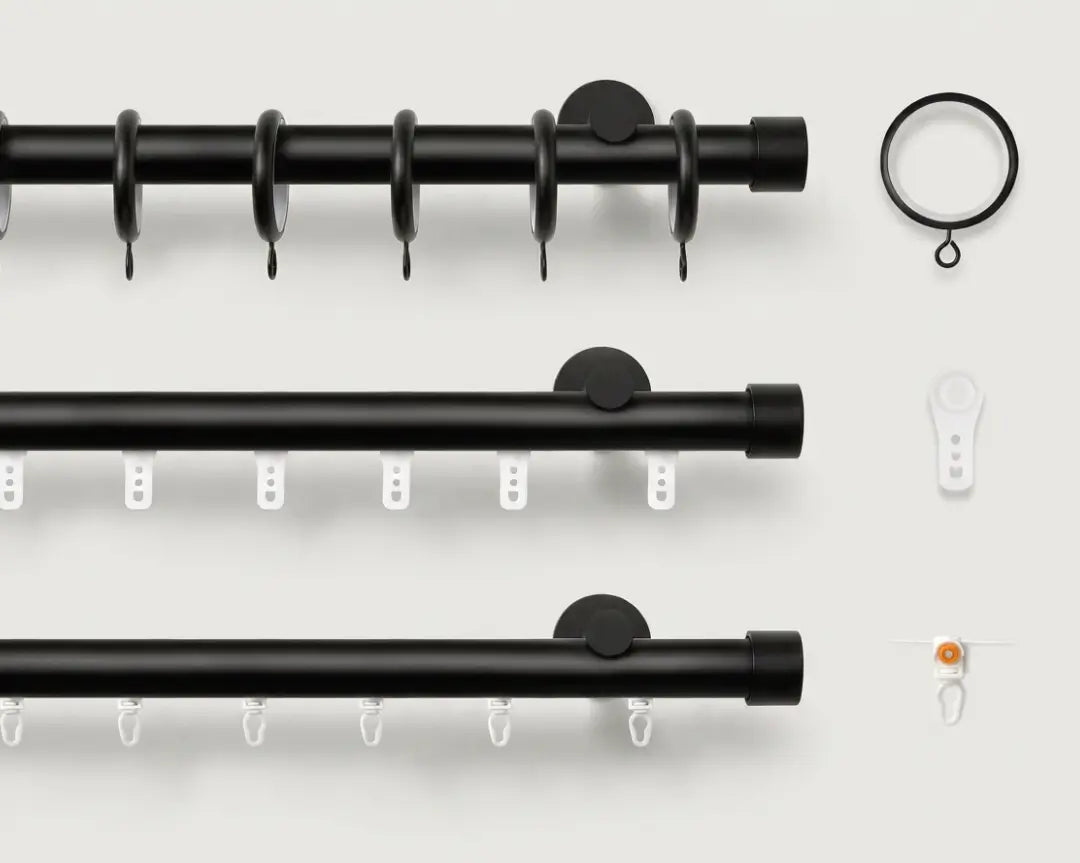
If you’re leaning toward a track for heavier blackout panels, consider low-profile tracks with hook tape and gliders that mount close to the wall; this setup often improves edge coverage and daily operation. You can explore options in Freshine’s Rods and Tracks collection. For picking fabrics, these explainers help renters compare insulation and light control: Thermal vs blackout curtains for stopping drafts and the broader 2026 energy-saving curtains guide. If you decide blackout is the right path, browse the blackout curtains collection to match weight, lining, and header style.
FAQ
Will a tension rod hold blackout curtains
For medium weights and shorter spans, yes—provided you stay within the product’s capacity. A 1 inch Umbra tension rod lists 15 lb; wider spans and dense fabrics increase slip risk, so consider tracks for heavy loads and frequent use. See the linked Umbra product page above for a current rating.
Do magnetic rods work on vinyl windows
No. Magnetic rods require ferrous steel. Vinyl or aluminum frames aren’t magnetic, and working loads for magnetic rods are typically only 2–5 lb per product listings from major retailers.
How can I avoid paint damage with adhesive hooks or tracks
Follow the manufacturer’s surface prep and cure times exactly. For Command hooks, clean with alcohol, avoid cleaners that leave residue, and remove by stretching the tab straight down to release the adhesive rather than pulling toward you.
Do thermal or blackout curtains actually reduce drafts
They can help when you combine heavier fabrics with full coverage and minimized gaps. Mount outside the frame, overlap edges, and, when possible, use returns to the wall. DOE Energy Saver guidance recommends closing coverings at night to limit heat loss through windows.
Source notes and evidence scope
- Adhesive hook limits and removal method are documented on Command’s official how-to page for curtain rods, which specifies a 10 lb total limit and stretch-release removal for painted drywall. See the descriptive anchor in the table above.
- Tension rod capacities vary; a 1 inch Umbra Loop rod lists 15 lb on the Home Depot product page, while some heavy-duty tension listings claim higher ratings at modest spans. The Home Depot rod types guide highlights center supports for long runs on mounted rods—use the same caution with tension spans.
- Magnetic rod working loads appear around 2–5 lb on current retailer pages; these products target steel surfaces only.
- Adhesive track kits are widely listed as drill-free at major retailers, but many omit precise load ratings on public product pages; choose conservatively, follow surface prep, and allow full cure before loading.
- DOE Energy Saver provides context on managing heat loss through windows and the value of closing coverings at night.
This comparison is based on product pages and guides available as of Feb 2026; specifications and prices change, so always verify the latest details on the manufacturer’s site.