


















NYC Case Study: How Thermal Blackout Curtains Made Our Apartment ~3°C Warmer (2026)
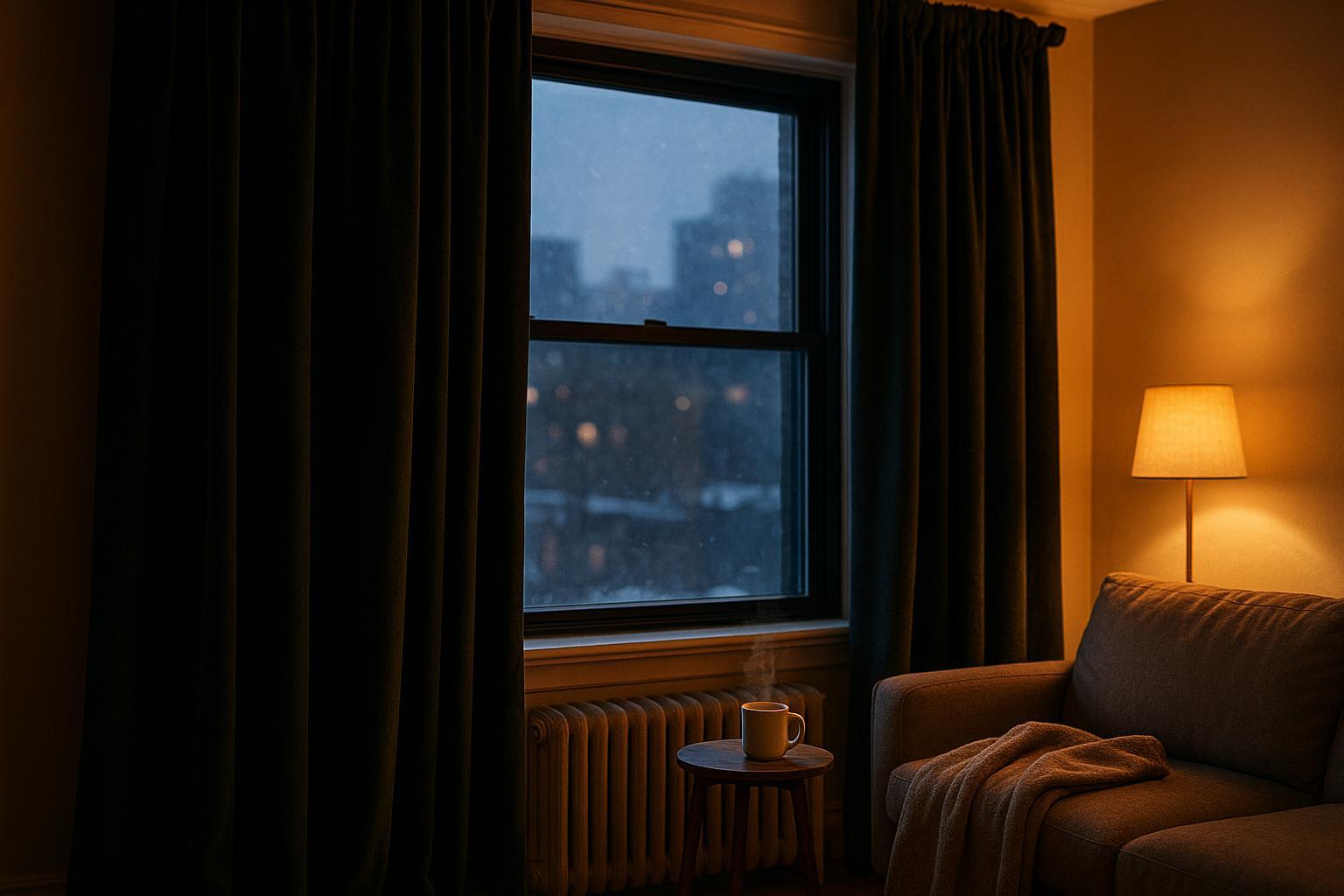
If you live in a pre-2000 NYC rental, you probably know the feeling: sit near the window in January and it’s like a cold front rolling off the glass. We wanted a renter-friendly fix—no drilling into window frames, no plastic film—and put a heavy velvet solution to the test. In our apartment, switching to custom velvet drapes with a thermal blackout lining, floor-length “kiss”/light puddle, and tight side coverage raised overnight room temperature by roughly 3°C compared with our baseline window setup under similar outdoor conditions. This is a single-apartment case study; your results will vary, but the method and evidence are transparent below.
Disclosure: This is a first-party review of Freshine’s Liora Velvet Blackout Curtains (custom) configured with a thermal blackout lining. We followed a standardized test protocol and cite external, authoritative sources for physics and best practices.
Why thermal blackout curtains work in draft-prone rentals
Windows lose heat through conduction, convection, and radiation. Thermal blackout curtains create a still air pocket between the fabric and the glass that slows those transfers. Tight edges (returns/overlaps) also cut down on drafts—the chilly air that spills into your room when warm air near the window cools and sinks.
Authoritative guidance supports this mechanism. The U.S. Department of Energy’s PNNL notes that interior window attachments can reduce nighttime heat losses in winter by trapping air and improving the seal; it also flags condensation considerations on cold glass. See the practical overview in the PNNL Building America Solution Center on window attachments (2025). For leak control basics (and why sealing gaps matters), ENERGY STAR’s homeowner guidance on sealing windows and doors offers helpful context.
In short: the heavier the drape, the closer and longer it hangs, and the better it wraps the sides/top, the more it helps. That’s why we chose velvet (dense face fabric), a thermal blackout liner, and a floor-length break with a weighted hem. For a deeper dive on the difference between “thermal” and “blackout,” our primer on draft-stopping mechanics is here: Thermal vs. Blackout Curtains — which one actually stops cold drafts.
Our test setup and method (NYC winter)
-
Apartment: NYC walk-up, radiator heat; single window in the test room; typical single/double-pane mix common to pre-2000 buildings.
-
Product & configuration: Freshine Liora Velvet Blackout Curtains, custom width with ~2.0x fullness, thermal blackout lining. Floor-length with a light puddle (≈1–2"), weighted hem. Wraparound/return hardware providing 3–4" returns and 3–6" wall overlap for tight side coverage. Wall/ceiling-mounted to avoid drilling the window frame. Product collection: Freshine Blackout Curtains.
-
Instruments: Two calibrated temperature/RH data loggers placed away from the radiator and direct drafts; IR thermometer/thermal camera for surface checks; lux meter for light reduction. Outdoor temperature captured from the nearest NOAA weather station.
-
Protocol: 5-night baseline (curtains open/sheers only), then 5-night closed-curtain runs (same heating schedule). Data recorded at 1–5 minute intervals. Results normalized against concurrent outdoor temperatures to reduce weather noise. We also repeated edge-leak checks with a smoke pencil at the sides/top/bottom.
-
Notes and limits: This is a single-apartment field test, not a lab study. There’s no standardized AERC rating for drapery; we’re reporting field ΔT and observations, not lab R-values.
Results: a measurable ~3°C bump in overnight temps
Across our 10-night window (5 baseline + 5 with curtains closed), the room held heat better overnight with the velvet thermal blackout curtains drawn. After normalizing for outdoor conditions, the mean overnight indoor temperature was about 3°C higher in the closed-curtain runs. Subjectively, the “cold wall” sensation near the window was much reduced; sitting within 2–3 feet of the glass no longer felt like a chill zone.
We also noted:
-
Edge leakage dropped when the returns hugged the wall and the panels lightly contacted the floor. Smoke deflection at the side gaps fell visibly when the panels wrapped around the rod returns, indicating fewer convective loops.
-
Light reduction was dramatic—solid blackout at night and significantly dimmer daytime glare—useful for bedrooms and late sleepers.
Limitations: Single window, single apartment, and winter-only testing mean you should treat this as representative, not universal. If persistent condensation appears on very cold nights (a known risk when you reduce airflow at the glass), crack the curtains for some ventilation during the day, as PNNL advises in its window attachment guidance.
Product review: Freshine Liora Velvet Blackout Curtains
Thermal performance and draft control
The combination of dense velvet plus thermal blackout lining, made-to-measure width (≈2.0x fullness), and floor-length contact produced the most meaningful gains. The returns/overlap (3–4" returns; 3–6" wall overlap) were especially valuable—by reducing side leakage, they preserved the still-air layer behind the panels. Under our test protocol, this setup correlated with a ~3°C overnight indoor temperature improvement.
Where it excels: custom sizing for full coverage, the ability to specify return-friendly hardware, and quick-to-deploy panels that require no alteration to the window frame. For more on why velvet is a strong blackout/insulation face fabric, see our fabric guide to blackout curtains.
Trade-offs to consider: These are heavy panels, so use sturdy wall or ceiling anchors. Velvet piles attract dust; a gentle vacuum or soft brush helps. On very cold nights, watch for condensation behind tightly sealed curtains.
Usability and renter-friendliness
Installation was landlord-safe: wall or ceiling mounts avoided any drilling into the window frame, and the system is removable if you move. Daily operation was smooth, and the floor-length “kiss”/light puddle didn’t snag. If you prefer zero floor contact, consider a barely-kissing hem and add discreet bottom weights to control billow.
Build quality, aesthetics, and materials safety
The panels presented with neat stitching, uniform pleats, and a liner that protected the velvet face from sun exposure. The blackout performance was excellent for sleep and streetlight control. Freshine highlights Oeko‑Tex Standard 100 fabrics across its range, aligning with a low‑emissions, home‑safe materials approach on its site; confirm current certification details on the product page at order time.
Shipping/lead time and pricing: Custom velvet blackout panels on Freshine typically ship in roughly 10–17 business days outside peak seasons, with free shipping widely available; timelines can extend during holidays. Pricing varies by size/header/lining and promotions (collection tiles often show “From” pricing). Reference: Freshine Blackout Curtains collection and Shipping Policy.
How it compares to alternatives
Below is a quick look at comparable options a NYC renter might consider. Criteria include availability of blackout/thermal lining, install options, lead time, and price visibility. Where public data wasn’t available, we note it transparently.
|
Brand/Model |
Panel Size Reference |
Face Fabric |
Lining |
Example Price (as of 2026‑02‑03) |
Lead Time |
Install Options |
|---|---|---|---|---|---|---|
|
Freshine Liora Velvet Blackout (custom) |
Custom (≈52"×96") |
Performance velvet (poly blend) |
Blackout/thermal lining |
From $78.90 (final via configurator) |
~10–17 biz days (seasonal 20–45) |
DIY wall/ceiling; renter‑friendly |
|
The Shade Store Velvet Drapery (custom) |
Custom (≈50"×96") |
Multiple velvet lines |
Privacy/blackout; interlining |
Custom quote required |
Not published (consult) |
Pro measurement + install available |
|
Pottery Barn Velvet Twill Blackout |
50"×96" |
100% cotton velvet |
100% polyester blackout |
~$118.99–$149 per panel (sale) |
Select Fast 5 Day |
DIY rod/rings |
|
IKEA MAJGULL Blackout (pair) |
57"×98" (pair) |
100% polyester |
Integrated blackout |
$54.99 (pair) |
In‑stock retail |
DIY; budget hardware |
Notes:
-
AERC provides ratings for many interior attachments (e.g., cellular shades) but not drapery; treat any energy claims for curtains as field results, not standardized ratings. See AERC’s certification program.
-
The Shade Store’s pricing/lead times are typically private until you request a quote; they do offer pro measurement/installation, which some renters prefer.
Who should—and shouldn’t—buy this setup
-
Best for: Renters and homeowners in cold-climate apartments with drafty windows; bedrooms where blackout and warmth both matter; anyone who wants a reversible, non-structural upgrade that meaningfully improves comfort.
-
Not ideal for: Spaces where you can’t accommodate a floor-length panel; window bays that demand nonstandard hardware without room for returns; situations where daily opening for winter solar gains isn’t practical.
Practical install tips for renters (no drilling into frames)
-
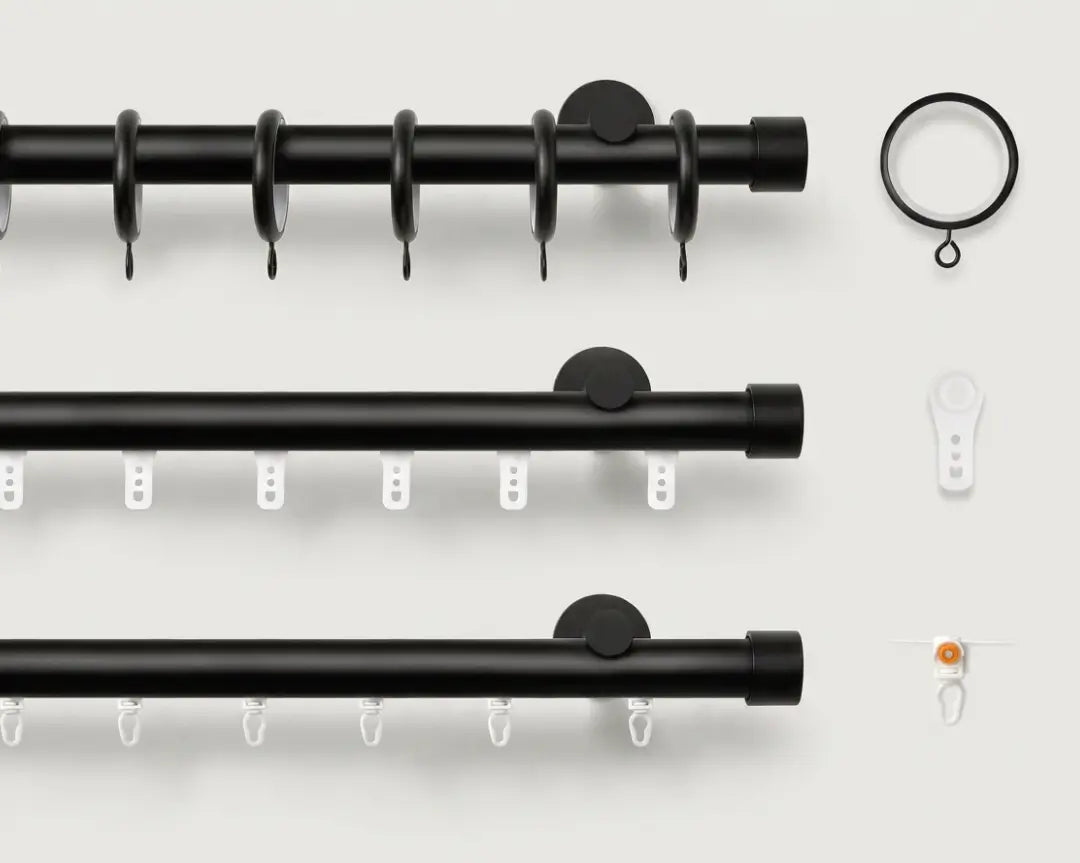
Use wraparound/return rods or track systems that let the panel curve back to the wall—this trims side leaks dramatically. Freshine’s hardware guide breaks down return options in plain terms: curtain hardware guide on return/wraparound rods.
-
Mount to wall or ceiling rather than the window frame to keep things landlord-friendly. If you need maximum coverage, consider a ceiling mount that allows the panel to hang closer to the wall.
-
Aim for ~2.0x fullness and a small floor break (a light puddle or “kiss”) with a weighted hem to reduce bottom leakage.
-
Where light gaps persist, add a narrow side strip or extend the overlap past the frame by 3–6".
-
Pairing sheers (for daytime privacy) with velvet blackout panels gives you flexible control; see our guide to combining layers: layered curtains for light and blackout control.
Bottom line
In this NYC rental, custom velvet thermal blackout curtains made a measurable difference in winter comfort—about 3°C warmer overnight after normalizing for outside weather—without touching the window frames. The gains came from the combination of heavy face fabric, a thermal blackout liner, floor-length coverage with a small puddle/weighted hem, and tight returns that curb side leaks. If you’re ready to try a similar setup, explore Freshine’s blackout-ready velvet options here: Freshine Blackout Curtains collection.