

















Do Curtains Need to Puddle on the Floor? Pros & Cons of 3 Curtain Lengths

Curtains do not need to puddle on the floor. For most North American homes, the safest default is either floor-length curtains that just kiss the floor or curtains that hover slightly above it. Puddled curtains can look luxurious, romantic, and designer-level, but they are best treated as a deliberate style choice—not a functional requirement.
The reason is simple: the biggest performance factors are not the extra inches of fabric on the floor. They are the curtain fabric, lining, fullness, width, installation height, side coverage, and how close the drapery sits to the window. The U.S. Department of Energy notes that conventional draperies can reduce winter heat loss by up to 10% when closed, and medium-colored draperies with white-plastic backings can reduce summer heat gain by about 33%. But the same guidance emphasizes that draperies should hang close to the window and fall to the windowsill or floor—not necessarily pile onto the floor.
So, should your curtains puddle? The practical answer is:
- Choose sill-length or apron-length curtains for kitchens, bathrooms, windows above furniture, kids’ areas, and high-maintenance spaces.
- Choose floor-length curtains for most living rooms, bedrooms, dining rooms, large windows, sliding doors, and rooms where you want a polished look.
- Choose puddled curtains only when you want a formal, decorative, low-traffic look and are willing to clean and adjust them more often.
If you want a custom fit for tall windows, wide windows, or full-height drapery, Freshine’s extra long curtains are designed for large-scale window treatments, while custom curtains let you fine-tune size, fabric, lining, and header style.
Quick Answer: The Best Curtain Length for Most Homes
For most homes, the best curtain length is floor-length with little to no puddling. The bottom of the curtain should either lightly touch the floor or hover about 1/2 inch above it. This gives the room a finished, tailored look without collecting as much dust, pet hair, or floor debris as puddled drapes.
Puddled curtains are not wrong. They can look beautiful in formal living rooms, primary bedrooms, traditional dining rooms, and staged interiors. But they are less practical in everyday family spaces, especially if you have children, pets, robot vacuums, damp floors, or high-traffic walkways.
What Does “Puddling” Mean?

Puddling means the curtain is intentionally longer than the distance from the rod or track to the floor, so the extra fabric gathers or pools on the floor.
In practical terms, curtain lengths usually fall into three groups:
| Curtain Length | Where It Ends | Best For |
|---|---|---|
| Sill or apron length | At the windowsill or a few inches below it | Kitchens, bathrooms, desks, radiators, windows above furniture |
| Floor length | Just touching or slightly above the floor | Living rooms, bedrooms, dining rooms, large windows, sliding doors |
| Puddled length | Extra fabric pools on the floor | Formal rooms, romantic bedrooms, decorative panels, low-traffic spaces |
Different retailers use slightly different terms. Some call a small extra length a “break,” while others reserve “puddle” for more dramatic fabric pooling. For this guide, we use “puddled curtains” to mean any curtain with visible extra fabric resting on the floor.
Curtain Length #1: Sill-Length or Apron-Length Curtains
Sill-length curtains stop at or near the windowsill. Apron-length curtains usually extend a few inches below the sill. These shorter curtain lengths are sometimes dismissed as less elegant, but they are often the correct choice in functional rooms.
Pros of Sill-Length and Apron-Length Curtains
They are easier to clean. Because the fabric does not touch the floor, shorter curtains are less likely to collect dust, hair, moisture, or dirt. This matters in kitchens, bathrooms, laundry rooms, mudrooms, and children’s spaces.
They work better above furniture. If a sofa, desk, console table, radiator, built-in bench, or kitchen counter sits under the window, long curtains can look crowded or become difficult to operate. Shorter curtains avoid that conflict.
They are usually safer around kids and pets. The most serious window-covering safety issue is cord access, not curtain length. The U.S. Consumer Product Safety Commission recommends cordless window coverings when young children are present. Still, shorter curtains reduce the amount of fabric that can be pulled, stepped on, chewed, or tangled.
They are practical in damp rooms. The EPA emphasizes moisture control as the best way to control indoor mold growth. In high-humidity rooms, keeping fabric away from damp floors, splashes, and condensation-prone areas is a practical advantage.
Cons of Sill-Length and Apron-Length Curtains
They can make a room look shorter. Short curtains visually stop at the window instead of extending the eye downward. In living rooms and bedrooms, this can make the window and wall feel smaller than they are.
They are less dramatic. If your goal is a designer look, hotel-style bedroom, or full-height living room treatment, short curtains may feel too casual.
They may offer less bottom coverage. For privacy, light control, and draft reduction, full-length curtains usually offer more complete coverage, especially on low windows, sliding doors, and floor-to-ceiling glass.
Best Rooms for Sill-Length or Apron-Length Curtains
- Kitchens
- Bathrooms
- Laundry rooms
- Basement windows
- Windows above desks
- Windows above radiators
- Kids’ craft areas
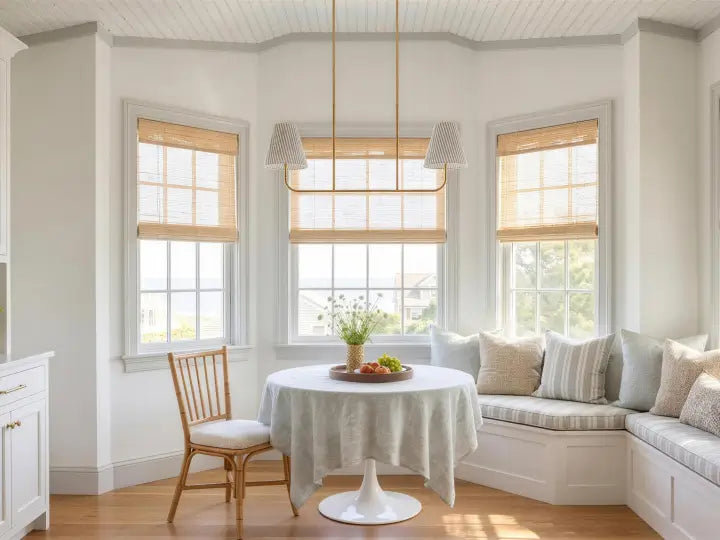
- Breakfast nooks
- Small rental spaces where easy maintenance matters
For kitchens and cozy corners, Freshine’s sheer curtains can help soften daylight while keeping the room airy.
Curtain Length #2: Floor-Length Curtains
Floor-length curtains are the most versatile and widely recommended option. They either lightly touch the floor, “kiss” the floor, or hover slightly above it. If you want the taller, more architectural version, our complete guide covers curtains that run floor to ceiling.
IKEA describes floor-length curtains as a common favorite because they are elegant and relatively easy to maintain, while Architectural Digest notes that hanging curtains higher and wider can help windows and ceilings look taller.
Pros of Floor-Length Curtains
They look polished without being fussy. Floor-length curtains create long vertical lines. This makes the room feel taller, softer, and more finished. They work especially well in living rooms, bedrooms, dining rooms, and home offices.
They are more practical than puddled curtains. You get most of the visual benefit of long drapery without the daily maintenance of fabric pooled on the floor.
They work well for privacy and light control. When paired with enough width and the right lining, floor-length curtains can improve privacy, reduce glare, and help control light. For bedrooms and media rooms, consider Freshine’s blackout curtains. For living rooms and layered treatments, linen curtains offer a relaxed, natural look.
They are the best default for large windows and sliding doors. Short curtains rarely look right on sliding glass doors, patio doors, or tall windows. Floor-length panels give those openings the scale they need.
They can support better thermal comfort. The Department of Energy recommends hanging draperies close to windows and allowing them to fall to the windowsill or floor for better heat-loss reduction. A well-fitted floor-length curtain with lining and adequate side coverage is usually more useful than a short curtain for comfort.
Cons of Floor-Length Curtains
They require accurate measurement. A half-inch mistake can be visible. Too short, and the curtains look accidental. Too long, and they may drag.
They may need adjustment over time. Natural fabrics such as linen can relax or stretch slightly depending on weight, humidity, and use. If you want a perfect floor-kiss look, choose custom sizing and measure after deciding your rod or track height.
They still touch the cleaning zone. Even when they do not puddle, floor-length curtains are closer to dust, pet hair, and vacuum movement than short curtains.
Best Rooms for Floor-Length Curtains
- Living rooms
- Primary bedrooms
- Guest bedrooms
- Dining rooms
- Home offices
- Sliding glass doors
- Tall windows
- Large picture windows
- Rooms where you want a finished, elevated look
For full-height treatments, Freshine’s Celina Linen Curtains are a strong fit for large windows and elegant floor-length styling. If you prefer a heavier, more substantial look, consider Elowen Heavyweight Drapery.
Curtain Length #3: Puddled Curtains
Puddled curtains are intentionally long enough to pool on the floor. They can look soft, romantic, European, traditional, or luxurious. But they also create the most maintenance.
Pros of Puddled Curtains
They create the most dramatic look. If you want a formal sitting room, romantic bedroom, classic dining room, or editorial interior, puddled curtains can add softness and visual richness.
They can disguise uneven floors. In older homes, floors are not always level. A small puddle can hide small variations better than a perfectly hovering hem.
They make stationary panels feel intentional. If the curtains are mostly decorative and not opened or closed every day, puddling can work well.
They add softness to hard rooms. In rooms with hardwood, stone, tile, metal, or minimal furniture, extra fabric can soften the visual and acoustic feel of the space.
Cons of Puddled Curtains
They collect more dust and debris. This is the biggest drawback. Fabric resting on the floor naturally gathers dust, pet hair, lint, and dirt.
They are harder to open and close. Everyday use can disturb the puddle. If you open and close the curtains frequently, you may need to rearrange the fabric often.
They are not ideal for children or pets. Extra fabric can become a target for tugging, chewing, climbing, or nesting. In family rooms, nurseries, playrooms, and pet-heavy spaces, puddling is rarely the practical choice.
They are a poor choice for damp rooms. Bathrooms, laundry rooms, basements, and damp climates are not ideal for fabric that rests on the floor. Moisture and dust together increase maintenance demands.
They cost more. More length means more fabric. Puddled curtains may also require more careful measuring, hemming, steaming, and styling.
Best Rooms for Puddled Curtains
- Formal living rooms
- Traditional dining rooms
- Romantic primary bedrooms
- Guest rooms with low traffic
- Decorative stationary panels
- Older homes where floors are slightly uneven
Avoid puddled curtains in kitchens, bathrooms, laundry rooms, kids’ rooms, pet areas, patio doors used daily, high-traffic living rooms, rooms with robot vacuums, and rooms with portable heaters near the window.
Comparison Table: Which Curtain Length Should You Choose?
| Factor | Sill / Apron Length | Floor Length | Puddled Length |
|---|---|---|---|
| Best for | Functional rooms | Most main rooms | Formal decorative rooms |
| Visual impact | Low to medium | High | Very high |
| Maintenance | Easiest | Moderate | Highest |
| Child/pet practicality | Best | Good | Weak |
| Light control potential | Medium | High | High |
| Insulation potential | Medium | High | High, but not necessarily better than floor length |
| Cost | Lowest | Medium | Highest |
| Works with furniture below window | Best | Usually no | No |
| Best default? | Only in specific rooms | Yes | No |
Do Puddled Curtains Block More Light?
Not necessarily. Puddled curtains can reduce small gaps at the bottom, but most light control comes from fabric opacity, lining type, curtain width, rod width, side return coverage, center overlap, installation height, and whether the panels fully cover the glass.
For bedrooms, nurseries, and media rooms, lining matters more than puddling. A floor-length blackout curtain that is properly sized will usually perform better than an unlined puddled curtain.
For flexible light control, consider Freshine’s blackout curtains for bedrooms or see-through sheer curtains for soft daylight in living areas.
Do Puddled Curtains Help With Insulation?
Only slightly, and not always enough to justify the maintenance. For energy performance, the Department of Energy focuses on how close the drapery hangs to the window, whether it reaches the windowsill or floor, and whether gaps at the top, sides, and center are reduced.
That means a well-installed floor-length curtain with lining can be a smart choice. But simply adding extra fabric to create a puddle is not the main driver of insulation.
For colder rooms, west-facing windows, drafty spaces, or bedrooms, prioritize lined curtains, heavier fabric, adequate fullness, wide rod or track placement, proper side coverage, closing curtains at night in winter, and closing curtains during direct sun in summer.
How High and Wide Should Curtains Be Hung?
Curtain length only works when the rod or track is placed correctly. A common designer rule is to hang curtains high and wide.
- Hang the rod closer to the ceiling than the window frame when possible.
- Extend the rod several inches beyond the window on both sides.
- Use enough fabric fullness so the curtain does not look flat.
- Measure from the actual hanging point to the intended bottom point.
- Measure left, center, and right because floors are often uneven.
Architectural Digest recommends adding extra width to each side of the window and measuring height from the intended rod placement rather than simply from the window frame. This helps the window look larger and the room feel taller.
Room-by-Room Recommendations
Living Room
Best default: floor-length curtains. A living room usually benefits from height, softness, and visual polish. Choose floor-length linen, cotton blend, velvet, or heavyweight drapery depending on the style of the room. Puddling can work in formal living rooms, but for everyday family rooms, a slight hover or floor-kiss is easier.
Recommended Freshine links: Extra Long Curtains and Linen Curtains.
Bedroom
Best default: floor-length curtains with privacy or blackout lining. Bedrooms need privacy, darkness, and softness. A small puddle can look romantic in a primary bedroom, but it is not required. If sleep quality is the goal, choose blackout or room-darkening lining before choosing puddling.
Recommended Freshine links: Blackout Curtains and Custom Curtains.
Dining Room
Best default: floor-length or light puddle. Dining rooms can handle a slightly more formal window treatment, especially if the curtains are not opened and closed constantly. A light puddle can work here, but avoid excessive pooling if chairs, pets, or cleaning traffic will interfere.
Kitchen
Best default: sill-length, apron-length, café curtains, or shades. Kitchens involve counters, sinks, heat, grease, and frequent cleaning. Long puddled curtains are usually impractical.
Bathroom
Best default: short curtains or shades. Because bathrooms are humid, keep fabric away from the floor when possible. Choose washable materials and avoid heavy puddled drapery.
Kids’ Room or Nursery
Best default: short curtains or floor-length curtains that hover slightly above the floor. Avoid puddling. Prioritize cordless or motorized systems, washable fabrics, blackout lining for sleep, and secure installation.
How Much Should Curtains Puddle If You Choose That Look?
If you decide to puddle, keep it restrained unless you are designing a highly formal room.
- Minimal break: 1–2 inches of extra fabric
- Soft puddle: 3–6 inches of extra fabric
- Dramatic puddle: 6–12 inches or more
For most homes, a minimal break or soft puddle is easier to live with than a dramatic puddle. The more fabric you add, the more often you will need to adjust, vacuum, steam, and style it.
Measuring Checklist Before Ordering Curtains
- Where will the rod or track be installed?
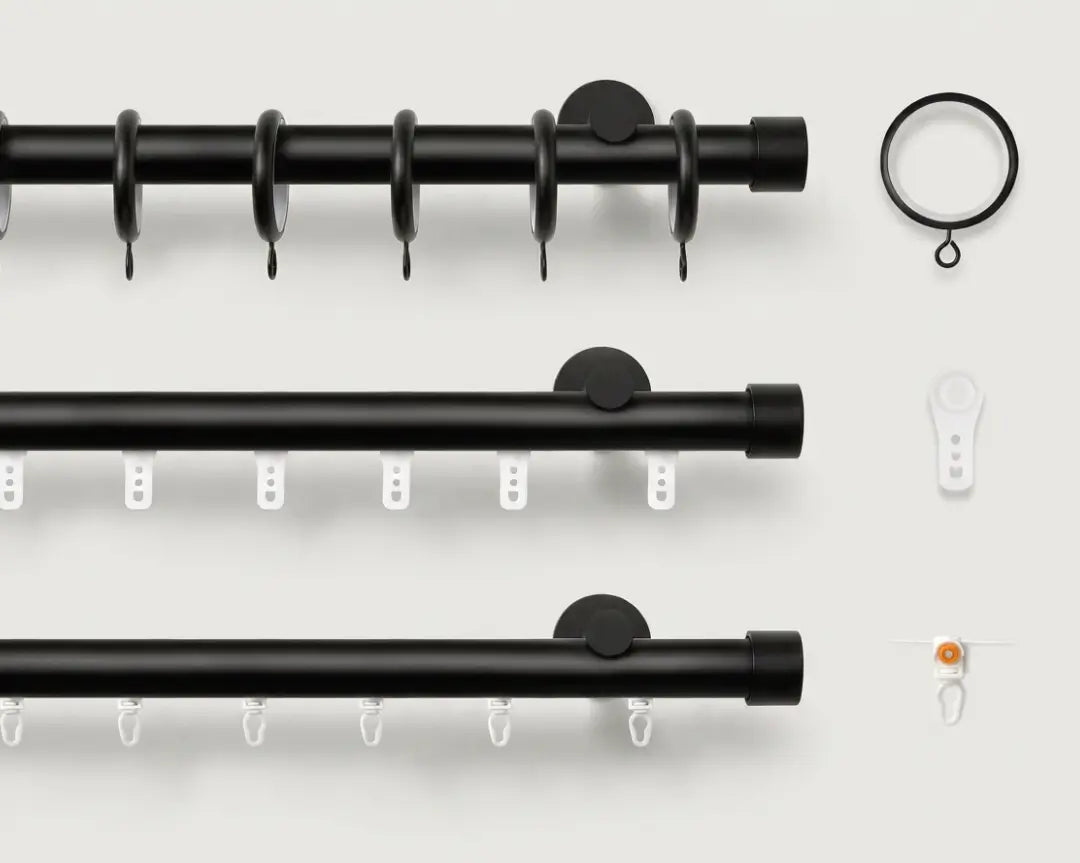
- Will you use rings, clips, grommets, pinch pleats, ripple fold, or rod pocket?
- Do you want the curtain to stop at the sill, kiss the floor, hover above the floor, or puddle?
- Is the floor level?
- Is there furniture, a radiator, desk, or counter under the window?
- Do children or pets use the room?
- Is the room damp or high traffic?
- Do you need blackout, privacy, light filtering, or sheer fabric?
- Will the curtains be opened daily or mostly stay in place?
- Do you need custom sizing for tall or wide windows?
If your window is extra tall, extra wide, arched, angled, or difficult to measure, custom drapery is usually the cleaner solution. Freshine’s custom curtains allow you to choose dimensions, fabric, lining, and header style for a more precise result.
Final Verdict: Should Curtains Puddle on the Floor?
Curtains should puddle on the floor only when the look is worth the maintenance. For most North American homes, puddling is not necessary.
Choose sill or apron length when function, furniture clearance, moisture control, or easy cleaning matters most.
Choose floor length when you want the best balance of style, privacy, insulation potential, and everyday practicality.
Choose puddled curtains when you want a formal, romantic, or high-end decorative effect in a low-traffic room.
The best overall choice for most living rooms, bedrooms, dining rooms, and large windows is simple: custom floor-length curtains that either kiss the floor or hover slightly above it. They look polished, photograph well, support better privacy and comfort, and are much easier to maintain than full puddled drapery.
To create that tailored look, explore Freshine’s extra long curtains, linen curtains, blackout curtains, and custom curtain collection.
FAQs
Do curtains have to touch the floor?
No. Curtains do not have to touch the floor. However, in living rooms, bedrooms, and dining rooms, floor-length curtains usually look more polished than short curtains. For kitchens, bathrooms, and windows above furniture, shorter curtains may be better.
Is it better for curtains to touch the floor or puddle?
For most homes, it is better for curtains to just touch the floor or hover slightly above it. Puddled curtains are more formal and decorative, but they collect more dust and are harder to maintain.
Are puddled curtains out of style?
No. Puddled curtains are not out of style, but they are more specific. They work best in traditional, romantic, formal, or luxury interiors. Modern homes often use a cleaner floor-length or slightly hovering hem.
How many inches should curtains puddle?
A light puddle usually adds about 1–4 inches of extra fabric. A more dramatic puddle may add 6–12 inches. For everyday homes, a restrained puddle is usually more practical.
Should bedroom curtains puddle?
Bedroom curtains can puddle if the room is low traffic and you like a soft, romantic look. But for better everyday function, floor-length blackout curtains that just touch or slightly clear the floor are usually easier to live with.
Should living room curtains puddle?
Living room curtains usually should not puddle unless the room is formal or rarely used. For family living rooms, floor-length curtains are more practical.
Are puddled curtains bad for pets?
They can be. Pets may sit on, scratch, chew, or shed on the extra fabric. If you have pets, choose curtains that hover slightly above the floor or just touch it.
What curtain length is easiest to clean?
Sill-length and apron-length curtains are easiest to clean because they do not touch the floor. Among long curtains, a slight hover above the floor is the easiest to maintain.