

















Ordering Custom Curtains? The Specs to Settle Before You Pay

The look of a custom curtain is settled before the fabric is cut. Header style, fullness, lining, memory shaping, and the measurements you take decide whether a panel hangs like a tailored drape or a flat sheet. Most disappointing curtain orders aren't fabric problems — they're questions nobody asked at checkout.
Designer Nadine Stay wrote down the checklist she uses when ordering made-to-measure curtains, in Ordering Custom Curtains? Here's What To Ask For. She specced the guest bedroom curtains in that post with us, so we can add the production side of each decision: what the spec controls, the numbers behind it, and where the answer changes by room.
The Whole Checklist on One Screen
| Spec | What it controls | Nadine's default | What's adjustable |
|---|---|---|---|
| Header style | How the top is pleated or gathered | Double pinch pleat | Nine options: pinch and Euro pleat, grommet, ripple fold, back tab |
| Panel count | Symmetry and how the curtain opens | Two panels per window | Single panel, or two split panels |
| Fullness | Fabric width relative to coverage | 2x double pleats, 2.5x triple | 1.0x–2.5x; we recommend 2.0x |
| Lining | Structure, privacy, light control | Unlined | Unlined, or 30 / 50 / 80 / 100% shading |
| Memory shaping | Whether the pleats hold their shape | Yes, when available | Pleated headers only |
| Rod placement | Stack room, proportion, light at the edges | 8–12" past the casing | We suggest 6–15" past each side |
| Width source | Whether the panels actually cover | Full rod length, not the window | Our measurement tool runs the math |
| Finished length | Where the hem lands | "Kiss" the floor | Kiss, ½" above, or puddled +2–4" |
Eight decisions, none of them about pattern. That's the part buyers underestimate.
Header Style Comes First, Because Fullness Follows It

Pick the header first — it sets the fullness the fabric has to deliver.
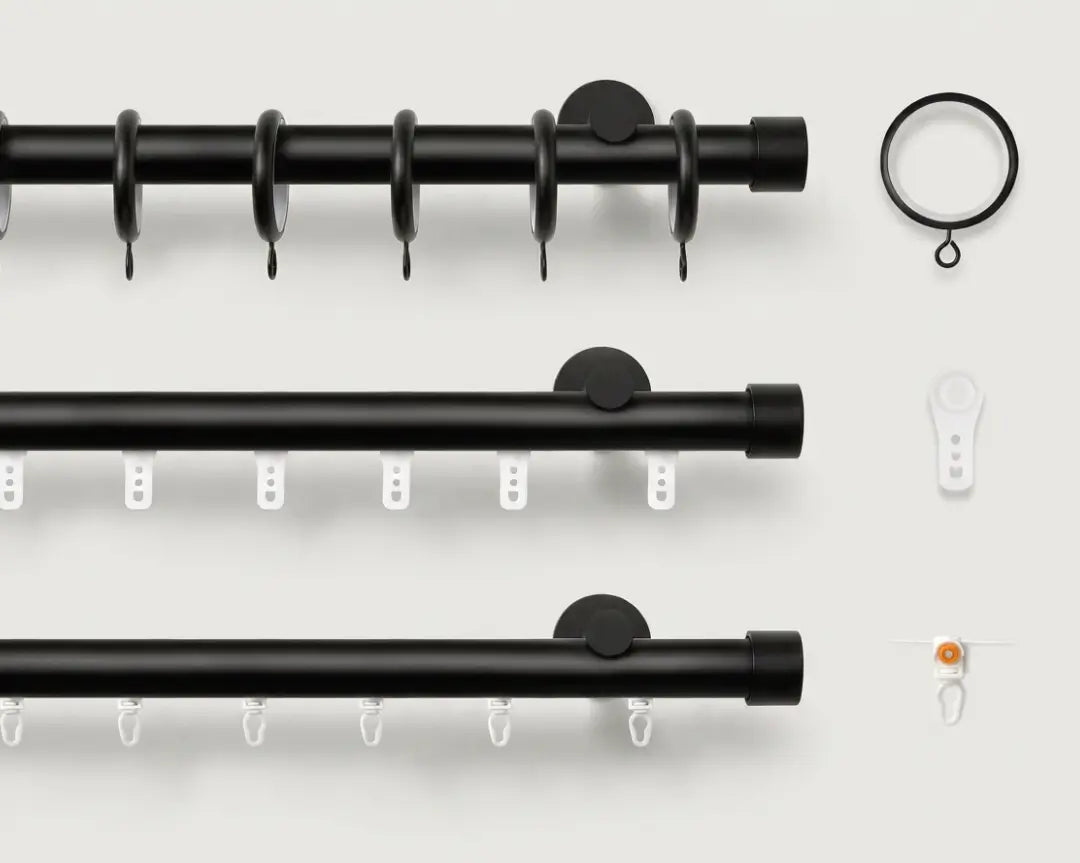
Her defaults: a double pinch pleat for most settings, a triple for formal rooms, and a tailor pleat — which we call a Euro pleat — for modern spaces. That matches what we build: a double pinch pleat is two folds at 2.0x fullness, a triple is three folds at 2.5x, both on 4-inch buckram with 5-inch pleat spacing and 2½-inch returns. Our header style guide covers all nine options, including three that behave differently: grommet tops want a rod rather than a track, ripple fold needs its own track, and back tab suits panels you rarely open.
Her rule for header depth: the taller the curtain, the deeper the header — 4 inches at 8-foot ceilings, 6 at 10-foot. Our standard pleated build uses 4-inch buckram, so a deeper pleat package on a 10-foot drop is something to raise at checkout, not after delivery. Tape versus workroom construction is in our pinch pleat guide.
Two Panels, Unless the Window Says Otherwise
Two panels per window, for one reason: symmetry. It's also the better engineering answer — the stack splits to opposite sides, the panels meet cleanly at the center, and each stays light enough to move.
Single panels suit a narrow bathroom window, a stationary panel beside a bed, or a door that only ever draws one way. Decide before measuring; panel count is part of the width math.
The Lining Call, Which Most People Get Backwards
This is where she breaks from the usual advice: she orders unlined curtains, because a white or black liner can look unsightly from outside, and doubling the fabric adds opacity without a visible backing.
The fabric makes that possible: the Sariel drapes she chose are a jacquard chenille at 428 GSM with 70–80% light blocking off the loom, so no liner is needed for a comfortable daytime room — the "very thick, blocks most light on its own" note in her post, in numbers.
Where a liner earns its keep:
- Bedrooms that need real darkness. A room-darkening weave is not blackout. If the panel itself has to stop light, the liner does it — 80% for a softer dark, 100% for a blackout build. Our blackout chenille drapes reach 100% at 256 GSM.
- Windows overlooked after dark. An unlined panel is more translucent at night with the lights on than at noon. If a neighbor can see in after sunset, add 30% or 50%.
- Very long panels. A lining adds body, which helps a tall drop hold a straight line.
One limit applies to every lining: it makes the panel opaque, not the window. Light still comes in over the heading and around the edges. The full ladder — unlined, 30%, 50%, 80%, 100% in white, beige, or black — is on our lining guide, with the tradeoffs written out in curtain lining explained.
Memory Shaping: Ask Which Headers It Applies To
She asks the workroom to memory shape her curtains whenever available, and notes you can train pleats at home instead — it just takes time.
The production detail worth having first: memory shaping is a heat-setting process, and it works on pleated constructions. It's part of the 23-step run behind every panel, after rounds of hand ironing and finishing. Rod pocket, flat panel, and back tab can't take it — there are no pleats to set. So if crisp, uniform folds are the priority, the header decision comes first. How thermal memory shaping works covers why it matters most on long drops.
The Three Measurements People Mix Up

Rod placement. She hangs the rod 8–12 inches past the casing on each side. That extra width is the stack width — the room the curtains need when open, so the window isn't half-covered. She keeps the rod 3–5 inches below the ceiling, and where a room has 10-foot ceilings with standard-height windows, she hangs the rod 8–12 inches above the casing instead, so the window reads taller. Our measuring guide recommends 6–15 inches past each side and mounting as close to the ceiling as possible; pleated stack-back runs about one-fifth of total drapery width.
Width. Measure the rod, not the window. Her numbers make a clean example: an 87-inch rod at 2x fullness is 174 inches of fabric, split into two 87-inch panels, each covering roughly 44 inches pleated when closed. If the arithmetic is where your eyes glaze over, the measurement tool runs it for you. 1.5x versus 2x fullness covers the saving-fabric temptation.
Length. She measures from the bottom of the ring's eye to the floor, because that's where the fabric hangs from. Our finished-length options: ½ inch above the floor, kissing the floor, or puddling 2–4 inches. Kissing the floor is safest underfoot; puddling looks luxurious and collects dust. Drapery installation with pin hooks covers how pleated headers hang.
Same Specs, Different Answers by Room
Bedroom. Work backwards from darkness. If the panel itself has to stop light, pick a blackout fabric and let the header and memory shaping carry the tailoring. To keep a jacquard instead, Sariel plus an 80% liner gets close.
Living room. Daylight is the point. An unlined jacquard chenille gives texture, weight, and a soft filter without flattening the brightest hours. Add a 30% liner only on the window that's genuinely exposed.
Tall room, standard windows. Her rod-height trick does the most work here — a rod hung higher above the casing stretches the window, and a longer panel reads as more generous.
Her guest bedroom: an 87-inch rod, two panels, double pinch pleats, 2x fullness, unlined, memory shaped, and the reverse face of a Sariel botanical stripe jacquard chenille.
Turn the Fabric Over Before You Decide

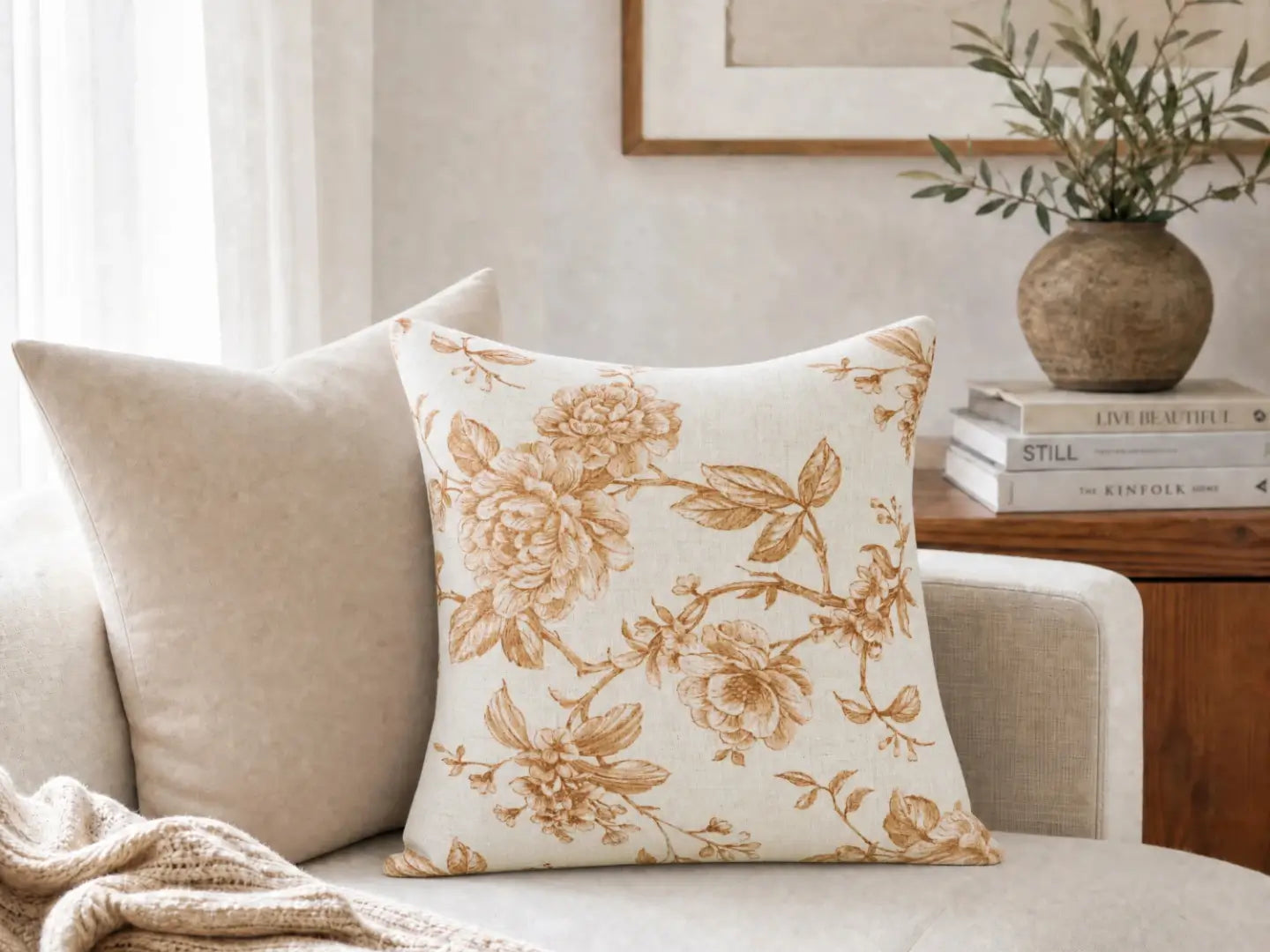
The habit worth stealing: never discount the back of the fabric. She wanted a deep burgundy-or-plum ground with florals and stripes, didn't find it in the beige face, flipped the sample over, and found the depth she was after. Woven jacquards are reversible by nature — the pattern is built into the cloth, not printed on top — so the reverse reads as a second design. Our jacquard collection is woven, not printed, and Sariel ships as two orderable colorways. Order fabric swatches first; the two sides of one weave are what a screen flattens and a sample doesn't. If ordering online is new to you, our earlier walkthrough covers the process.
FAQ
How many panels should I order for one window?
Two, for most windows. Two panels split the stack evenly and meet cleanly at the center. A single panel suits narrow windows, one-way doors, or a stationary decorative panel.
How much fullness should custom curtains have?
2.0x for double pinch or double Euro pleats, 2.5x for triple. Below 2.0x, curtains look thin when closed. Calculate fullness against the full rod width, not the window.
Do I need a lining on custom curtains?
Not always. A heavyweight jacquard chenille like Sariel blocks 70–80% of light on its own — comfortable for a living room. Add a liner for bedrooms, overlooked windows, or long panels.
Is memory shaping worth it?
Yes, if you want pleats that hang uniformly from day one instead of settling over weeks. The caveat: heat-set memory shaping applies to pleated headers, not rod pocket, flat panel, or back tab.
Should curtains touch the floor?
Kissing the floor is the most common choice for a tailored look. Half an inch above the floor is easier to keep clean in busy households. Puddling 2–4 inches reads luxurious but collects dust.
Your Turn
Which spec is still unclear for your window? Tell us the room, the rod width, and the ceiling height, and we'll say which header and fullness we'd order. Our design team will do the same for free from a photo of your window through the free design service.
For the parts of the checklist Nadine covers that we haven't, read her original post on Nadine Stay.
---