




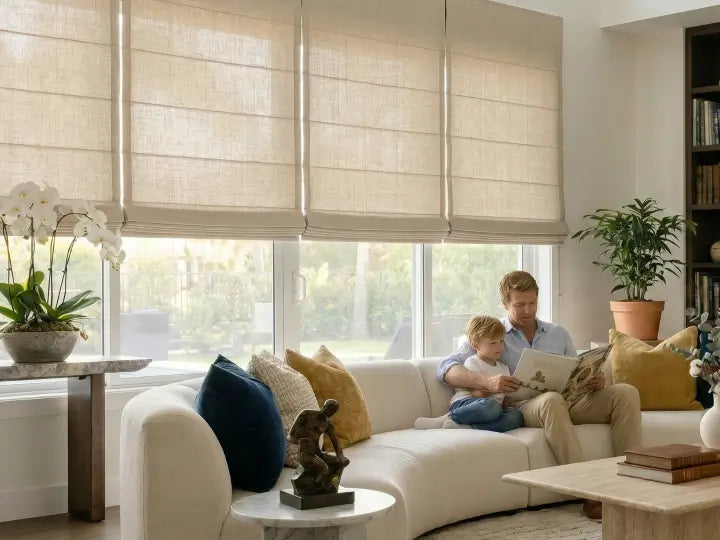

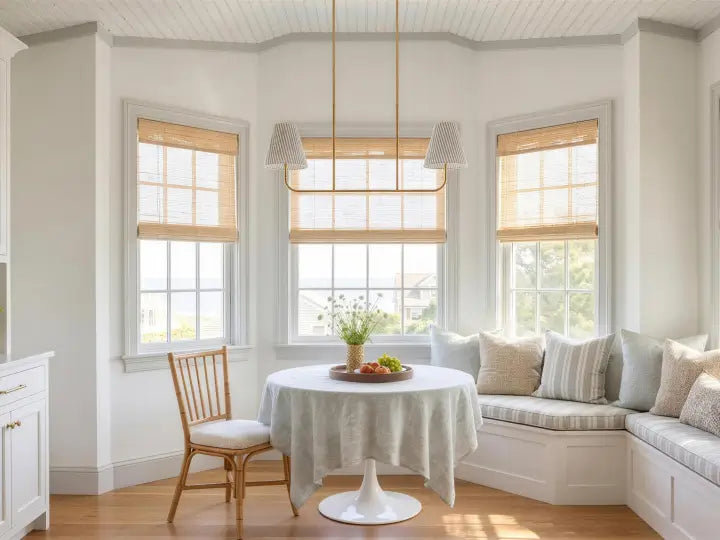

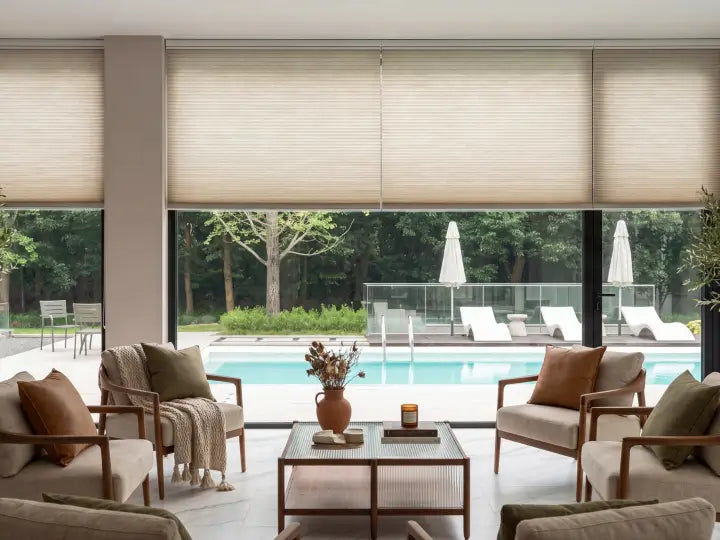

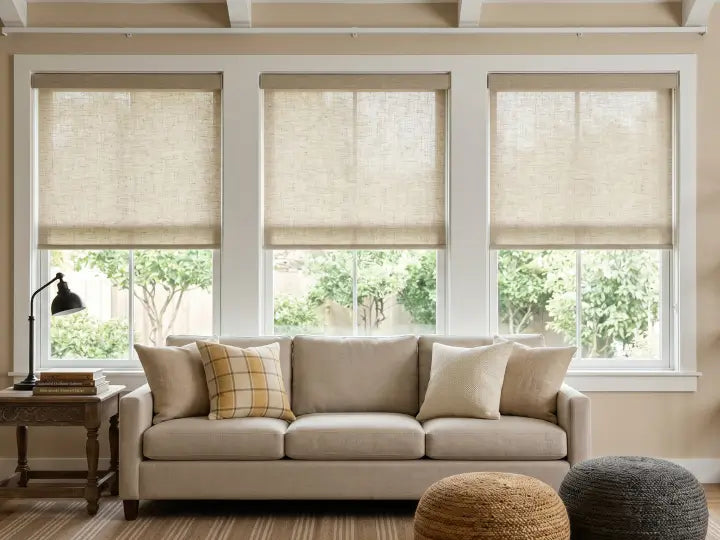









Modern Farmhouse Curtains: The 4 Elements That Get the Look Right

Core Principles of Modern Farmhouse Curtain Styling
Creating authentic modern farmhouse charm with curtains isn’t tied to one fixed fabric shade or single material. The cohesive, timeless aesthetic relies on four harmonized styling pillars: prioritizing subtle tactile texture over loud busy prints, leaning into soft warm neutrals instead of bold saturated hues, pairing drapes with matte black or antique bronze curtain hardware, and adhering to full floor-to-ceiling, wall-spanning sizing proportions. Strip out the farmhouse references and the same warm-neutral, natural-texture formula becomes organic modern.
Overlook any one of these four core rules, and your space will feel subtly unbalanced—even if you can’t pinpoint exactly what feels off. Nail all four styling fundamentals, and your window treatments will deliver the signature modern farmhouse vibe: warm, grounded, and naturally polished with zero forced effort.
In this guide, we break down every styling element, share key shopping cues, and match you with ideal Freshine fabrics and hardware for every room in your home.
Element 1: Fabric Texture — The Backbone of Modern Farmhouse Curtain Design
What Textured Fabrics Fit the Modern Farmhouse Aesthetic
Linen and linen blends. Pure linen has a visible slub texture — those tiny variations in the weave that catch light and give the fabric depth. It drapes with a relaxed hand, not stiff or overly structured. Linen blends (linen-cotton or linen-polyester) keep the texture while adding durability and reducing wrinkles. For farmhouse, the slight creasing is part of the appeal — it reads as lived-in, not messy. Cotton and cotton-linen blends. A heavyweight cotton twill or a cotton-linen mix offers a similar natural feel at a lower price point. The key is avoiding anything with a synthetic sheen. Poly-blends that read shiny under light break the illusion instantly. Medium to heavyweight. Farmhouse curtains should have physical presence. A fabric below ~200 GSM tends to look thin and unsubstantial against the warm, grounded elements in a farmhouse room — wood beams, leather, wrought iron. Aim for 250+ GSM or a fabric with enough body to drape in clean folds.
Fabrics to Skip for Modern Farmhouse Styling
- Velvet. Velvet carries an inherently formal, luminous finish that leans into dramatic luxury—directly conflicting with modern farmhouse’s core ethos of laid-back, understated ease. This style prioritizes calm, lived-in warmth over bold, eye-catching opulence.
- Silk or high-sheen synthetics. Any textile with a sleek, glossy light-reflecting surface skews either ultra-modern or classic formal design language. Their polished shine disrupts the muted, earthy organic foundation central to authentic farmhouse interiors.
- Heavy jacquard or brocade. Subtle tactile texture elevates farmhouse decor, yet intricate raised woven motifs create overpowering visual noise. These busy patterns draw all visual focus to the window treatments, rather than letting drapes blend harmoniously as a quiet grounding layer within the space.

Freshine fabrics that fit
| Product | Fabric | Weight | Why It Works |
|---|---|---|---|
| Celina Linen Curtains | Linen blend | 350 GSM |
Our top-selling curtain, defined by prominent slub texture and heavy 350 GSM full drape. Available across core warm farmhouse neutrals, with customizable lining options ranging from sheer unlined to full 100% blackout for room-by-room light control. |
| Elara Linen Curtains | Linen blend | Light-filtering | 26 colors — the widest neutral palette on Freshine. The linen-polyester blend reads natural without the maintenance of pure linen. A strong entry point if you're furnishing multiple rooms. |
| Marisol Linen Curtains | Linen blend, mid-weight | ~250 GSM | Designed for dining rooms and living spaces where the curtain is part of the entertaining backdrop. The fabric has subtle sheen that reads elevated, not shiny — a good bridge between farmhouse comfort and hosting polish. |
| Amara Linen Curtains | Linen blend Semi-Sheer | Lightweight | The airy option. Linen blend with a soft, breathable hand — lighter than Celina and more casual than Marisol. Ideal for farmhouse kitchens, layered window setups, or any room where you want natural texture without visual weight. |
Element 2: Curtain Color – Curated Warm Neutrals, Over Stark Cool Whites
The modern farmhouse palette is narrower than people think. It's not "any neutral." It's specifically warm neutrals — colors with yellow, brown, or red undertones that absorb light softly rather than reflecting it coldly.
The farmhouse color range
| Tone | Examples | What It Does |
|---|---|---|
| Cream / Warm White | Celina Cream White, Elara Cream Beige | Diffuses sunlight into a warm glow. The default choice for living rooms and bedrooms. |
| Flax / Oatmeal | Celina Light Beige, Marisol Natural | Adds warmth without darkening the room. Works beautifully against white shiplap or light wood floors. |
| Greige / Warm Gray | Elara Brownish Gray, Celina Blue Gray | Bridges farmhouse warmth and modern restraint. Good for rooms with mixed wood tones or cooler wall colors. |
| Sage / Muted Green | Celina Pale Olive Green, Celina Deep Green-Gray | The exception to strict neutrals. A muted green reads as a natural accent without breaking the palette. Use in one room, not every room. |
| Khaki / Warm Tan | Celina Khaki | Grounds the room. Pairs especially well with leather furniture and darker wood tones. |
Shades to Steer Clear Of
- Stark white. White-white curtains (think printer-paper white) feel cold and clinical against farmhouse wood tones. If you want white, go cream or ivory.
- Cool grays. Gray with blue undertones reads contemporary, not farmhouse. It clashes with the warm wood and brass that define the style.
- Saturated colors. Navy, burgundy, emerald — these pull the eye to the window and break the calm, cohesive feel farmhouse depends on.
A practical rule for choosing
Pull the dominant undertone from your room's largest surfaces — the floor, the walls, the largest piece of furniture. If the room leans warm (oak floors, beige sofa), choose curtains in cream, flax, or greige. If the room already has a lot of cool tones (gray walls, white marble), use the curtains to inject warmth: oatmeal, khaki, or a warm cream.
Select fabric swatches before committing. Colors viewed on digital screens may vary slightly from physical fabric. More importantly, a single textile shade shifts noticeably under different lighting: morning natural light and evening ambient glow each alter how the fabric pairs with your wall paint and existing decor. We suggest testing fabric swatches in your own space. Secure samples to your wall and observe their undertones across all daily light cycles to confirm the hue fits your palette before ordering full curtains.
Element 3: Hardware — Matte Black or Antique Brass
Farmhouse hardware isn't an accessory. It's a visual anchor. The wrong finish — polished chrome, brushed nickel, shiny brass — signals a different style language entirely.
The two finishes that work
Matte black. The modern half of modern farmhouse. Clean, minimal, provides a crisp line against neutral curtains. It reads intentional without feeling decorated. Pair with white or cream walls for contrast, or with darker neutrals for a more monochromatic look. Antique brass. The farmhouse half. Warmer than black, with a subtle brown undertone that echoes wood and leather. Works especially well in rooms with visible wood beams, dark furniture, or vintage accents.
Both finishes share a quality that matters: they're matte, not glossy. Shiny hardware reads traditional or transitional. Farmhouse wants the quiet confidence of a non-reflective surface.
Rod style
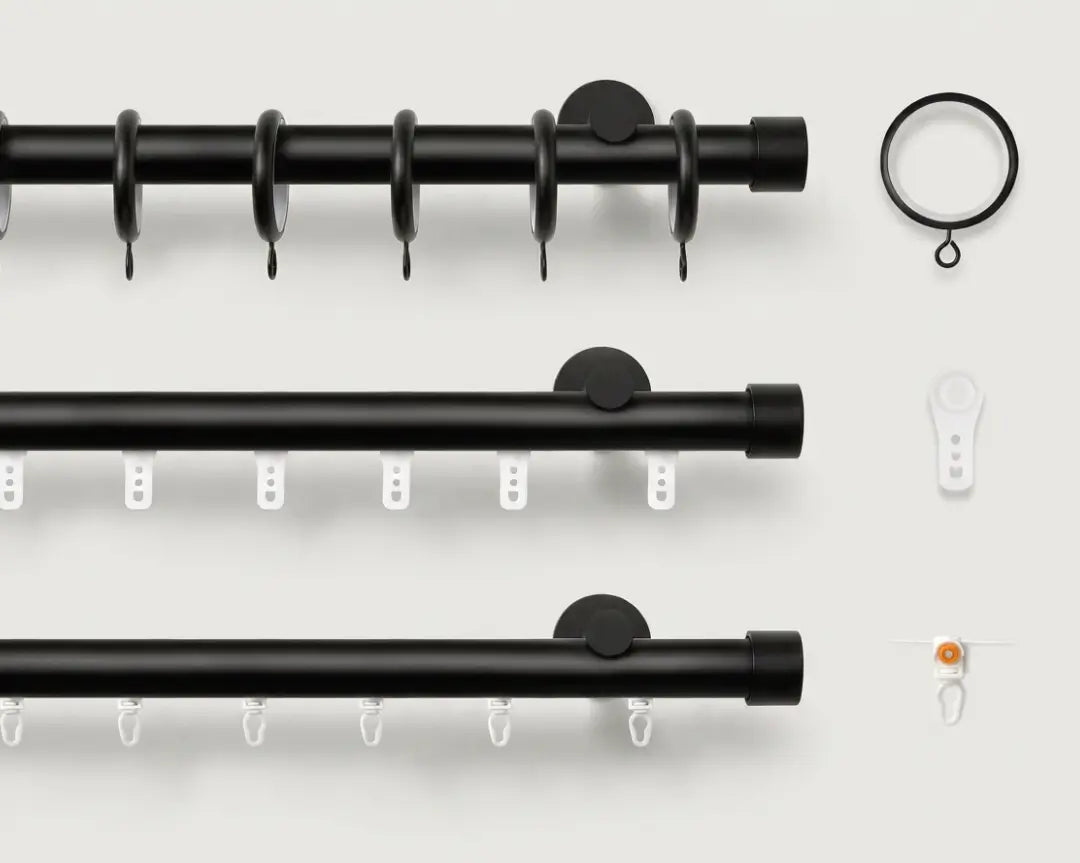
Keep it simple. Tubular rods with clean lines and minimal finials. No ornate scrollwork, no crystal ends, no layered finial designs. A straightforward cylinder or a subtle taper is all you need.
Collins Decorative Rod works here because it's aluminum (light enough to handle, strong enough for heavyweight curtains), available in Black and Antique brass and comes with eight finial styles — most of them clean-lined enough for farmhouse. The 1-inch diameter reads substantial without looking heavy.
Header style matters too
The header connects the curtain to the hardware, and it shapes the entire personality of the window:
- Pinch Pleat. Tailored, structured, permanent-looking. The best choice for living rooms and dining rooms where the curtains are part of the designed backdrop. Creates clean vertical lines that add height.
- Rod Pocket. Casual, gathered, relaxed. Good for bedrooms and kitchens where the vibe is softer. The fabric gathers directly onto the rod — no rings, no clips.
- Back Tab. A middle ground. Hidden fabric loops on the back of the header slide onto the rod, showing a clean front. More polished than rod pocket, more relaxed than pinch pleat.
- Grommet. Works if the rod is a design element (thick matte black metal). The exposed rings create a more casual rhythm. Skip if your rod is utilitarian.
Element 4: Hang It High, Wide, and to the Floor
This is where most farmhouse curtain attempts fall apart. The fabric is right. The color is right. The hardware is right. But the curtains stop six inches above the floor, or the rod barely clears the window frame, and the whole room shrinks.

The three rules
High. Mount the rod 4–6 inches below the ceiling — not above the window frame. This draws the eye up and makes standard 8-foot ceilings feel taller. If you have 9-foot ceilings or higher, go all the way to 2–3 inches below the ceiling or crown molding. Wide. Extend the rod 6–10 inches past each side of the window frame. This lets the curtains stack back onto the wall when open, leaving the full window exposed. It also makes the window itself feel larger — a standard 36-inch window reads closer to 50 inches wide with properly extended hardware. Floor. Curtains should kiss the floor or break slightly (a half-inch of fabric resting on the floor). Anything shorter — floating 2–3 inches above the floor — looks like a measuring mistake. Anything significantly longer (more than 1–2 inches of pooling) reads traditional or romantic, not modern farmhouse.
Why custom sizing unlocks farmhouse
Ready-made curtains come in standard lengths: 84, 96, 108 inches. But farmhouse proportions depend on where you mount the rod — and that varies by ceiling height, window size, and room. A 9-foot ceiling with a high-mounted rod needs roughly 104–108 inch curtains. An 8-foot ceiling with a standard rod position might need 92 inches. Off-the-shelf panels force you to compromise on the one thing farmhouse style won't tolerate: proportion.
Custom curtains, cut to your exact measurements, eliminate the guesswork. You decide the rod position first — then order curtains to match. This is why custom is worth the premium for farmhouse: it's not about better fabric. It's about getting the hang right, and the hang is everything.
Room by Room: Putting the Four Elements Together
Living Room
The living room is the showroom for farmhouse style. This is where guests sit, where the light changes through the day, and where the curtains are most visible.
- Fabric: Celina Linen in Cream White or Light Beige. 350 GSM gives the panels enough weight to drape cleanly. The 40–50% light blocking keeps the room bright during the day without feeling exposed.
- Hardware: Collins Rod in matte black, 1-inch diameter, extended 8–10 inches past each side of the window.
- Header: Pinch Pleat. Structured enough to read intentional, soft enough to feel relaxed.
- Hang: Floor-to-ceiling, rod mounted 4–6 inches below the ceiling.
Dining Room
The dining room asks for something slightly more elevated — it's an entertaining space, and the curtains set the backdrop.
- Fabric: Marisol Linen Curtains. The mid-weight weave and subtle surface interest read polished without feeling formal. Pair with a soft lining if the room gets strong afternoon sun.
- Hardware: Collins Rod in Antique bronze. Warmer than black, echoes candlelight and wood tones.
- Header: Pinch Pleat. Same logic as the living room — structure reads as intentional.
- Hang: Floor-length with a slight break. The curtains should just touch the floor.
Bedroom
Farmhouse bedrooms need softness and darkness in equal measure.
- Fabric: Celina Linen with a blackout or room-darkening lining. The linen face keeps the farmhouse texture; the lining handles light control. Or layer: Elara Linen as the decorative outer panel, with a blackout-lined panel behind it on a double rod.
- Hardware: Double rod system — Collins Double Rod in matte black. Inner rod for the blackout layer, outer rod for the decorative linen.
- Header: Rod Pocket or Back Tab. Softer, more relaxed than the living room. The bedroom should feel less "designed" and more comfortable.
- Hang: Floor-to-ceiling, rod mounted high. Blackout curtains need the extra height to prevent light leaking over the top.

Kitchen
Farmhouse kitchens favor shorter lengths and lighter fabrics — the goal is privacy without sacrificing light.
- Fabric: Elara Linen in Cream Beige or a warm oat tone — light-filtering, casual, easy. For an even lighter, airier feel, Amara Linen's cotton-linen semi-sheer weave works beautifully in sun-filled kitchens.
- Hardware: A simple matte black rod, or a tension rod inside the frame for café-style (covering only the bottom half of the window).
- Header: Rod Pocket. The gathered effect reads relaxed and informal — exactly right for a kitchen.
- Hang: Café length (sill-length) for above-the-sink windows; floor-length only if the window is away from countertops and water.
The One Mistake That Undoes Everything
You can get the fabric, the color, and the hardware exactly right — and still end up with curtains that don't look farmhouse. The culprit? Mixing too many finishes in one room.
Farmhouse depends on visual calm. If the curtain rod is matte black but the cabinet pulls are brushed nickel and the light fixture is polished brass, the room starts to feel chaotic — not in an obvious way, but in a way people notice without being able to name. Pick one metal finish for the room's hardware (black, bronze, or brass), and carry it through: rods, cabinet pulls, faucets, light fixtures, door handles. The consistency is what makes the room feel designed rather than assembled.
Frequently Asked Questions
Q: Can I use patterned curtains in a modern farmhouse room?
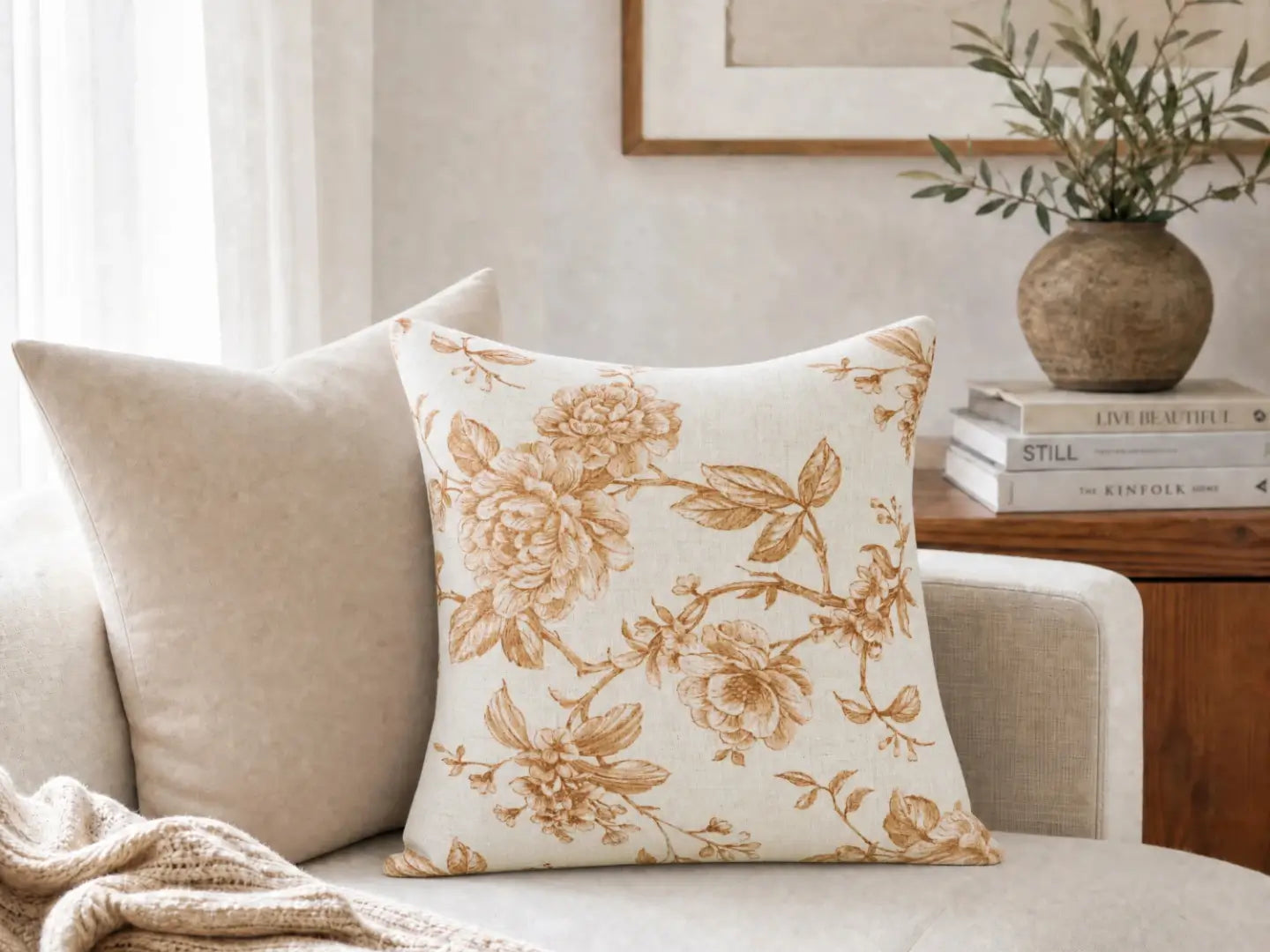
Yes, but keep it restrained. Subtle ticking stripes, windowpane checks, or faint botanical prints in muted tones can work — especially in kitchens or breakfast nooks. The pattern should read as texture from across the room, not as a graphic statement. If you can see the pattern clearly from the doorway, it's too bold.
Q: Do farmhouse curtains need to be linen?
No, but they need to read as natural. Cotton, cotton-linen blends, and textured polyester with a matte finish all work. The test: hold the fabric up to a window. If it reflects light in a smooth, glossy way, skip it. If it diffuses light with visible weave texture, it'll work.
Q: What if my room already has cool gray walls?
Use the curtains to bring warmth back in. Choose a cream, flax, or warm greige (gray with brown undertones, not blue). The curtains will bridge the cool walls and the warm furniture, making the room feel intentional rather than mismatched.
Q: Are blackout curtains too heavy for farmhouse style?
Not if you choose a blackout-lined linen. The face fabric — what you actually see — is still linen with visible texture and a matte finish. The blackout lining is behind it, invisible from the front. Celina with a blackout lining is a popular bedroom choice for exactly this reason: it looks like farmhouse linen, it performs like a blackout curtain.
Q: How do I know what length to order?
Start with the rod position, not the window. Decide where the rod goes (4–6 inches below the ceiling), then measure from that point to the floor. Subtract a half-inch for a clean break or add a half-inch for a soft kiss. That's your curtain length. Don't measure from the window frame — you'll end up with panels that are too short.
The Bottom Line
Modern farmhouse curtains succeed or fail on four decisions: fabric texture, color temperature, hardware finish, and proportion. Get the texture right (linen or a convincing linen blend, matte, with visible weave character). Stay in warm neutrals — cream, flax, greige, khaki. Anchor the window with matte black or Antique bronze hardware. And mount the rod high and wide enough that the curtains frame the room, not just the window.
Everything else — the specific product, the exact shade, the header style — is about tailoring those four decisions to your room. Order swatches. Measure from the rod position, not the window frame. And remember: in farmhouse, the curtains aren't the star. They're the thing that makes everything else in the room look better.
Browse the Living Room Curtain Collection → Select Fabric Swatches →