



















How to Dress Oversized Windows: Why Freshine Custom Curtains Solve the Standard Curtain Problem

Wall-to-wall glass has become a signature of new luxury homes: two-story great rooms, twelve-foot sliders, picture windows that take a whole wall. Builders keep going bigger, and buyers keep asking for more light. The catch arrives the day you try to dress the glass. The windows get bigger every year; the panels sold to cover them don't.
Architectural Digest has published a guide on exactly this problem, and its diagnosis matches what arrives in our custom orders — the room was designed at one scale, and the curtains show up at another. Here's the technical version: what fails, why it fails at scale, and the specifications that fix it.
Where Standard Curtains Break Down
- Fixed dimensions against oversized openings. Ready-made panels rarely run past 96 or 108 inches, and their widths are fixed. A 120-inch opening at two-times fullness needs 240 inches of fabric. Buy five 48-inch panels and you get five breaks, five hems that don't quite agree, and a wall that reads as patchwork.
- Fabric that can't carry the span. Below roughly 250 GSM, fabric flutters with air movement, bells at the hem, and loses pleat structure over a long run. A swatch that looks right at 50 inches behaves differently at 150 — the same cloth that drapes politely on a bedroom window goes soft and shapeless across a wall.
- Pure linen over twenty feet. Linen wrinkles, stretches, and grows with humidity — a hem that kissed the floor in January can puddle by July. Add sun fade and dry-clean care, multiplied across a wall of fabric, and the romance wears thin.
- Light and heat. Large glass takes in a lot of sun. Glare across a television, solar gain by mid-afternoon, and privacy after dark all have to be specified, not hoped for.
- Seams. Joining widths without breaking the pattern is a workroom skill. A warehouse cutting stock sizes hasn't got it: the join lands wherever the math puts it, and the pattern breaks across it.
The Five Specifications That Fix an Oversized Window

1. Fullness is a ratio, not a feeling.
Fullness is fabric width divided by the span it covers. Pleated drapery runs about 2x; triple pleats reach 2.5x, because three folds per pleat consume more cloth. On a 120-inch span, 2x means 240 inches of fabric and 2.5x means 300 — the difference between a wall of cloth that hangs flat when closed and folds that hold a column. Freshine cuts 2x and 2.5x fullness, with pinch pleat (double or triple), Euro pleat, and Ripple Fold headers. Ripple Fold runs at 2.0x on 2.36-inch carrier spacing and needs its own track, so the wave stays even across the whole run.
2. Fabric weight does the structural work.
GSM — grams per square meter — measures how much cloth you're hanging, and it predicts behavior better than a photograph does. 300 to 400 GSM is the working range for large spans: enough mass to pull the folds down and hold them there. Our library covers that band: Celina 350 GSM, Elara 335, Iris 390, Marina 400. Below 250 GSM the fabric has little to pull against gravity, so air movement and the hem's own memory take over — a specification problem, not a styling one. Weight also loads the hardware, which is why a heavy panel and a light rod are a bad pairing.
3. Prefer a linen blend to pure linen.
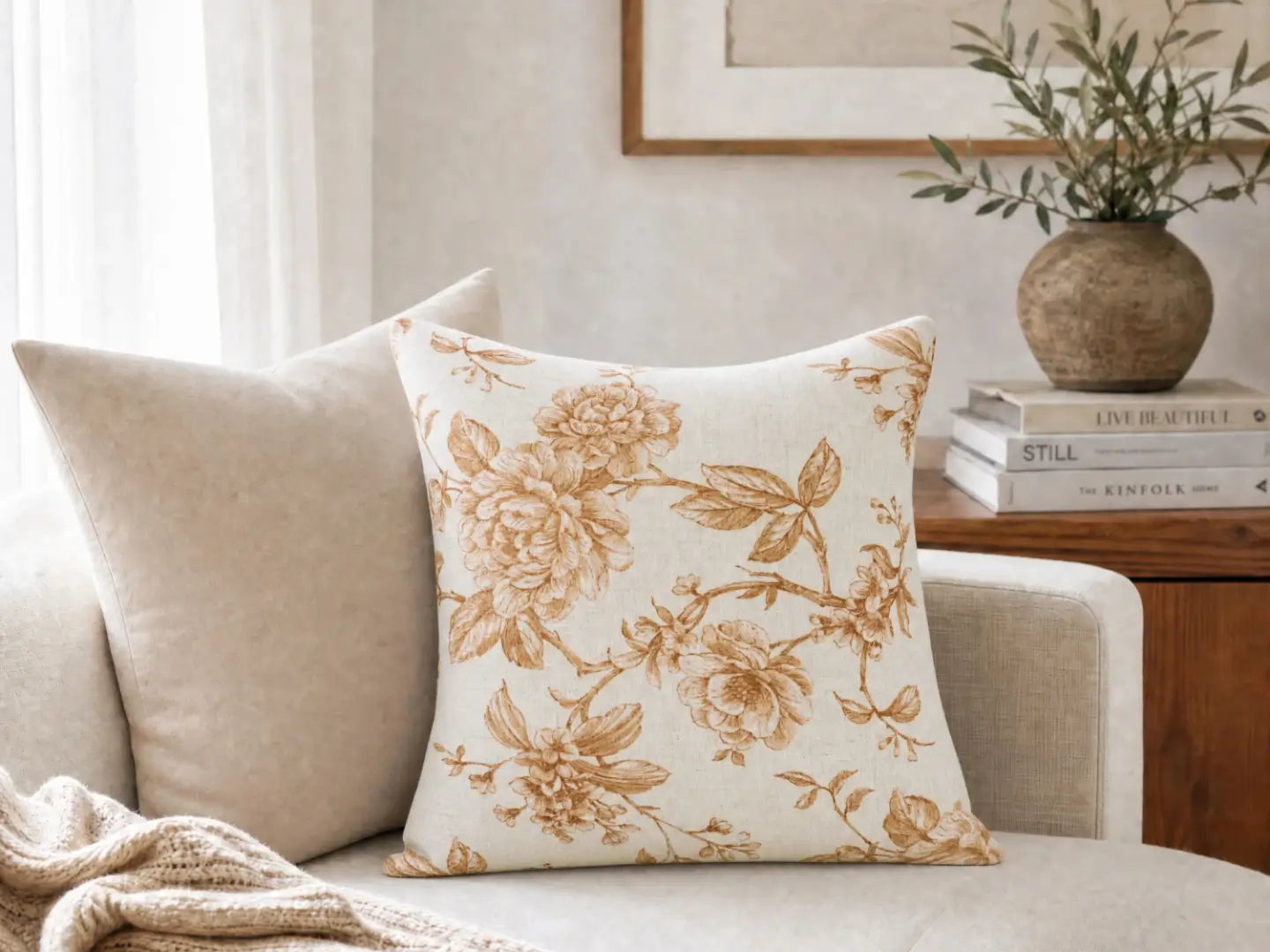
Pure linen gives the sun-washed European look and brings its habits with it: it stretches, grows with humidity, fades in direct sun, and generally wants professional cleaning. Faux linen — a linen-polyester blend — keeps the slub texture and the matte hand while the polyester stabilizes the weave. Celina is 30% linen, 70% polyester: machine washable, resistant to stretching and sun fade, and 40%–50% light blocking on its own. That matters when each panel is bedsheet-sized and gets cleaned once a season, not once a decade.
4. Choose the liner by the problem it solves.
Add a liner and you specify what the glass can't. 30% shading (135 gsm microfiber) takes the edge off glare and gives daytime privacy. 50% (200–225 gsm) adds structure to the folds. 80% room-darkening handles media rooms and western exposures. 100% blackout (217–240 gsm) is for bedrooms. Unlined is right when the weave is heavy and daylight is the point. One honest limit: a liner makes the panel opaque, not the window. Light still enters at the heading and around the edges, so plan the coverage — the stand-off past the frame, the return to the wall — and not just the lining. A lining also adds body, which helps a long drop hold a straight line. The full ladder of shading rates is on our lining guide.
5. Hang it high, wide, and outside the frame.
Use an outside mount and set the rod high — four to six inches below the ceiling or crown molding — rather than hugging the window frame. Height does free work: the eye reads the panel as the window, so the opening looks taller than it is. Extend the rod past the frame on both sides so open panels stack against the wall instead of covering glass you paid for; for pleated panels, budget roughly one-fifth of the total drapery width as stack-back. Our measuring method recommends 6 to 15 inches past each side, mounted as close to the ceiling as the room allows.
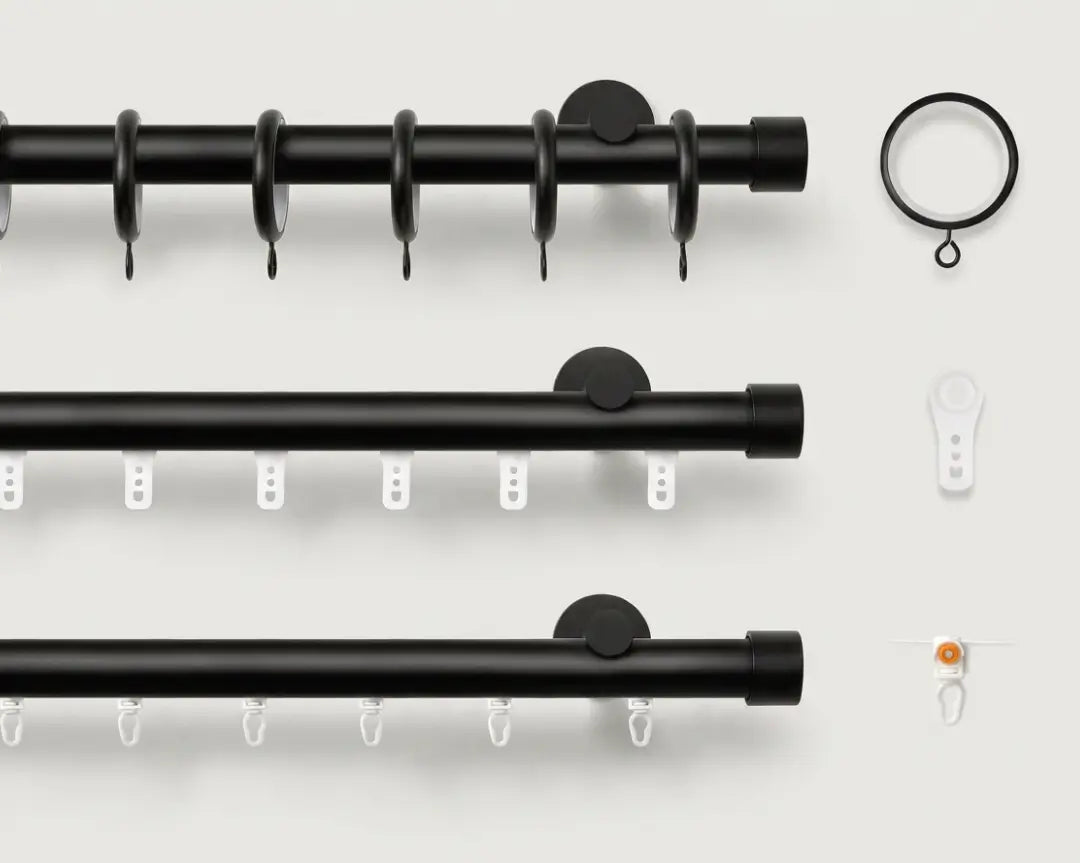
Hardware has to match the span. A decorative rod suits a standard room's width. Past that, a ceiling-mounted track carries the load and runs wall to wall without brackets breaking the line. On a genuinely grand span, motorization is the difference between using the curtains daily and leaving them closed.
Where the joins land matters as much as what's specified.

- Cut to the opening. Celina Extra Wide is made to order up to 360 inches wide by 240 inches long. Past that we can still cut, but weight becomes the limit, not the loom.
- Pattern matching. Where a width has to be joined, the seam is planned to fall inside a fold and the pattern is matched across the repeat. That costs extra fabric, because the repeat has to line up on both sides of the join. Done properly, it reads as one run of cloth, not a stitched seam. Lengths over 102 inches rotate the fabric 90 degrees, so a long drop runs continuous.
- Memory shaping heat-sets the pleats, so a fifteen-foot panel hangs in even columns from installation instead of relaxing into place over a month. On a span this wide, uneven pleats are the first thing anyone notices.
Set side by side, the difference isn't styling:
| Standard panel | Made-to-measure | |
|---|---|---|
| Width and drop | Fixed sizes, usually ≤108" long | Cut to the opening, up to 360" × 240" |
| Fabric weight | Rarely specified, often under 250 GSM | 300–400 GSM |
| Fullness | Whatever the panel width allows | 2.0x pleated, 2.5x triple |
| Lining | One option, if any | Unlined, 30%, 50%, 80%, 100% |
| Seams | Breaks between panels | Planned into a fold, pattern matched |
The Result, and What It Costs

Dressed correctly, an oversized window stops reading as a decorating problem. The drape works as architecture: folds hold their line from heading to hem, the hem lands where you planned it, and light is controlled by specification rather than by closing the curtains at 3 p.m. Proportion is the whole effect — a panel that reaches the ceiling and stacks off the glass makes the opening look taller and the wall look deliberate. The fabric does quiet work too: weight and fullness soften sound in a hard-surfaced room, and a liner slows heat at the glass.
The other change is price. A workroom used to quote in the thousands for a wall of drapery, and that quote is why so many large windows end up bare. Direct-to-consumer cutting has moved that: Celina Extra Wide starts at $42.99 in nine colorways, with free shipping and a 7–14 day delivery window. Made-to-measure is shedding its luxury-only status — the argument the AD guide ends on, and one we'd make too.
Read the Original, Then Measure
For the full argument, including hem finishes:
Read Architectural Digest’s full guide on oversized window treatments
Three numbers decide the order: the rod or track span rather than the window, the drop from the hang point to the floor, and the stack-back allowance on each side. Settle those before the fabric, because fullness and lining both follow from them. For the panel math on a wall of glass, panels, splits, and the math behind wide windows walks through it — and our design team will spec it from a photo, free.
---
