















Single Panel vs Double Panel Curtains: Which Is Right for Your Window?

A curtain decision that looks small is actually a layout decision. One panel or two changes where the fabric stacks, how the window reads from across the room, and whether the whole thing feels modern or traditional.
Here's the short version. Narrow windows lean single. Wide windows—past roughly 110 inches—aren't really a choice: fabric rolls are cut around 110 inches wide, so a single panel that big needs a sewn seam, or it becomes two panels by default. In between, three things decide it. How wide the window is. What header style you want. And how the curtains need to move every day.
Single Panel vs Double Panel, Defined
A single panel is one width of fabric hung across the window. It draws to one side—left or right—or hangs fixed as a stationary decorative panel. A double panel (Freshine's checkout calls this a split panel) is two equal halves that meet in the middle and open outward from the center.
The difference sounds trivial. It isn't. A single panel stacks all its fabric on one side when open, which means one side of your window needs wall space. A double panel stacks half on each side, and it opens from the center—the way most people picture curtains working.
There's a hard limit worth knowing before you decide anything else. Curtain fabric rolls are cut around 110 inches wide. Past roughly 104 inches, a single panel has to be spliced—two widths sewn together with a visible seam—or it simply becomes two panels. That's not a style preference; it's geometry.
When a Single Panel Wins

Narrow windows. A single panel on a 40- to 60-inch window looks intentional. Two panels on a window that size crowd the glass and stack poorly. One panel keeps it clean.
Ripple-fold headers. A ripple-fold curtain forms one continuous S-wave across the rod or track. Break it into two panels and you get two waves that never quite read as one line. If you're committed to ripple fold, a single panel is usually the better match. Freshine's Celina in a ripple-fold header is built for exactly this—an uninterrupted wave from end to end.
One-side stackback. Some windows only have wall space on one side—a corner, a door, a radiator on the right. A single panel stacks onto the side that has room and stays out of the way everywhere else.
Fixed, decorative panels. When curtains are meant to frame a window rather than close over it, a single panel on each side (or one dramatic panel) reads as a design choice, not a functional one.
When Double Panels Win

Wide windows. Past 110 inches you're splitting anyway, so design for it deliberately. Two panels meeting in the middle balance a wide span in a way one huge panel never can.
Center opening. Most people open and close curtains from the middle. Double panels do this naturally. A single panel forces you to drag the entire width to one side, which gets tedious on a daily basis.
Pleated headers. Pinch pleat and euro pleat are built on symmetry—crisp folds that meet in a composed, deliberate way at the center. Two panels show that symmetry off. Freshine's Marisol pleated linen curtains and the Emilia cotton pleats are designed around exactly this look.
Grommet headers. Grommets come in even counts so the folds fall evenly. That even rhythm reads best as two panels opening from the middle.
Traditional and formal rooms. A single sweeping panel is modern and minimal. Two panels is the classic, tailored look—dining rooms, formal living rooms, anywhere the window is meant to feel composed rather than architectural.
Header Style Decides More Than You Think
Panel count and header style are separate choices at checkout, but they pull on each other. Match them right and the window looks finished; mismatch them and it looks accidental.
| Header style | Leans toward | Why |
|---|---|---|
| Ripple Fold | Single | Continuous S-wave, unbroken line |
| Pinch Pleat | Double | Symmetric folds meet at center |
| Euro Pleat | Double | Same symmetry, cleaner top edge |
| Grommet | Double | Even ring count, even folds |
| Rod Pocket | Either | Narrow window → single; wide → double |
| Back Tab | Either | Soft, casual; let width decide |
| Flat Panel | Either | Most flexible; works single or split |
The product pairing follows the same logic. For a single ripple-fold panel, Celina's ripple-fold version and the Luna velvet ripple-fold drapery are the two to know—one linen, one velvet, both built to draw as one continuous wave. For a pleated double-panel setup, Marisol's pleated linen and the Emilia or Nina cotton pleats give you that tailored center seam. For everything in between—grommet, rod pocket, back tab, flat panel—the core linen line (Celina, Amara, Elara) and the Hestara cotton-linen blend cover the range, and you pick the panel count at checkout.
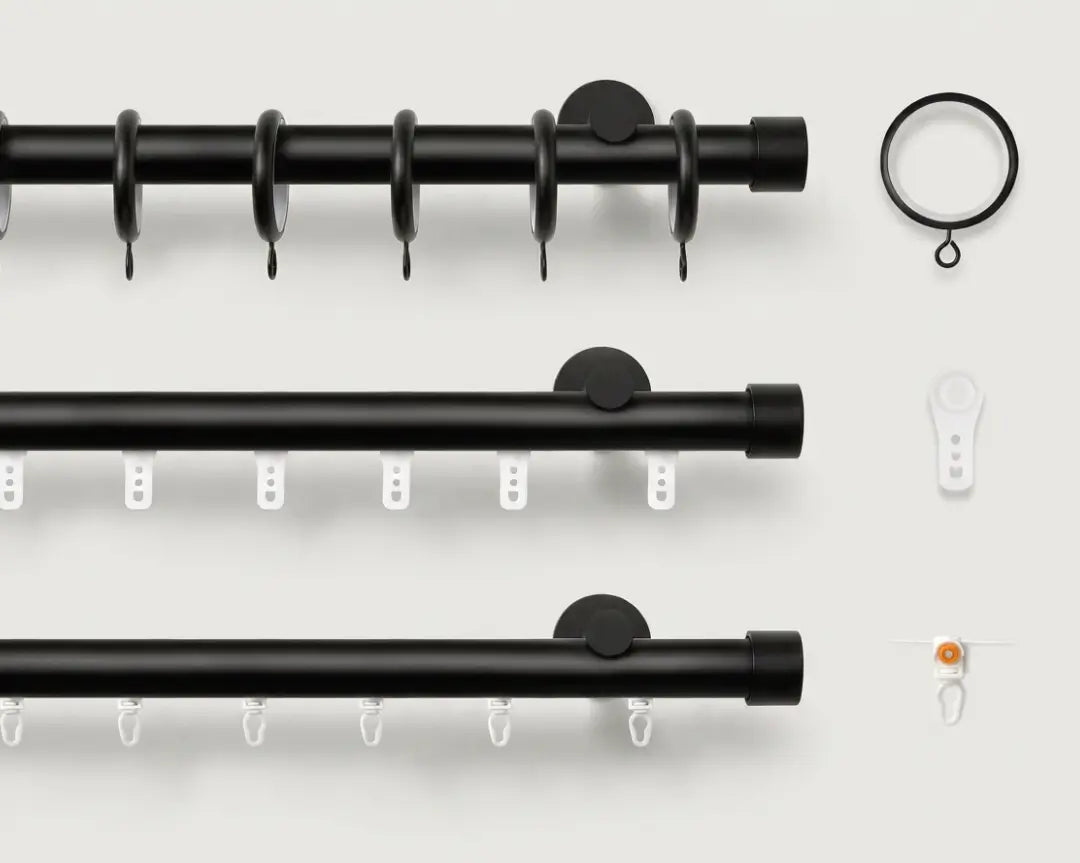
If you're pairing a single panel with a track, match the hardware to the header. Ripple fold needs a ripple-fold track; a flat or pleated header works on either a rod or a track. Our guide to rods vs. tracks walks through that choice.
How to Decide

Walk it in order and the answer usually falls out.
- Measure the window. Under roughly 60 inches, single is the default. Over 110 inches, you're double by necessity.
- Pick the header. Ripple fold pushes single; pinch and euro pleat push double; grommet leans double; rod pocket, back tab, and flat panel leave it open.
- Check the stack space. One side only → single. Both sides → double.
- Decide how it should feel. One clean sweep → single. Tailored symmetry → double.
The overlap is where taste lives. A 90-inch window can go either way, and both can look right. When you're genuinely split, the header style is the tiebreaker—match the panel count to the folds and the window reads intentional either way.
A note on fullness while you're ordering: single or double, the fullness ratio you pick changes how the panels drape. Two panels at 2x fullness stack and fold differently than one panel at 2x. Our fullness comparison covers the tradeoff if you want the numbers behind it.
Frequently Asked Questions
Is one curtain panel enough for a wide window?
Only up to the fabric's roll width—around 110 inches. Past that, a single panel needs a visible splice or becomes two panels. For anything approaching that width, double panels are the better design anyway.
Can I use a single panel with pinch pleats?
You can, and single‑panel pinch pleats can look great. The main difference between single and double panels comes down to your opening‑closing preference and the stack‑back space you have available.
Do double panels cost more than a single panel?
They're priced by total fabric and construction, not by how the fabric is divided, so the difference is usually small. The real cost is in hardware—a double rod or dual track for layered looks—and in getting the stack space right.
Which is better for a bedroom, single or double?
Double, in most cases. Bedrooms want light control, and two panels meeting in the middle close tighter against the glass and block edge light better than one panel dragged to a side.
Can I split a single panel later if I change my mind?
Not cleanly. A single panel is cut as one piece of fabric. Converting it to two means cutting and re-hemming the width, which changes the fullness. Decide up front—single vs. double is a checkout-time choice, not an afterthought. If your order has not gone into production, kindly contact us promptly and we can still update your selection between single and double panels.