
















Kids' Room Curtain Ideas: 6 Looks That Survive Actual Children
Most kids' room curtain advice is a gallery of adorable prints. The problem with adorable prints is that children change faster than curtains wear out — the dinosaurs a four-year-old picks are a source of embarrassment by nine, and the curtains are still perfectly good.
The short answer
Two decisions matter more than the look you choose: how dark the room needs to be, and how easily the fabric washes. Get those right and any of the six looks below works.
The strategy that survives: put the personality in the things that are cheap to change — bedding, wall art, cushions — and let the curtains be a colour rather than a character.
In this guide
Two decisions before the look
1. How dark does the room have to be? This is the one that decides whether everyone sleeps. Young children in particular wake with the light, and in summer that can mean 5 a.m. If you need genuine darkness, you need blackout fabric — not "room darkening", which is a different and weaker specification, as light filtering versus blackout explains. If the room is a playroom or the child sleeps regardless, a light-filtering panel keeps things gentler and brighter.
2. How does it wash? Children's rooms produce marks that adult rooms do not: sticky hands at hem height, poster putty, marker, the occasional felt tip. Machine-washable fabric is worth more here than in any other room in the house, and it argues for cotton and cotton blends over dry-clean-only linens and velvets. Our guide to washing curtains without shrinking them is worth reading before you buy, not after.
Everything else — colour, pattern, length — is genuinely a matter of taste. These two are not.

Six looks that last
1. Quiet Neutral
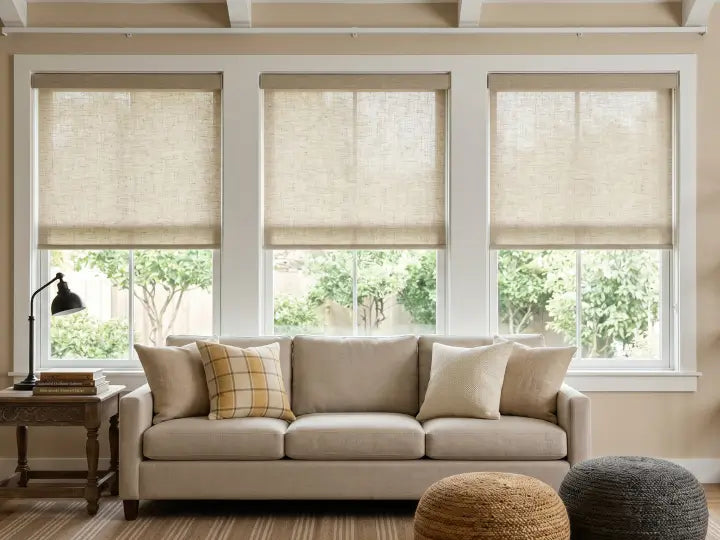
A plain oatmeal, warm white, or soft greige panel, floor length. The most boring answer and the most durable one: it works from nursery through to a teenager's room without a single change, and it lets bedding and art carry all the personality. If you only want to buy curtains once, this is the look.
2. Soft Colour Block
One confident, muted colour — sage, dusty blue, clay, butter yellow — with no pattern at all. It reads as a deliberate choice rather than a theme, so it ages far better than a print. Pick the colour from something in the room that will stay, like the rug or the wall, rather than from a current obsession.
3. Fine Stripe
A narrow stripe is the one pattern that behaves like a neutral. It adds structure and a hint of playfulness without committing to a subject, and it suits both a young child's room and, later, a teenager's. Vertical stripes have the useful side effect of making a low ceiling read taller.
4. Sheer + Blackout Pair
The functional answer for a room that needs both daytime softness and night-time darkness: a sheer at the back for daylight and privacy, a blackout panel in front for sleep. It costs more and needs the right hardware, but it is the only setup that genuinely solves both problems. The order and the hardware are covered in how to layer curtains.
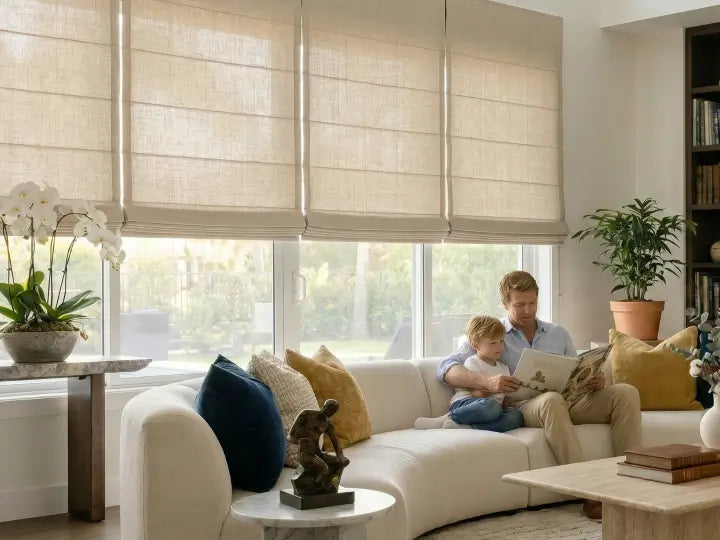
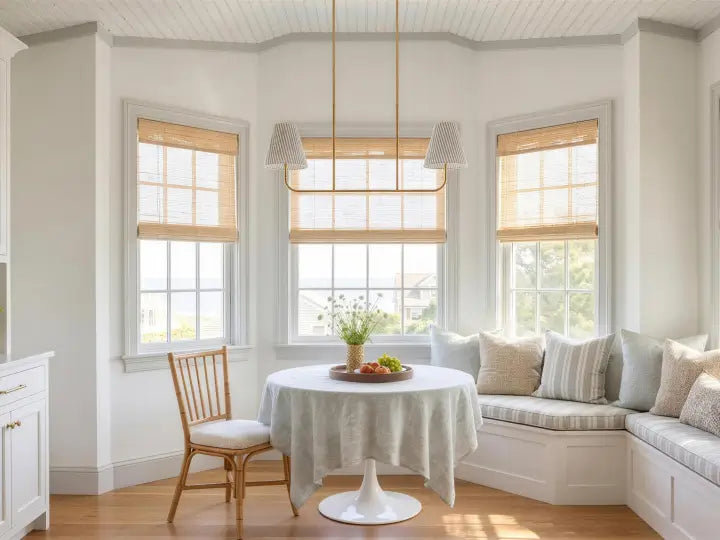
5. Roman Shade, Clean and Tailored
A fabric Roman shade sits inside the window instead of beside it, which matters in a small room where every inch of wall is wanted for a bed, a desk, or a bookcase. It reads tidier than curtains and gives a small room back its walls. Worth knowing that a Roman's folded stack sits at the top of the window even when raised.
6. Pattern, Contained
If you want an actual print, put it on one window and keep everything else quiet — or better, put the print on a Roman shade and hang plain panels beside it. A single patterned element is easy and cheap to swap when tastes move on; a whole room committed to a theme is not.
Choosing by age, honestly
| Stage | What actually matters |
|---|---|
| Nursery | Darkness first, everything else second. Naps happen in daylight. Choose blackout and a neutral you will not resent in three years. |
| Toddler to about 6 | Washability. This is the sticky-hands era, and hem height is exactly hand height. Cotton blends, machine washable. |
| About 6 to 11 | Let them choose — but from bedding and art, not curtains. Keep the window neutral so their choices have somewhere to sit. |
| Teenager | Darkness again, for entirely different reasons. A plain neutral or a deep saturated colour; nothing that reads as a children's room. |
The through-line is obvious once you see it: the two ends of childhood both want darkness and neutrality, and only the middle wants personality. Which is a good argument for buying neutral curtains once and spending the theme budget on things that cost twenty dollars to change.
FAQ
What curtains are best for a kids' room?
Machine-washable blackout panels in a plain colour, floor length. Blackout because children wake with the light and summer mornings start early; machine-washable because hem height is hand height; plain because the pattern a small child loves is the pattern an older one rejects, while the curtains are still perfectly good. Put the personality into bedding and wall art, which cost far less to change.
Should kids' room curtains be blackout?
Usually yes, and especially in a nursery, where naps happen in daylight and sunrise can be before five in summer. Note that "room darkening" is a weaker specification than blackout, not a synonym for it. The exception is a playroom or a room used mainly in the daytime, where a light-filtering panel keeps the space brighter and gentler.
How do you choose curtains for a girl's or boy's room?
The same way for both, because the two decisions that matter — darkness and washability — have nothing to do with who is sleeping there. Pick the colour from something durable in the room, such as the rug or the wall, rather than from a current interest, and if you want a themed print put it on one element you can swap cheaply rather than across the whole window.
What length should kids' room curtains be?
Floor length, just brushing the floor, in almost every case — it looks better and there is no practical reason to go short. The exception is a window with a radiator, a deep sill, or furniture pushed underneath, where sill or apron length is the sensible choice. Avoid puddling in a child's room; it collects dust and gets stepped on.
Are Roman shades a good idea in a child's room?
They are excellent in small rooms, because a Roman shade sits inside the window recess instead of taking up wall on either side — which gives you the wall back for a bed, desk, or bookcase. The trade-off is that the folded fabric stack still occupies the top of the window when the shade is raised, so you lose a little glass.
How often will you need to replace kids' room curtains?
If you choose a neutral, potentially never — a plain panel can go from nursery to teenage bedroom untouched. If you choose a themed print, plan on replacing it around age eight or nine, well before the fabric is worn out. That gap between when a curtain stops suiting a child and when it actually wears out is the single strongest argument for keeping the window plain.
If you are doing a child's room now
Start with the darkness decision, then the fabric. Our kids' room curtains are made to your window in washable cotton and linen blends, with the blackout range for the rooms where sleep is the whole point — and a Roman shade when the walls are needed for furniture.