
















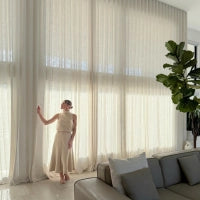


Dining Room Curtain Ideas: 6 Looks Matched to Your Table
Most curtain advice starts at the window, but in a dining room the piece that sets the tone is the table, so this guide matches six curtain looks to six kinds of table.
The short answer
Match the curtains to the table: a large rectangular table reads formal and suits velvet or pinch pleats, while a round or glass table suits airy sheers. For every look, hang the rod 4–6 inches above the frame or higher, float panels no more than ½–1 inch off the floor or break them 1–2 inches onto it, and give sheers 2.5–3× fullness. Keep hems out of chair paths and fabric off radiators.
Good fit if you're dressing a dining room or open-plan dining area. Skip / reconsider if a banquette, buffet or radiator sits under the window: start with Look 6 and the dining-room rules.
In this guide
- Start with the table
- Look 1: Quiet Linen
- Look 2: Evening Velvet
- Look 3: Sheer Daylight
- Look 4: Pattern Play
- Look 5: Tailored Formal
- Look 6: Café & Nook
- Dining-room rules
- The honest part
- Glossary
- FAQ
What curtain look suits your dining table?
The one that matches its formality. "A large rectangular table feels more grand and formal," notes Homes & Gardens, while a round one feels "more casual, sociable." Rachel Usher suggests curtains join "a family of tones" with a room's other materials (Livingetc), and in a dining room the table is the biggest piece in that family. No source we found pairs curtains with tables, so these pairings are our own calls.
| Your table | The look | Why it pairs |
|---|---|---|
| Farmhouse trestle, oak or Scandi wood | Quiet Linen | The wood grain already supplies the texture |
| Traditional dark-wood rectangle | Evening Velvet | Already formal; velvet deepens it at night |
| Glass, acrylic or round pedestal | Sheer Daylight | A light-looking table wants a light-looking window |
| Cottage table with mismatched chairs | Pattern Play | One print pulls a mixed set together |
| Formal table under a chandelier | Tailored Formal | Pleats echo the room's structure |
| Banquette, nook or a window over a buffet | Café & Nook | Furniture already hides the lower glass |
Dressing another room? See our living room and bedroom lookbooks.
Look 1 · Quiet Linen: what curtains suit a farmhouse or trestle table?
The look: pale, textured, unfussy panels that let the wood grain lead.
- Fabric: linen or a linen-blend, lined
- Color: oat, flax or sand
- Heading: ripple fold
- Length: kiss or break, not float
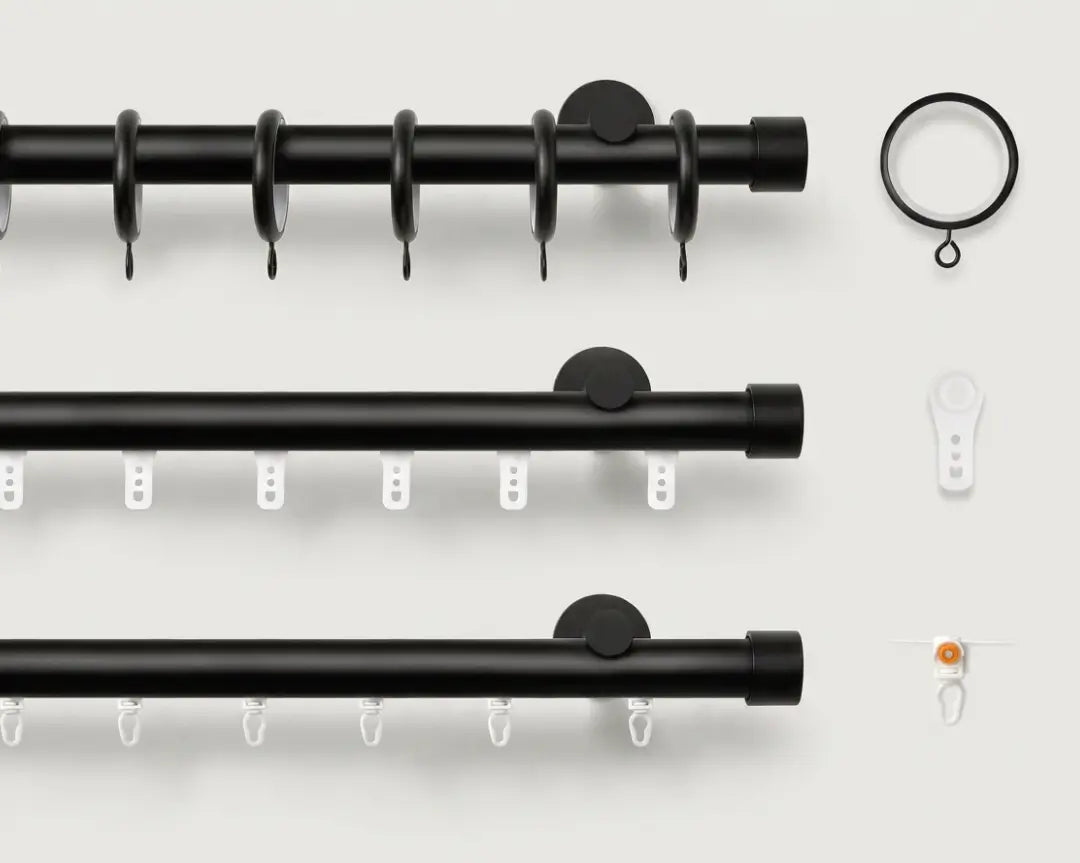
- Hardware: a ceiling track or slim rod
Why it fits: the table brings the texture, so the window stays quiet. "By keeping drapes clean and minimal, such as ripple fold linen drapes, they don't clutter or crowd the space," Devon Wegman told Homes & Gardens. Designer Jake Arnold favors "softer neutrals instead of stark whites" (Domino).
Shop the look: Elara linen-blend curtains, 8% linen / 92% polyester, 335 GSM, light-filtering (blocks roughly 35–45% of light).
Practical note: pure linen "may shrink or stretch over time" (The Shade Store), and a small break hides that where a float would show it. See also our modern farmhouse curtain guide and, for Scandi tables, our Japandi lookbook.
Look 2 · Evening Velvet: what curtains suit a traditional dark-wood table?
The look: deep, lined velvet that turns a formal table into a candlelit room after dark.
- Fabric: velvet, lined or interlined
- Color: jewel tones or chocolate
- Heading: pinch pleat
- Length: break; puddle only if the panels stay open
- Hardware: a sturdy, extra-wide rod

Why it fits: a dark-wood rectangle already reads formal, and velvet leans in. "I love darker curtains against lighter walls for a dining room or area," Pip Rich told Livingetc; closed at night, they "become a sophisticated backdrop."
Shop the look: Liora velvet curtains, 100% polyester velvet, 400 GSM, 70–85% light blocking, or browse all velvet curtains.
Practical note: velvet "will need more space" to stack than a sheer, so run the rod farther past the frame, and lining "protects your fabric from sun damage" (Focal Fabrics). More in our old money velvet guide.
Look 3 · Sheer Daylight: what curtains suit a glass or round pedestal table?
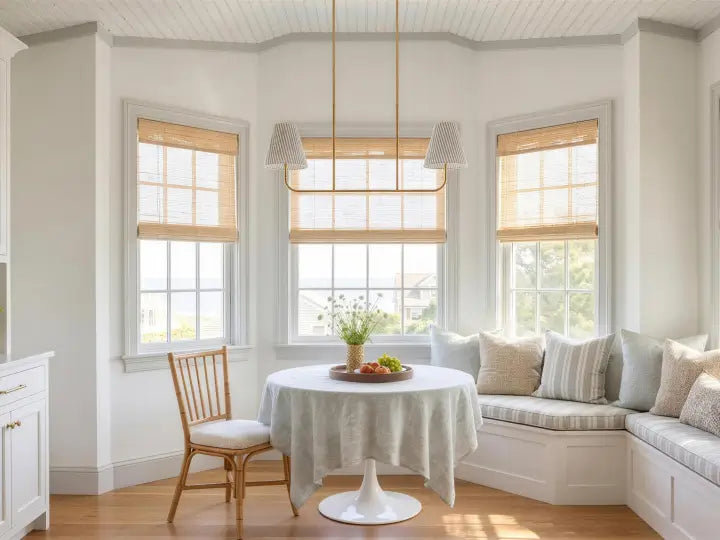
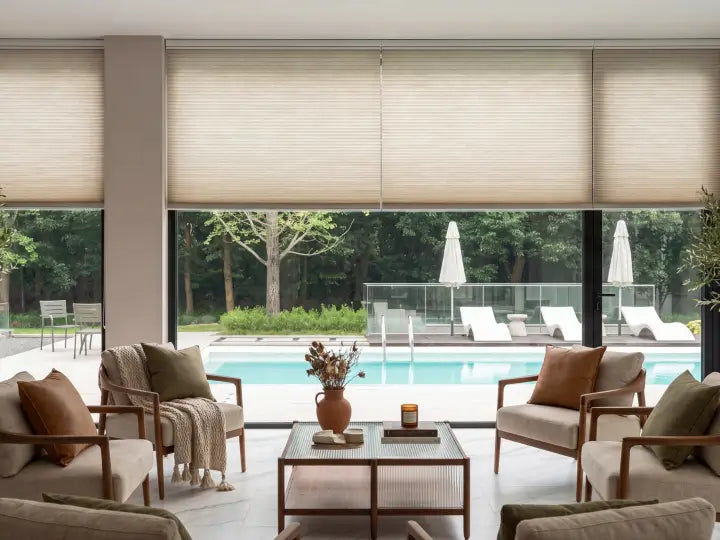
The look: soft sheers that keep a light-looking table airy and fill the room with daylight.
- Fabric: a linen or voile sheer; stripes welcome
- Color: off-white, or a single color
- Heading: ripple fold at 2.5–3× fullness
- Length: float or break, since sheers get drawn often
- Hardware: a ceiling track

Why it fits: a round table feels "more casual, sociable," and glass nearly disappears, so heavy drapes would outweigh it. Livingetc calls sheers "the perfect window treatment choice for a dining room."
Shop the look: Amara semi-sheer curtains, a linen-blend (20% linen / 80% polyester) that blocks 30–40% of light, or browse our sheer curtains.
Practical note: sheers look thin when skimped, so order 2.5–3× fullness (Focal Fabrics); our curtain width guide turns that into panel widths. Plan an evening layer too (see sheers under the chandelier).

Look 4 · Pattern Play: what curtains suit a cottage table and mismatched chairs?
The look: one confident print that pulls a mixed set of chairs together.
- Fabric: printed or embroidered cotton or linen, or a woven jacquard
- Color: one pattern, held by a restrained palette
- Heading: cottage pleat or double pinch pleat
- Length: kiss
- Hardware: a slim pole; trim optional
Why it fits: when the chairs don't match, a print gives the eye one thing to follow. "I recommend pairing a pattern with a more restrained palette," says Marea Clark (Livingetc).
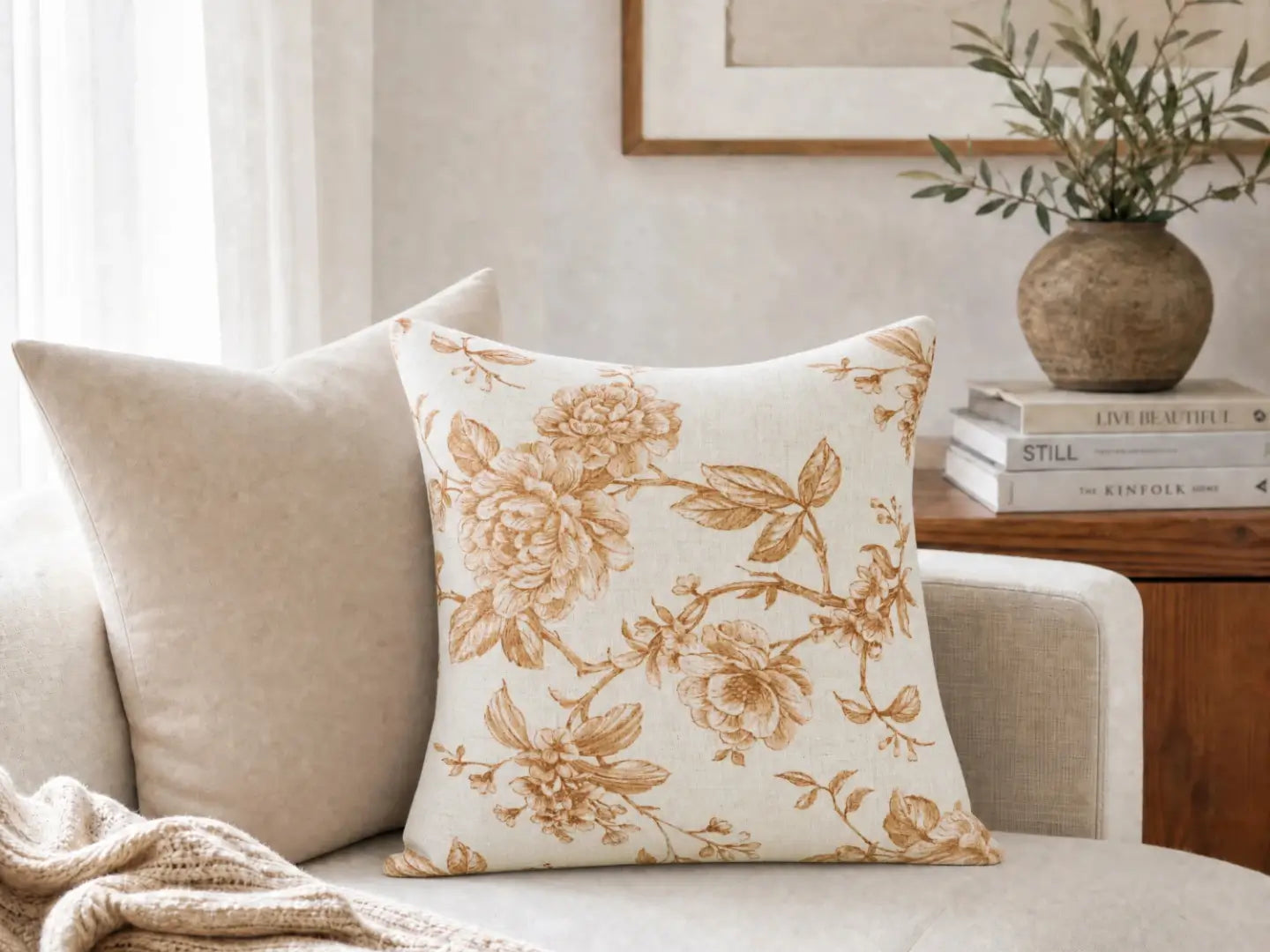
Shop the look: Ada Antique Garden Birds drapes, a printed bird-and-floral design, 500 GSM, 80–90% light blocking. Prefer a woven pattern? See our jacquard curtains and how jacquard, embroidered and printed curtains differ.
Practical note: pattern on pattern is where this look fails. With papered walls, repeat the print, as one green dining room with "matching curtains in the same print" does (Homes & Gardens), or keep the curtains plain.
Look 5 · Tailored Formal: what curtains suit a formal table under a chandelier?
The look: crisp, elegant pinch pleats, tone-on-tone, with one tailored detail.
- Fabric: lined silk, wool or heavy linen, or a linen-look weave
- Color: tone-on-tone, with trim
- Heading: pinch pleat
- Length: break, or puddle if the panels stay open
- Hardware: a clean valance, pelmet or cornice
Why it fits: a chandelier over a formal table sets a structured room, and pinch-pleated drapery repeats it. "Valances and pelmets are becoming particularly important as we enter 2026," says Rebecca Hughes (Livingetc), and puddling is "ideal for formal dining and living rooms" (The Shade Store).
Shop the look: Seraphine linen-look curtains, a linen-look polyester, 300 GSM, 60–70% light blocking. Our pinch pleat guide compares double vs. triple pleats.
Practical note: pick one detail, not three. "Too many layers, trims, or decorative details can quickly overwhelm a room," warns Jake Arnold (Domino), and Livingetc's report says "Statement valances are on the way out."
Look 6 · Café & Nook: what goes on a window over a banquette or buffet?
The look: half-height or sill-length panels for windows that furniture already half-covers.
- Fabric: light cotton or linen, in stripes or checks
- Color: anything goes
- Heading: tailored or pinch pleats
- Length: the lower half of the window
- Hardware: a slim curtain pole
Why it fits: a banquette or breakfast table pushed against the glass leaves no room for long panels. Café curtains "let in as much natural light as possible, without compromising on privacy," says Annie Downing (Livingetc). Where a banquette covers a window, one Livingetc room used "a simple Roman shade" instead.
Shop the look: Elara café curtains, the same linen-blend (8% linen / 92% polyester) as the full-length Elara.
Practical note: the top of the glass stays bare after dark, so add a shade if the nook faces the street. Is the style dated? See our 2026 café curtain verdict and these kitchen café curtain ideas.
What do dining rooms need that other rooms don't?
Five things: chair-proof hems, an evening plan for sheers, heat clearance, a buffet-window fix and fabric that copes with food smells and west sun. Our guides to measuring for curtains and curtain width cover the method.
| Decision | Rule of thumb | Source |
|---|---|---|
| Rod height | 4–6 in above the frame, or ½–⅔ of the way to the ceiling; for ceilings of 10 ft or more, Bob Vila says stay within 8 in of the frame | Family Handyman; Emily Henderson; Bob Vila |
| Rod width | 3–6 in past the frame per side, or at least 6–10 in; velvet needs more stack room | Bob Vila; Emily Henderson; Focal Fabrics |
| Length | Float no more than ½–1 in; break +1–2 in; puddle +1–3 or +3–6 in, for drapes that stay open; sill length ends ½ in above the sill or at it | The Shade Store; Homes & Gardens; Bob Vila |
| Fullness | Sheers 2.5–3×; medium to heavy fabrics 2–2.5× | Focal Fabrics |
| Electric baseboard heater | Short drapes at least 6 in above; full-length drapes at least 2 in from the heater front to the nearest fold, 1 in off the floor | Marley Model D manual |
Keep hems out of the chair path
Chairs slide back at every meal, and puddles "can be easily sat upon, trampled and torn" (The Shade Store) or "pose a tripping hazard" (Homes & Gardens). Near a chair path, float or break.
Sheers under the chandelier
Dinner often happens after dark, when sheers "don't offer full concealment at night, if lights are switched on indoors," though they still "stop windows from feeling like stark black voids" (Livingetc). Emily Mould of Romo's fix: "Pair sheers or semi-sheers with opaque, heavier-weight drapes or blinds" (Homes & Gardens). More in our guide on seeing through sheer curtains at night.
Food smells and stains
Fabric holds cooking odors, but the science on fibers is split. "Fibrous textiles readily absorb and desorb ambient odors," notes a 2022 study in which cotton released more of the hot-pot odorants hexanal, nonanal and anethole than wool or polyester (Huang et al., AATCC Journal of Research). A 2024 study using sweat, not food, found cotton took up fewer aldehydes and ketones, and polyester released more by 24 hours (McQueen et al., Textile Research Journal).
Practical advice is clearer: "Heavy fabrics tend to trap odors," says Norwex's Courtney Landry, who suggests washing kitchen curtains every 2–3 months and other rooms' every 6–12 months (Chowhound). Near an open kitchen, follow the kitchen schedule. We found no independent tests of "performance" curtain fabrics, so we make no stain-proof claims.
Evening sun from a west window
On west-facing windows, afternoon glare peaks "between about 2 pm and sunset," and low sun "fades furniture even faster" (Blindsgalore). Split the job: a solar shade with "around 1% to 3%" openness for glare, drapery for mood. Line velvet or silk here, and see our guide to UV protection for curtains.
A window behind a buffet or sideboard
A break hidden behind furniture "might cause the fabric to catch on the legs" (The Shade Store). Use sill length (Homes & Gardens), a café curtain (Look 6), or fixed side panels hung wide with a shade doing the work; Domino calls fixed panels "especially beautiful" in dining rooms.
Radiators and baseboard heaters
Covering a radiator sends heat "straight up the back of the curtain and onto the cold window glass," and Darci Hether's rule is firm: "never let drapery panels touch the radiator or the exposed pipe leading up to it!" (Homes & Gardens). Mount the hardware "a bit wider and higher than the window," stop short curtains about 1–2 inches above a hot-water radiator, or use a Roman shade. For baseboard heaters, follow the manual (see the table).
The honest part: where each look goes wrong
| Look | Where it goes wrong | The fix |
|---|---|---|
| Quiet Linen | Pure linen can shrink or stretch | Kiss or break; skip the puddle |
| Evening Velvet | Traps odors, stacks wide, suffers in hard sun | Line it, extend the rod, add a solar shade |
| Sheer Daylight | See-through at night with the lights on | Add an opaque layer |
| Pattern Play | Fights patterned wallpaper | Repeat the print, or go plain |
| Tailored Formal | Over-trimming; trampled puddles | One detail; puddle only where nobody walks |
| Café & Nook | The top of the glass stays bare after dark | Add a Roman shade |
Two mistakes cut across all six. Curtains hung too short, low or narrow "visually compress the room" (Domino), and a rod too short for the stack leaves open panels sitting over the glass (Emily Henderson).
Real projects hit snags too. Read how one customer's dining room came together when the favorite fabric wouldn't work, then order free swatches and view them in your own evening light before you commit.
Glossary
Ripple fold: a heading of soft, even S-shaped waves, usually on a track.
Pinch pleat: stitched pleats that give a tailored heading.
Float, kiss, break, puddle: hems that hover above, touch, rest on or pool on the floor.
Fullness: fabric width divided by rod width.
Stack: the width open panels take up.
Solar shade openness: the share of open weave; lower cuts more glare.
Linen-blend vs. linen-look: a blend contains some linen (Elara is 8%); a linen-look is polyester that resembles linen.
Pelmet, cornice, valance: top treatments; the first two are rigid, valances soft.
FAQ
What curtains are best for a dining room?
It depends on the table and the light. Livingetc calls sheers "the perfect window treatment choice for a dining room," ideally layered with heavier drapes for evening. Formal rectangular tables suit velvet or pinch pleats; round and glass tables suit sheers.
Should curtains touch the floor in a dining room?
Nearly. Float them no more than ½–1 inch above the floor or break them 1–2 inches onto it. Save puddles for formal rooms where panels stay open and away from chairs.
Are sheer curtains a good idea for a dining room?
Yes, for daytime: they soften glare and keep the view. After dark, sheers don't fully conceal a lit room, so if the table faces a street, pair them with heavier drapes or a shade.
Do curtains absorb food smells?
Yes, but studies disagree on which fiber holds more: a 2022 cooking-odor study found cotton released more odor compounds than polyester or wool, while a 2024 sweat study found polyester released more. Heavy, lined fabrics tend to trap odors.
Can you put a sideboard or buffet in front of a window?
Yes. Skip floor-length panels that vanish behind it, since a hidden hem can catch on the legs. Use sill-length curtains, a café curtain, or fixed side panels hung wide with a shade.
Should you hang curtains over a radiator?
No. Never let panels touch a radiator or its pipe. Stop short curtains about 1–2 inches above a hot-water radiator, mount the rod wider and higher, or use a Roman shade. For electric baseboards, follow the manual.
Browse our dining room curtains collection, where every panel is made to measure and priced by size on the product page, and order free swatches to see the fabric beside your table first.