
















Are Sheer Curtains Still in Style? An Honest 2026 Verdict
Sheer curtains never left; what went out is the shiny, skimpy, too-short version most of us remember, and the past year's design press is clear about the difference.
The short answer
Yes, sheer curtains are still in style in 2026. Of ten dated design pieces from September 2025 to September 2026, eight treat sheers as current, two accept them only when layered or more substantial, and none call them out. The current version is a matte, textured weave in soft white, ivory or oatmeal, made at 2.5 to 3 times the width it covers, hung high and stopping about ¼ inch above the floor, often layered behind a heavier drape. Shiny, skimpy, short panels bunched on a rod pocket are what read cheap.
Good fit if you want daylight with softer glare, a room that looks finished by day, or the first layer of a double-dressed window. Skip / reconsider if one panel must deliver darkness or night privacy, a favorite sofa sits in hours of direct sun, or you won't steam and dust now and then.
In this guide
- What ten dated sources say
- What looks current in 2026
- What makes sheers look cheap
- Problem → fix table
- Where sheers work best, and where they don't
- The honest part
- Glossary
- FAQ
Are sheer curtains still in style? What ten dated sources say
Yes, and nobody in our sample called them out. We logged ten design-press pieces from September 2025 to September 2026, most quoting working designers or curtain makers.
| # | Source | Date | Stance | What it says (paraphrased) |
|---|---|---|---|---|
| 1 | Livingetc (designer Tabitha Isobel) | Sep 2025 | In | Sheers are having a moment as homes crave softness, texture and layers. |
| 2 | The Spruce (designers Cortney McClure, Danielle Chiprut) | Dec 2025 | In, as a layer | Grommet tops look mass-produced; sheers paired with blackout curtains or woven shades add dimension. |
| 3 | Better Homes & Gardens | Dec 2025 | In, as a layer | Fussy ruffles and swags are out; a sheer under a lined drape is a rising look. |
| 4 | Livingetc (designer Lara Clarke) | Jan 2026 | In | Lists sheers as a 2026 trend and a design layer, not a utility. |
| 5 | Homes & Gardens (Emily Mould, The Romo Group) | Feb 2026 | In | A firm presence this year, led by texture and chunky, tonal yarns. |
| 6 | Hunker | Feb 2026 | Conditional | Single, flat curtains are dated; layer a blackout curtain with sheer panels. |
| 7 | Homes & Gardens (curtain maker Pat Giddens) | Apr 2026 | In, layered | Double-dressed windows, usually a sheer under a solid, are very popular. |
| 8 | Redesign Daily | Apr 2026 | In, even alone | Sheer-only windows are a notable 2026 shift, with depth from double panels and textured weaves. |
| 9 | Apartment Therapy | Aug 2026 | In ("back") | Old sheers read fussy; today's are relaxed, often linen or cotton, sometimes hung solo. |
| 10 | House Digest | Sep 2026 | Conditional | Thin curtains that block no light look decorative only; layer sheers, and skip shiny polyester. |
The real split is over sheers used alone: Redesign Daily and Apartment Therapy see them going solo, while House Digest says thin curtains that block no light should be layered. Every negative mention targets a version (thin, solo, shiny, short or fussy), never sheer fabric itself. For the wider picture, see our 2026 curtain trends hub.
What makes a sheer curtain look current in 2026?
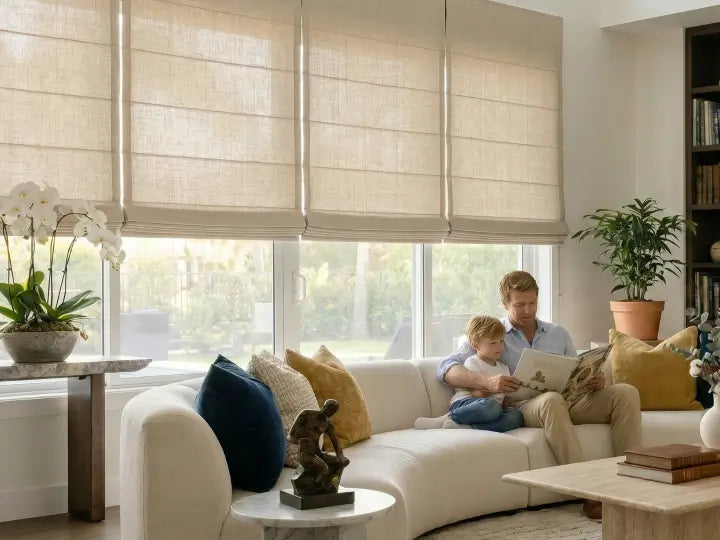
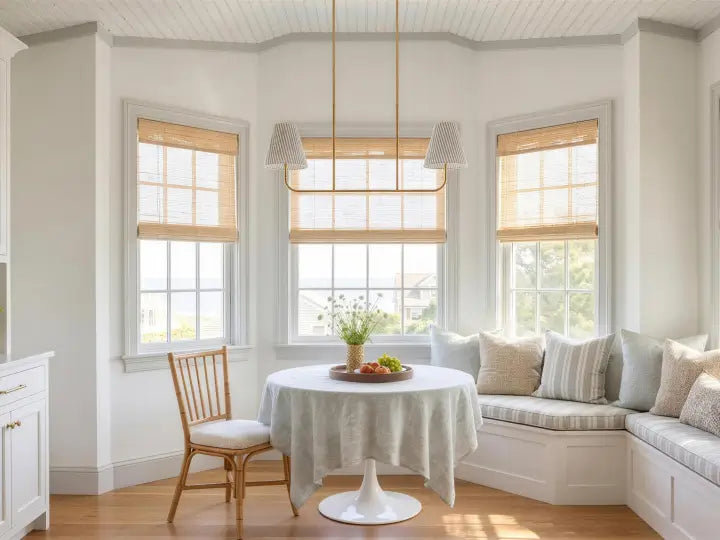
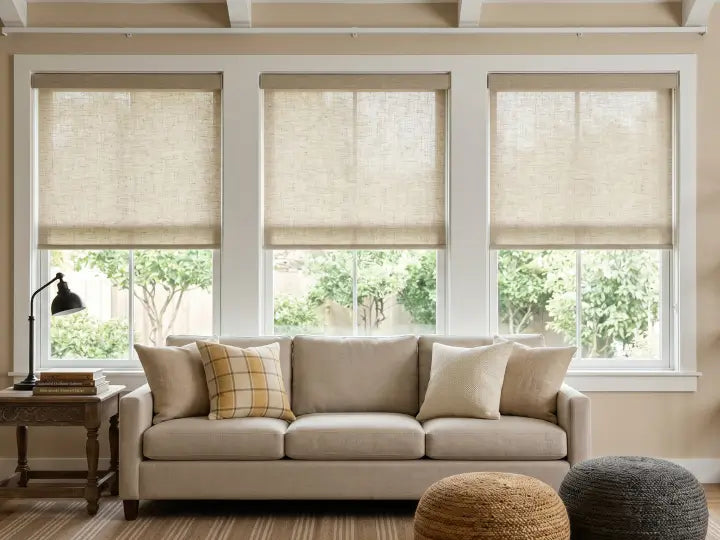
Texture, a soft white, generous fullness, a hem that just clears the floor, a tailored heading and a high mounting line, often with a heavier drape in front.
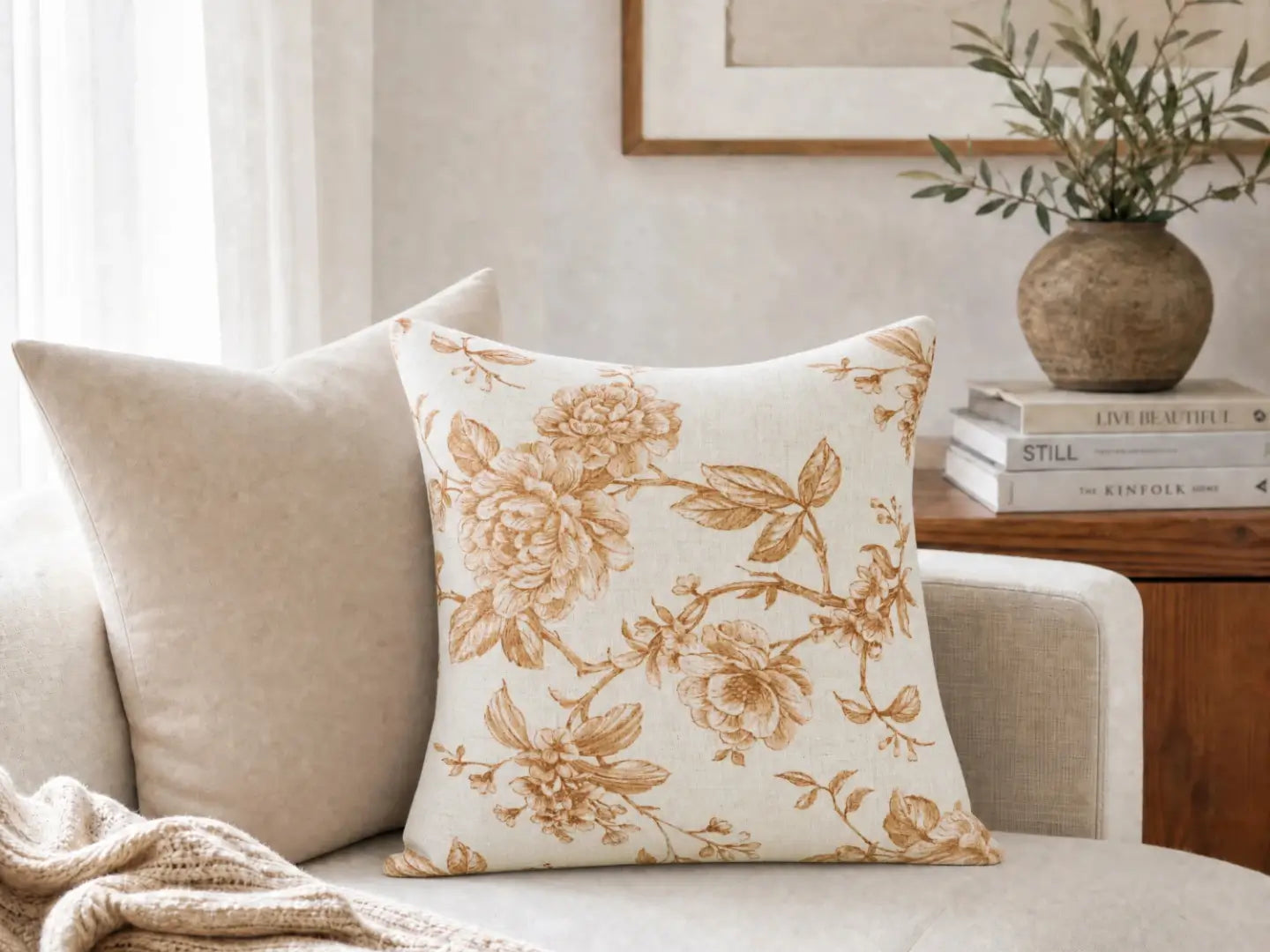
Texture, not shine. Emily Mould of The Romo Group told Homes & Gardens to expect sheers with tonal variation and irregular, chunky yarns, and Apartment Therapy says linen and cotton now lead the sheer market. For real linen in the weave, Thalira is a linen-blend (44% linen, 9% rayon, 47% polyester; about 20% light blocking, 95 GSM) and the most linen-rich sheer we sell. Corenya is a heavier, textured linen-blend (20% linen, 80% polyester; about 15% light blocking, 130 GSM). Our linen vs. faux linen guide shows how to read the label.
Soft white, not blue-white. Homes & Gardens put stark white first on its 2025 list of curtain colors on the way out; designer Nina Lichtenstein said bright white can feel cold among light neutrals and that designers are turning to off-white and ivory. The brightest whites can rely on optical brighteners, which absorb ultraviolet light and re-emit blue, so beside warm white paint they may look faintly blue or gray.
Fullness of 2.5 to 3 times. The Shade Store recommends 2.5 to 3 times the covered width for sheer or lightweight fabrics, versus 1.5 to 2 times for most drapery. London designer Nicola Crawford told Livingetc: "The secret is fullness. Think flowing, not flat." Our fullness comparison walks through the fabric math.
A hem that just clears the floor. San Francisco designer Ellie Yun told the same magazine she stops sheers about ¼ inch above the floor, so they open easily, stay out of the dust and make the window look taller. A light kiss also works. Puddles divide opinion: The Shade Store lists a 3 to 6 inch puddle, while House Digest's 2026 out list calls heavy puddling a dust trap. Our guide to three curtain lengths weighs it up.
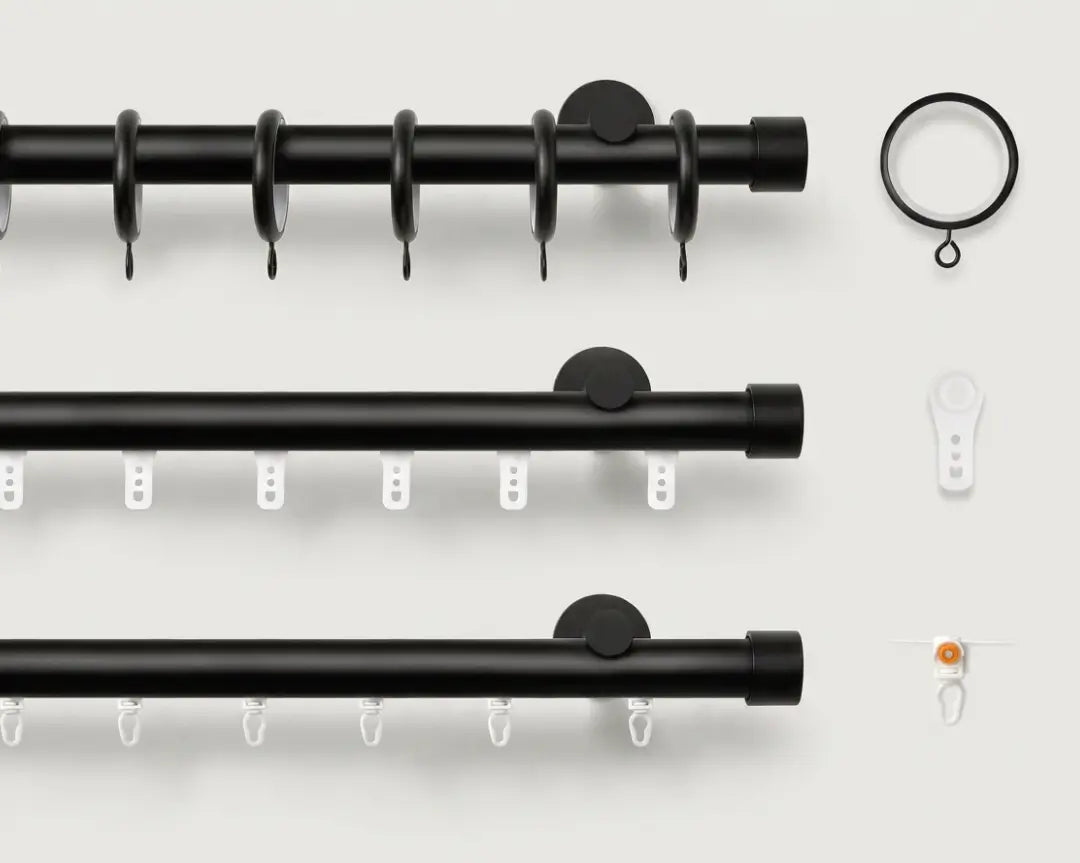
Mounted high and wide. The Shade Store's rule of thumb is to mount the rod about two-thirds of the way from the window top to the ceiling (on the ceiling if space is tight) and 6 to 12 inches past the frame on each side. Compare rods vs. tracks or browse rods and tracks.
A tailored heading. Cortney McClure told The Spruce she would pick a pleated top, inverted box pleat or ripple fold over grommets anywhere but a playroom or kid's bedroom. On a sheer, ripple fold gives even, continuous waves on a track, while pinch pleats give a crisper, more traditional line.
Layered with a heavier drape. Curtain maker Pat Giddens told Homes & Gardens that double-dressed windows are very popular right now. Designer Eleanor Weaver describes the look as a functional base, such as a sheer, under a decorative full-length drape. Our layering how-to covers the hardware. Nova, a polyester semi-sheer (15–20% light blocking, 160 GSM), is sold as a layered set with Ilythra drapes.

Why do some sheer curtains look cheap?
Because of how they're made and hung, not because they're sheer. The same faults run through the 2025–2026 out lists.
- Thin, shiny polyester. Designer Eve Jean, quoted by House Digest, says high-sheen polyester can look cheap instead of luxurious, and Apartment Therapy blames yesterday's gauzy fabric for the dated reputation. Polyester itself isn't the villain: University of Georgia Extension rates it wrinkle-resistant and resistant to strong sunlight. Judge sheen and weight on a free swatch held up to daylight.
- Skimpy width. Panels barely wider than the window hang flat when closed and show every gap.
- A hem that floats. Designer Candace Plotz told The Spruce that drapery hovering above the floor leaves a room unbalanced and unfinished, and Hunker's 2026 list rules out sill-length drapery.
- Rod pockets. The fabric grips the rod and bunches unevenly, which is fine for a stationary café panel but not for a sheer you open daily.
- Swags and ruffles. Better Homes & Gardens lists fussy ruffles and swags as out, and House Digest's 2026 list adds frills and tassels. Tailored valances are another matter; see our valance verdict.
- Factory fold lines. A grid of packing creases reads off-the-shelf. Hang the panels, then steam them.
- Blue-white whites. A brightened white can look blue against warm walls.
- Grommets on a whisper-light sheer. Visible grommets sit on The Spruce's and House Digest's dated lists. Our grommet verdict found them repositioned rather than retired, but on a very light sheer a pleated or ripple-fold heading looks more deliberate.

How do you make sheer curtains look expensive?
Fix the fabric, width, hem and hardware. Most cheap-looking sheers need two or three of these fixes, not all eight.
| Looks cheap | Why it reads that way | Fix |
|---|---|---|
| Shiny, thin voile | Shine bounces light back; the weave hangs limp | A matte, textured weave such as a linen-blend, checked on a swatch in daylight |
| Panels barely wider than the window | Closed, they go flat and show gaps | 2.5–3× the width covered: 250–300 in of panel width for a 100 in rod |
| Hem floating above the floor | Looks shrunk or bought in the wrong size | Made to length: about ¼ in above the floor, or a light kiss |
| Rod sitting on the window trim | Shrinks the window and crowds the glass | About two-thirds of the way to the ceiling, 6–12 in past the frame |
| Rod-pocket gathers | Bunch unevenly and drag when opened | Pinch pleat on rings, or ripple fold on a track |
| Swag or scarf valance | Ruffles and swags top the 2025–2026 out lists | Drop it, or choose a tailored valance |
| Packing creases | A fold grid says straight out of the bag | Hang first, then steam on a low setting |
| Blue-white against warm walls | Brightened whites can read blue or gray | Soft white, ivory or oatmeal, checked against your trim in daylight |
Where do sheer curtains work best, and where don't they?
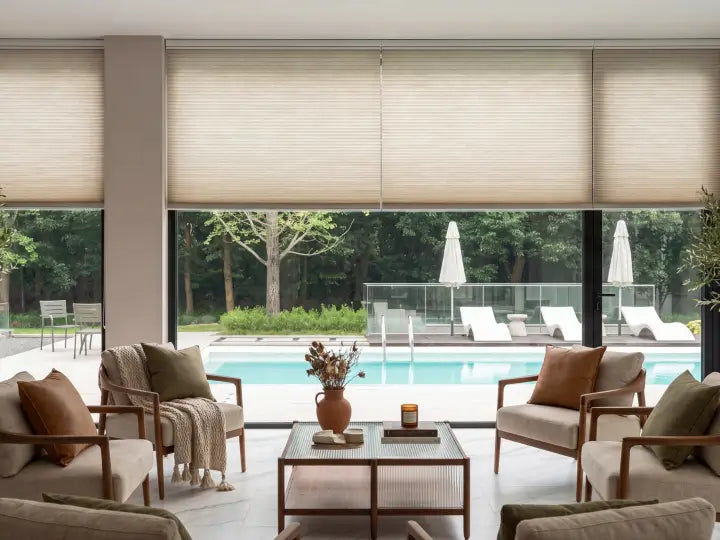
Wherever you want daylight and a softer view more than darkness: living rooms, dining rooms, home offices and the daytime side of a bedroom.
- Living rooms and big glass. Lara Clarke told Livingetc that a striped sheer adds depth and warmth across wide glazing, and that in winter sheers soften reflections after dark. For wall-to-wall runs, Liana (100% polyester, 15–20% light blocking, 100 GSM) is made up to 360 inches wide and 240 inches long. Browse all see-through sheers, or compare light sheers vs. linen drapes.
- Bedrooms. By day, yes; at night, add blackout. Homes & Gardens' double-dressing piece gives that exact example: blackout at night, sheer by day.
- Kitchens and baths. Sheer café panels give eye-level cover with light above; see our café curtain verdict.
- More cover. Miravel is a linen-blend semi-sheer (20% linen, 80% polyester; about 15% light blocking, 180 GSM). Our semi-sheer guide explains the difference, and the semi-sheer collection has the rest.
- Pattern without weight. Livingetc suggests a sheer with an interesting thread running through it. Phaelyn is a polyester sheer with embroidered roses (35–45% light blocking; up to 89 inches wide and 118 inches long).
- The airiest look. Mira is a very sheer polyester (about 10% light blocking). For pared-back styling, see our Japandi and organic modern lookbooks.
Where they don't work alone: anywhere you need darkness, and street-facing rooms after dark. With lights on inside, a sheer won't fully hide the room at night; our day-vs-night sheer privacy guide explains exactly what people can see.
The honest part: what sheer curtains can't do
Sheers solve glare and softness, not darkness, fading, heat or upkeep.
- Night privacy. As above: a single sheer is a daytime treatment.
- Fading. Sheers pass visible light by design, and the Canadian Conservation Institute notes that for light-sensitive colors, UV usually causes less than half of the fading, often about a tenth. A sheer can shield a delicate outer drape, which is Pat Giddens's point, but it won't save a sofa in daily direct sun. That needs a shade or a lined layer.
- Insulation. The Efficient Window Coverings guide from Lawrence Berkeley National Laboratory and BuildingGreen says curtains and drapes normally add no more than R-1, and that window treatments cut summer solar heat gain by 20% to 60% depending on color and openness. A sheer is open by definition, so expect the low end.
- Dust and laundry. Dragging hems collect dust, and polyester builds static and attracts lint, per UGA Extension. A light pass with a brush attachment between washes helps; follow the care label.
- Wrinkles. Linen wrinkles badly unless treated and polyester resists it (UGA Extension); linen-blends land in between. If crumple bothers you, pick a higher-polyester sheer.
- More fabric, more cost. Custom sheers are priced by size, fabric and heading (sheers usually skip lining), and 2.5 to 3 times fullness uses far more cloth than a skimpy panel. That cloth is the look.
Glossary
Voile — a light, plain-weave sheer fabric.
Linen-blend — linen mixed with other fibers; the label lists each fiber's share by weight.
Fullness — total flat fabric width divided by the width it covers; 2.5× on a 100-inch rod is 250 inches.
Double dressing — a functional base, such as a sheer or blind, layered with a decorative drape.
Ripple fold — a track heading that sets fabric into even, S-shaped waves.
Pinch pleat — a sewn heading that gathers fabric into tacked pleats at the top.
Float, kiss, break, puddle — a hem just above the floor, touching it, 1–2 inches longer so it bends, or 3–6 inches longer so it pools.
GSM — grams per square meter, a measure of fabric weight; higher means heavier cloth.
Optical brightener — a finish that absorbs ultraviolet light and re-emits blue, so white looks whiter.
FAQ
Are sheer curtains still in style in 2026?
Yes. Of ten dated design pieces from September 2025 to September 2026, eight treat sheers as current and two accept them only when layered or more substantial; none call them out. What reads dated is thin, shiny, skimpy or short panels and fussy swags.
Do sheer curtains look cheap?
Not by default. They look cheap when the fabric is thin and shiny, the panels are barely wider than the window, the hem floats or the heading bunches on a rod pocket. A matte, textured weave at 2.5 to 3 times the rod width, hung high and just clearing the floor, reads custom.
Are white sheer curtains in style?
Soft whites are; stark, bright white is fading. Homes and Gardens put stark white first on its 2025 list of curtain colors on the way out, with designers moving to off-white and ivory. Check soft white, ivory or oatmeal against your trim and walls in daylight.
How much fullness do sheer curtains need?
The Shade Store recommends 2.5 to 3 times the covered width for sheer or lightweight fabrics, versus 1.5 to 2 times for most drapery. For a 100-inch rod, that is 250 to 300 inches of total panel width.
Should sheer curtains touch the floor?
Nearly. Designer Ellie Yun stops sheers about a quarter inch above the floor so they open easily and stay out of the dust. A light kiss or a 1 to 2 inch break also works; hems that stop inches short look unfinished.
Should sheer curtains go in front of or behind drapes?
Behind. The sheer hangs closest to the glass to filter daylight, and the heavier, often lined drape hangs in front for evening privacy. A double rod or two tracks lets each layer open on its own.
Are linen sheers better than polyester sheers?
Different, not better. Linen has an irregular, matte texture but wrinkles badly unless treated; polyester resists wrinkles and strong sun, per University of Georgia Extension, though cheap versions can look shiny. Linen-blends sit in between. Read the fiber label: a linen look is not linen.
Ready for a sheer that looks 2026, not 1996? Start with our sheer curtains collection, where every panel is made to your width and length, and order free swatches first to judge texture, sheen and shade of white against your own walls in daylight.